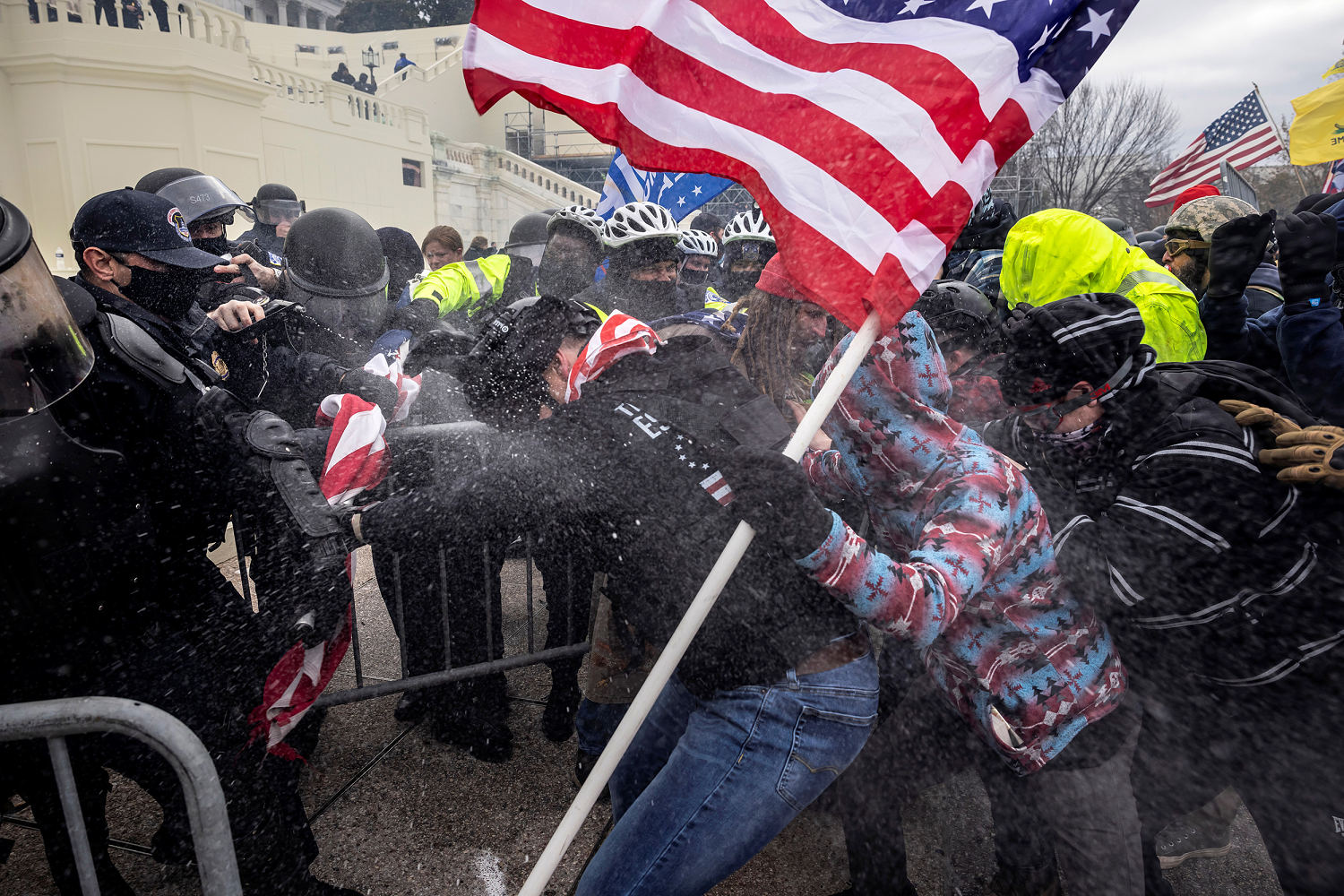
Political pundits love a clean moral binary. Good versus evil. Democracy versus autocracy. It makes for easy headlines and predictable cable news panels.
When Joe Biden declared that Donald Trump’s actions on January 6 "should follow him to his grave," the mainstream media nodded in unison. They treated it as a definitive, devastating indictment. A knockout punch delivered by a seasoned statesman defending the soul of the nation.
They missed the entire board.
By anchoring his political strategy to the perpetual relitigation of January 6, Biden isn't burying Trump. He is handing his rival the exact oxygen required to survive. While the legacy press applauds the rhetoric, anyone who understands political communication, voter psychology, and asymmetric warfare sees a massive strategic blunder unfolding in real time.
The Lazy Consensus of Perpetual Outrage
The prevailing wisdom in Washington is simple: remind voters of the chaos of January 6, and they will recoil from Trump. It assumes that the electorate views political events through the same institutional lens as a constitutional law professor or a D.C. bureau chief.
That assumption is fatally flawed.
I’ve spent years watching campaigns burn tens of millions of dollars on "character indictment" ads that move the needle by zero percent. Why? Because once a public figure reaches total saturation, new moral condemnations stop functioning as information. They become background noise.
Every single voter in America already has a fixed, concrete opinion about what happened at the Capitol. Nobody is sitting on the fence waiting for Joe Biden to tell them that January 6 was bad. When a sitting president tells the public that an opponent's actions should follow him to his grave, he isn't persuading the undecided. He is preaching to the choir while inadvertently validating the central grievance of the opposition.
The Mechanics of Political Martyrdom
To understand why this rhetoric backfires, you have to understand how asymmetric political branding works.
Trump’s entire political identity is built on a single premise: They are out to get you, and I am the only one standing in the way.
When the sitting president uses language as final and absolute as "follow him to his grave," he steps directly into the villain role Trump wrote for him. To a skeptical, anti-establishment voter—the exact demographic that decides swing states—this doesn't sound like a defense of democratic norms. It sounds like an entrenched elite trying to permanently disqualify a populist threat.
The Streisand Effect in Electoral Politics
In media theory, the Streisand Effect occurs when an attempt to hide, remove, or censor information has the unintended consequence of increasing awareness of that information. In modern politics, there is a cousin to this phenomenon: The Outrage Amplifier.
When you relentlessly attack a figure on moral grounds without addressing the material conditions of the voter's life, you elevate the target's status. You make them larger than life. You turn a flawed politician into an existential symbol.
- The Institutional View: Emphasizing January 6 proves Trump is unfit for office.
- The Voter Reality: Emphasizing January 6 proves the current administration has nothing else to talk about.
If you are a voter struggling with housing costs, grocery bills, or stagnant wages, hearing the president obsess over a past event—no matter how severe—creates a massive credibility gap. It signals that the leadership is looking backward while the public is worried about next month.
Dismantling the "Soul of the Nation" Fallacy
Let’s look at the core argument driving the Biden communication strategy. The idea is that if you frame an election as an existential battle for democracy itself, turnout among your base will skyrocket, and moderate voters will hold their noses and vote for stability.
This works once. It worked in 2020 when chaos was the immediate, daily experience of the electorate. It even had residual power in the 2022 midterms, aided heavily by the Supreme Court's decision on Roe v. Wade.
By the time you try to run that exact same playbook again, diminishing returns have already set in. You cannot run a permanent emergency. Human psychology simply doesn't allow for sustained, peak-level panic over multiple years. Eventually, alarm fatigue sets in. When everything is an existential threat to the republic, nothing is.
What the Data Actually Shows About Voter Prioritization
Political scientists like Lynn Vavreck, who literally wrote the book on how campaigns work (The Message Matters), have demonstrated for decades that elections are fundamentally referendums on the incumbent's handling of the economy and current conditions.
When an incumbent party shifts the focus away from their own record and onto the moral failings of the challenger, voters don't suddenly forget about their bank accounts. Instead, they interpret the pivot as an admission of weakness.
Imagine a scenario where a CEO steps up to an earnings call, ignores three straight quarters of declining margins, and spends forty-five minutes talking about how unethical the previous CEO was. The stock wouldn't rally. It would tank. Investors would immediately realize the current leadership has no plan for growth. Voters behave the exact same way.
The Nuance the Pundits Missed: Memory vs. Relevance
There is a massive difference between historical memory and political relevance.
Will January 6 follow Donald Trump to his grave in the history books? Almost certainly. Historians, biographers, and legal scholars will dissect that afternoon for centuries. On a purely historical level, Biden’s statement is entirely accurate. A peaceful transfer of power is the bedrock of the American experiment, and breaking that streak is an indelible stain.
History and politics, however, operate on completely different timelines.
History cares about legacy, precedent, and institutional integrity. Politics cares about leverage, momentum, and immediate utility. By confusing a historical truth with a winning campaign message, the Biden team fell into a classic trap. They assumed that because something is historically monumental, it must also be electorally decisive.
It isn't. History is written by scholars looking backward; elections are decided by consumers looking forward.
Addressing the Counterargument: Can You Really Ignore It?
Now, let’s be brutally honest about the flaw in my own contrarian stance.
If you are Joe Biden, you cannot simply pretend January 6 didn't happen. Doing so would demoralize your core base, alienate institutionalist donors, and effectively normalize behavior that threatens the constitutional order. Silence looks like complicity.
So, if ignoring it is impossible, and obsessing over it is political suicide, what is the actual play?
The answer lies in reframing the threat from the past to the future, and from the abstract to the personal.
1. Stop Litigating the Event; Start Highlighting the Cost
Talking about "the soul of the nation" or "following him to his grave" is abstract, emotional, and backward-looking. Smart strategists never fight on abstract turf. Instead of focusing on the morality of what Trump did, effective messaging focuses on the instability it creates for the average person's daily life. Markets hate chaos. Businesses don't invest during constitutional crises. Tie the behavior directly to economic volatility.
2. Deprive the Opponent of Oxygen
When Biden makes a sweeping, dramatic declaration about Trump’s legacy, he guarantees a three-day news cycle centered entirely around Trump. Every cable network puts Trump’s face on the screen. Every pundit debates Trump’s psyche. Even when the coverage is negative, Trump owns the attention economy. And in modern media, attention is the only currency that matters. A disciplined strategist mentions the accountability briefly, lets the courts handle the legal consequences, and immediately pivots back to tangible deliverables.
3. Weaponize Competence Over Outrage
The strongest contrast to chaos isn't anger; it is boredom. If your brand is steady, predictable governance, your messaging should sound like a technocrat, not a prophet. The moment you match your opponent's apocalyptic tone, you surrender your biggest competitive advantage. You drag yourself down into the mud where your opponent has a home-field advantage.
The Echo Chamber Trap
Why do smart, experienced political operatives keep making this mistake? Because they live inside an information ecosystem that rewards the wrong metrics.
When Biden says Trump’s actions should follow him to his grave, the feedback loop is instant and intoxicating:
- Fundraising emails see a massive spike in small-dollar donations.
- Cable news panels praise the "moral clarity" of the speech.
- Social media feeds erupt with validation from the party faithful.
Every single short-term metric screams Success!
It takes immense discipline to look at a massive fundraising haul and realize you are actually losing the broader war. Small-dollar donors are the most partisan, ideologically rigid people in the country. What fires them up is frequently the exact thing that alienates the low-information, pragmatic voter in Pennsylvania, Michigan, or Wisconsin who only tunes into politics two weeks before Election Day.
By optimizing for the applause of the base and the approval of the press corps, the administration is systematically dismantling its own persuasive power with the middle of the electorate.
The Brutal Reality of Asymmetric Warfare
Donald Trump doesn't care if his actions follow him to his grave. He has spent his entire adult life proving that shame is not a weapon that works on him. You cannot humiliate someone who rejects the rules of the society doing the humiliating.
Using traditional moral condemnation against a post-shame politician is like bringing a rulebook to a street fight. You can point to the violations all day long. You can quote the bylaws. You can invoke the founding fathers.
None of it stops the punch.
When Biden steps to the podium and tries to etch Trump’s epitaph in real time, he isn't projecting strength. He is revealing that he still believes the old rules of political gravity apply. He is betting his entire legacy on the idea that voters will eventually care as much about institutional norms as he does.
History will remember January 6 forever, just as Biden said. But if Democrats keep making it the centerpiece of their pitch, Trump won't be the only one whose political career is defined by that day.