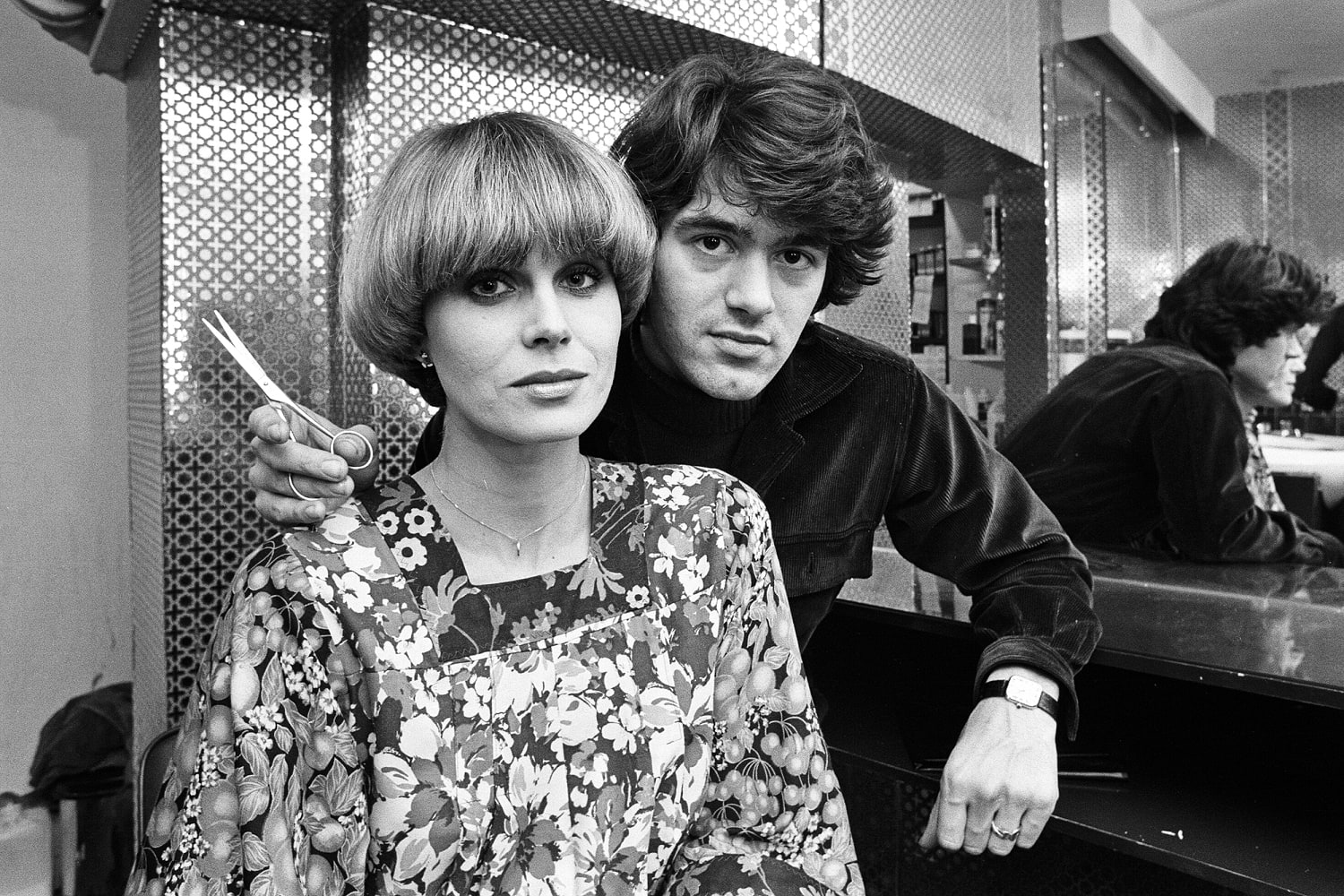
Every obituary running across the beauty press right now leads with the exact same lazy headline: celebrity hairstylist John Frieda dies at 75.
They are burying the actual story under a pile of salon nostalgia. If you enjoyed this piece, you might want to look at: this related article.
Calling John Frieda a celebrity hairstylist is like calling Ray Kroc a line cook. Yes, Frieda held the scissors in London during the 1970s. Yes, he cut hair for Princess Diana, Paul McCartney, and Jacqueline Kennedy Onassis. If he had stayed behind the chair, you would never have heard his name outside of Mayfair. You would not be reading about him today, and Kao Corporation would never have handed him $450 million in 2002.
The standard industry narrative loves a romantic artist story. Beauty editors want to believe that genius hairdressing naturally translates into a global consumer empire. That is pure fiction. The salon business and the mass-market packaged goods business are mortal enemies. One relies on scarce, high-touch human labor that cannot scale without diluting quality. The other relies on ruthless supply-chain efficiency, chemical formulation, and shelf-space warfare at Walmart and Boots. For another angle on this development, see the latest coverage from The Motley Fool.
Frieda’s real genius had nothing to do with how he feathered hair in 1978. His real achievement was realizing early on that the salon chair is a dead-end financial trap, and using celebrity proximity as a Trojan horse to conquer the drugstore aisle.
The Celebrity Hairstylist Myth Is a Financial Trap
Spend ten years consulting for beauty founders and you watch the same tragedy play out on repeat. A brilliant colorist or stylist gets a few Vogue covers, styles an Oscar winner, and convinces themselves they are a brand. They raise venture capital, launch a twelve-SKU line of $48 shampoos, and go bankrupt within thirty-six months.
Why? Because they confuse personal fame with distribution power.
In the 1980s, professional haircare was locked inside a rigid caste system. On one side, you had prestige salon brands like Redken and Sebastian, sold exclusively through licensed stylists who guarded their retail margins like state secrets. On the other side, you had cheap drugstore commodities like Alberto VO5 and Suave—products built for volume, priced under three dollars, and completely devoid of aspiration.
Most celebrity stylists tried to play the prestige game. They wanted their bottles sitting on marble counters in Beverly Hills. Frieda looked at the math and walked the other direction.
He understood a brutal truth about retail economics: prestige salons have terrible foot traffic. Even the busiest flagship salon in New York or London sees a few hundred clients a week. A single high-volume drugstore chain moves tens of thousands of units before lunch.
Frieda did not build an empire by selling to celebrities. He used celebrities to validate a mass-market chemical solution for the millions of women who could never afford a £200 appointment on New Cavendish Street.
Frizz Ease Was a Chemical Arbitrage Play
Look at the launch of Frizz Ease Hair Serum in 1990. Standard beauty history frames this as a creative eureka moment—a stylist tired of humid weather ruining blowouts.
Strip away the PR gloss and look at what actually happened in the lab. Frieda and his team did not invent silicones. Dimethicone and cyclomethicone had been sitting in industrial chemical catalogs for decades, used in everything from lubricants to skin protectants. What Frieda executed was a masterclass in formulation positioning and category creation.
Before 1990, women with curly or frizzy hair were sold heavy pomades, sticky mousses, or harsh relaxers. Drugstore shelves were organized by hair type—oily, dry, normal—and basic function—shampoo, conditioner, hairspray. Nobody was selling a targeted, high-margin problem solver in a tiny bottle at a mass-market price point.
Frieda took a concentrated silicone blend, put it in a 1.69-ounce bottle, and priced it around $10—more than triple the cost of standard drugstore haircare at the time, yet a fraction of a salon visit.
He bypassed the salon gatekeepers entirely. By putting a luxury salon name directly onto the shelves of Boots in the UK and mass retailers in the US, he created the "masstige" haircare category years before the term became a boardroom buzzword. Competitors in the salon world mocked him for cheapening his name. Meanwhile, he was printing cash at consumer-packaged-goods margins while they were fighting over 10 percent commission splits on salon backbars.
How John Frieda Actually Built a $450 Million Exit
If you want to understand why Kao Corporation—the Japanese consumer goods giant behind Biore and Jergens—paid $450 million for John Frieda Professional Hair Care in 2002, stop looking at his scissor technique and start looking at his brand architecture.
Most founder-led beauty brands fail to exit because the founder is the bottleneck. If the brand is just a reflection of the stylist's personal aesthetic, the business dies the moment the stylist gets tired, ages out of relevance, or says something stupid in an interview.
Frieda systematically removed himself from the product equation. He built a portfolio of problem-solution sub-brands that stood entirely on their own merits:
- Frizz Ease (1990): Attacked humidity and texture control using lightweight silicone polymers.
- Sheer Blonde (1998): Exploited a massive underserved demographic by formulating non-peroxide brightening agents and color-depositing pigments for natural and dyed blondes, turning a color maintenance headache into a daily wash-and-wear habit.
- Brilliant Brunette (2004, developed under his strategic blueprint): Segmented the market further, proving that consumers would buy hyper-specific pigment-enhancing formulas rather than generic "color-safe" shampoo.
- Beach Blonde: Captured the textured, salt-spray aesthetic before "effortless waves" became an Instagram cliché.
Notice the pattern. None of these lines required John Frieda to stand in a store and explain how to use them. The packaging did the selling. The names stated the exact demographic and the exact result.
I have sat in dozens of pitch meetings with haircare founders who spend forty minutes talking about their "philosophy of movement" and "holistic scalp harmony." Frieda sold visible, immediate cosmetic transformation in a bottle you could buy next to your toothpaste. He treated haircare like functional skincare, targeting specific symptoms with specific chemical mechanisms.
What Everyone Gets Wrong About Modern Beauty Empires
People routinely ask whether a hairstylist could replicate John Frieda’s career today. The lazy answer is yes, because social media makes it easier than ever to reach consumers directly.
The real answer is almost certainly no—at least not by following the modern influencer playbook.
Today’s celebrity stylists launch brands on the back of TikTok virality and private equity roll-ups. They outsource formulation to third-party contract manufacturers in New Jersey or Italy, slap a minimalist sans-serif label on a white-label bottle, and burn millions on Meta customer acquisition costs. When the paid ad efficiency drops, the brand collapses. They have awareness, zero defensibility, and negative unit economics.
Frieda operated under a completely different set of rules, and there are distinct downsides to his model that modern founders need to weigh honestly before idolizing him.
First, mass retail is brutal on brand equity. Once you enter the drugstore ecosystem, you surrender control over your pricing, your adjacency, and your promotional calendar. You are constantly pressured by retail buyers to discount, run buy-one-get-one promotions, and churn out flanker products just to keep your eye-level shelf space. Under Kao’s ownership, John Frieda products eventually became ubiquitous—and ubiquity in beauty slowly erodes mystique. When a brand is sitting in a clearance bin at CVS, you can never take it back upmarket.
Second, chemical arbitrage does not last forever. In 1990, consumers loved what silicones did to their hair. Twenty years later, the "clean beauty" movement weaponized ingredient lists, demonizing dimethicone, sulfates, and parabens—the exact workhorse ingredients that made Frieda’s formulas perform so reliably. A brand built entirely on synthetic performance chemistry suddenly found itself playing defense against startups selling silicone-free, cold-pressed botanical oils that performed half as well at twice the price.
Third, selling out early caps your upside while protecting your downside. Taking $450 million in 2002 was a phenomenal liquidity event for Frieda and his partner Gail Federici. Yet compared to the multi-billion-dollar valuations achieved by independent beauty founders two decades later, it looks conservative. Frieda traded long-term equity upside for immediate, generational certainty before the private equity boom inflated beauty multiples into the stratosphere.
The Real Lesson From Frieda’s Career
If you are building a consumer brand, stop romanticizing the craft.
Nobody cares how good you are at the manual service version of your business. Customers do not buy your heritage, your awards, or your famous clientele. They buy a reliable fix for an annoying daily problem, delivered in a place where they already shop, at a price that feels like a bargain compared to the alternative.
John Frieda understood that a salon chair caps your income at the number of hours you can stand on your feet. A bottle on a drugstore shelf works twenty-four hours a day across four continents while you sleep.
He did not die a celebrity hairstylist. He died a ruthless retail strategist who used a pair of scissors to buy his way into the consumer packaged goods hall of fame.