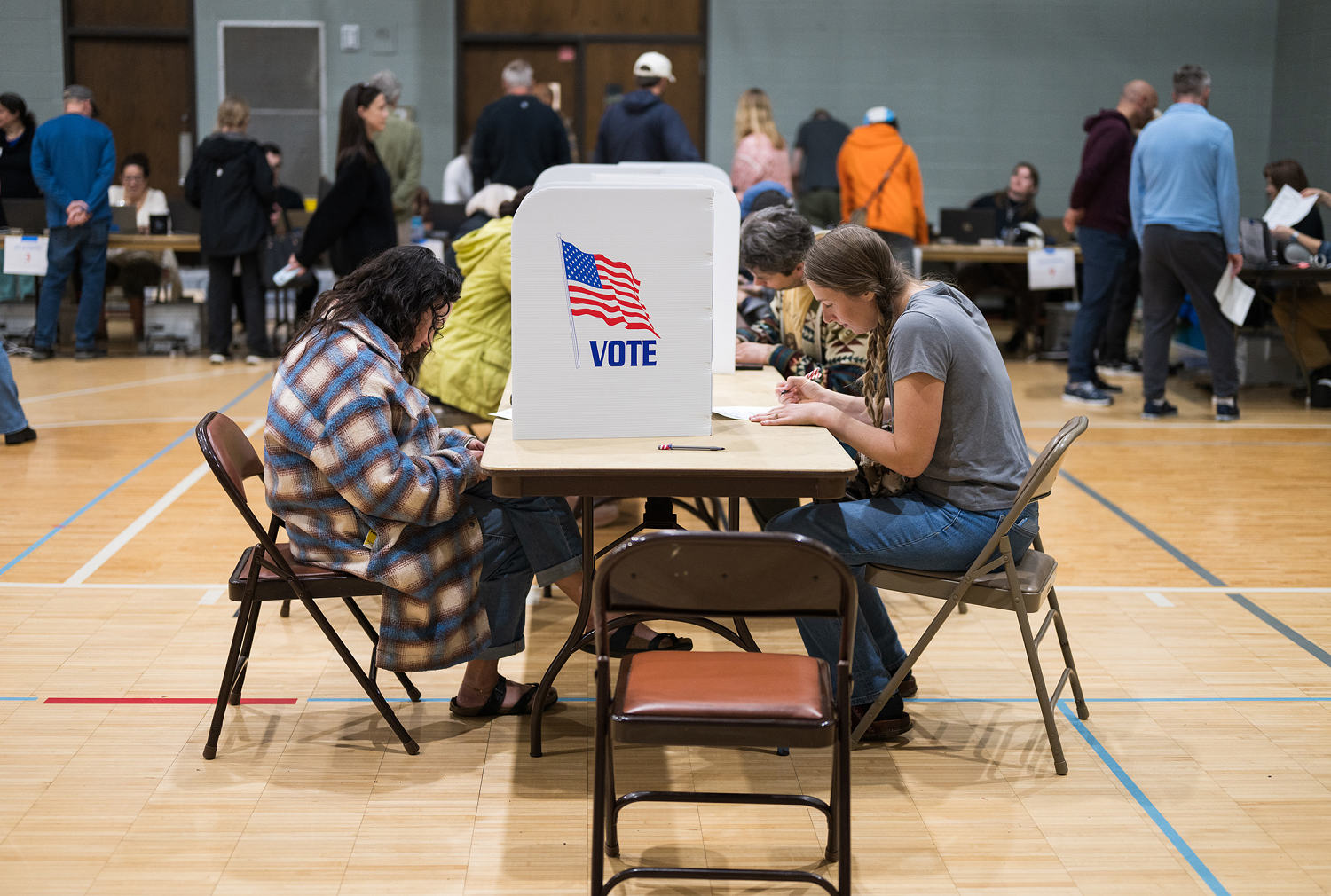
Federal judicial intervention against executive intimidation of election administrators operates as a structural circuit breaker within decentralized democratic systems. When a federal judge orders an administration to cease threatening election officials, the ruling addresses a specific legal friction: the collision between executive branch influence and the constitutional autonomy of state and local voting operations. Standard news coverage treats such injunctions as isolated political clashes. An operational analysis reveals a deeper mechanical reality. These rulings establish the legal boundaries of executive speech, define the evidentiary thresholds for institutional coercion, and recalibrate the risk calculus for the civil servants responsible for executing federal elections.
The Structural Architecture of Election Administration
To understand the necessity of judicial intervention, one must first map the operational topology of American elections. Unlike nations with centralized electoral commissions, the United States relies on a hyper-decentralized network of roughly 10,000 local jurisdictions. Authority flows downward from the Elections Clause of the U.S. Constitution, which delegates the primary responsibility for the time, place, and manner of elections to state legislatures, subject to congressional alteration.
This decentralization creates a structural vulnerability known in systems engineering as a high-surface-area network. Each local election administrator—whether a county clerk, a registrar of voters, or a municipal board member—acts as an independent node. While this architecture prevents single-point technical failures, it leaves individual nodes exposed to asymmetric political pressure. When the executive branch directs rhetoric, threats of prosecution, or funding contingencies toward these local nodes, it introduces systemic friction into a process reliant on strict procedural neutrality.
The judicial order restraining the Trump administration from threatening election officials directly targets this asymmetry. The court is not merely arbitrating a dispute over political rhetoric; it is enforcing a structural separation of powers designed to insulate operational administrators from top-down coercion.
The Three Mechanisms of Executive Coercion
Executive pressure on decentralized administrators rarely manifests as a single, explicit directive. Instead, it operates through three distinct mechanisms that alter the operational environment for election workers.
1. Ambiguous Legal Jeopardy
The primary lever of coercion involves weaponizing the ambiguity of federal and state election statutes. Election administration requires thousands of discretionary micro-decisions—evaluating signature matches, managing provisional ballots, and adjudicating equipment malfunctions. When executive actors suggest that routine administrative errors or good-faith legal interpretations could trigger federal criminal investigations, they transform standard operational risk into personal legal jeopardy. The immediate effect is defensive administration, where officials prioritize personal liability protection over voter access or processing efficiency.
2. Resource and Funding Conditionality
The second mechanism relies on tying federal support—such as grants from the Election Assistance Commission (EAC) or cybersecurity infrastructure support from the Cybersecurity and Infrastructure Security Agency (CISA)—to political compliance. Even when statutory frameworks prohibit the executive branch from unilaterally withholding appropriated funds, the mere threat of administrative delays or heightened audit scrutiny forces local jurisdictions to divert scarce operational bandwidth toward legal compliance and defensive documentation.
3. Stochastic Intimidation via Public Signaling
The third mechanism operates outside formal bureaucratic channels. Publicly naming specific officials, questioning their integrity, or framing routine administrative procedures as malicious interference triggers predictable downstream behaviors among third-party actors. In organizational risk management, this functions as decentralized harassment. The executive branch does not need to issue a direct command for threats to materialize; public signaling lowers the social and psychological barriers for external actors to target local administrators.
The Legal Threshold for Judicial Injunctions
Securing a federal injunction against executive branch officials requires clearing high constitutional hurdles. Federal courts are historically reluctant to issue prior restraints on speech, particularly when the speakers are elected officials or senior executive appointees commenting on matters of public concern. To bypass First Amendment defenses, plaintiffs must demonstrate that the challenged conduct crosses the line from protected political speech into unlawful coercion or unconstitutional interference with statutory duties.
Courts evaluate these claims using established legal doctrines, primarily focusing on the distinction between persuasion and coercion. Under the precedent set by Bantam Books, Inc. v. Sullivan and refined in subsequent appellate rulings, government officials may express strong opinions, criticize local policies, and advocate for specific outcomes. However, they cannot use the power of their office to threaten adverse state action—such as baseless prosecution, regulatory retaliation, or unlawful funding freezes—to compel compliance.
When a judge issues a restraining order in this context, the ruling hinges on three evidentiary pillars:
- Direct Nexus: Plaintiffs must establish a causal link between the administration's statements or actions and a concrete impairment of the election officials' ability to perform their statutory duties.
- Credible Threat of State Action: The rhetoric must be accompanied by explicit or implicit references to the machinery of government, such as Department of Justice investigations or executive orders, rather than mere partisan criticism.
- Irreparable Harm: The plaintiffs must prove that monetary damages after the fact cannot remedy the injury. Because elections operate on strict, immovable calendar deadlines, any disruption to the administrative pipeline constitutes immediate, irreparable harm to both the officials and the electorate.
Operational Impact on Local Jurisdictions
The issuance of a judicial restraining order alters the day-to-day reality of election management, though its effects are bounded by the limits of judicial enforcement.
In the immediate term, the order provides a legal shield for local administrators. County clerks and state election directors can point to a binding federal directive when resisting informal inquiries or demands for non-standard access to voting equipment and voter rolls. It clarifies the rules of engagement, establishing that federal executive agencies cannot bypass established statutory channels to pressure local personnel.
The second operational effect involves personnel retention. Election administration suffers from severe institutional brain drain, driven largely by the asymmetric personal costs imposed on mid-level civil servants. By establishing a judicial boundary against executive intimidation, the court reduces the perceived personal risk of remaining in the profession. Retaining experienced administrators directly correlates with lower error rates during ballot tabulation and post-election audits, as institutional knowledge mitigates the friction of complex statutory compliance.
However, the injunction also introduces new administrative overhead. Local jurisdictions must establish strict protocols for documenting all communications with federal entities to ensure compliance with the court's order. Legal counsel for state and local boards must shift from routine statutory review to active litigation monitoring, consuming budgets originally allocated for poll worker training and physical security upgrades.
The Limitations of Judicial Restraint
A rigorous assessment requires acknowledging what a court order cannot achieve. Judicial injunctions are reactive, paper-based constraints operating within a dynamic, high-speed information environment. They suffer from three inherent structural limitations.
First, enforcement latency limits the immediate deterrent value of an injunction. If an executive actor violates the spirit of the order through carefully worded public statements or indirect channels, the plaintiffs must return to court, file motions for contempt, and present evidence of non-compliance. This judicial cycle takes weeks or months, whereas the operational window of an election cycle compresses into days and hours.
Second, the boundaries of First Amendment protection prevent courts from barring all critical commentary. A judge can prohibit threats of unlawful prosecution or coercive interference, but the court cannot silence political rhetoric regarding election integrity. Consequently, executive actors can easily adapt their language, shifting from explicit threats of state action to generalized claims of systemic failure. While this linguistic pivot complies with the letter of the injunction, it continues to generate the third-party intimidation effects that degrade local administrative capacity.
Third, jurisdictional fragmentation means that a single ruling rarely covers the entire national apparatus. Unless the court certifies a nationwide class or the ruling comes from an appellate body with broad geographic reach, the protections remain localized. Neighboring states operating under different federal circuits may face identical executive pressures without the benefit of an active injunction, creating an uneven patchwork of legal insulation across the national electoral map.
The Cause-and-Effect Chain of Institutional Friction
Missing from surface-level reporting is the downstream economic and operational cost of this friction. When executive intimidation forces election officials into a defensive posture, the entire system slows down.
- Increased Verification Latency: Fearing targeted scrutiny, local officials implement redundant, manual checks on routine processes, such as mail-in ballot signature verification and provisional ballot adjudication.
- Delayed Reporting Windows: Manual verification bottlenecks push result reporting past traditional election-night windows.
- Information Vacuum Exploitation: The resulting delay in official tallies creates an information vacuum, which external actors exploit to amplify narratives of administrative incompetence or fraud.
- Escalated Security Expenditures: Amplified narratives trigger renewed threats against the facilities and personnel conducting the delayed counts, forcing counties to divert funds toward physical security, ballistic glass, and law enforcement overtime.
This feedback loop demonstrates that executive intimidation is not merely a political norm violation; it is a direct tax on public infrastructure. Every dollar spent on defensive legal counsel or physical fortification for a county registrar's office is a dollar removed from voter education, accessible voting machines, or cybersecurity hardening.
Strategic Execution for Election Administrators
Given the realities of executive pressure and the structural limits of judicial remedies, state and local election administrators cannot rely solely on federal courts for operational insulation. Leadership within these jurisdictions must execute a defensive operational posture built on procedural rigidity and institutional transparency.
Administrators must immediately standardize all communication protocols with federal agencies, requiring that any request for data, access, or procedural modification be submitted in writing through official legal counsel. Informal phone calls or off-the-record inquiries from executive appointees must be documented and routed through state attorneys general or independent municipal counsel.
Simultaneously, local boards should accelerate radical operational transparency prior to voting windows. By publishing detailed, step-by-step audit logs, logic and accuracy testing schedules, and chain-of-custody protocols in advance, jurisdictions remove the ambiguity that fuels external suspicion. When procedures are publicly locked before ballots are cast, post-election attempts to characterize routine administration as irregular behavior lose evidentiary traction. Judicial injunctions provide a necessary temporary perimeter, but long-term resilience depends on hardening local administrative processes against external political volatility.