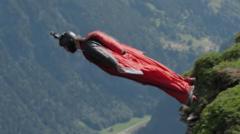
When Swiss authorities formally discontinued criminal proceedings regarding the fatal accident of Scottish wingsuit pilot Liam Byrne on the Gitschen mountain, the legal mechanism executed a predictable procedural arc. In jurisdictions where high-risk adventure sports intersect with fatal outcomes, judicial systems initiate standard inquiries to ascertain a baseline distinction: whether a fatality is the product of inherent kinetic risk or third-party criminal negligence. The closure of this probe illuminates the friction between extreme sports risk management and statutory liability frameworks.
The Investigative Threshold in High-Altitude Fatalities
Under Swiss federal procedure, any unnatural death triggers an initial inquiry by the public prosecutor's office and cantonal police. This is an administrative and legal necessity rather than an immediate accusation of foul play. The investigative mandate relies on a straightforward binary framework:
- Criminal Culpability: Acts involving equipment tampering, third-party recklessness, coercion, or commercially negligent guiding that directly compromised the pilot's safety envelope.
- Misadventure within Acceptable Risk: Fatalities arising entirely from environmental variables, calculated navigational deviations, or physiological limits within an inherently hazardous activity voluntarily undertaken.
The termination of the probe indicates that forensic reconstruction found no evidence supporting the former. Telemetry, witness accounts from accompanying flyers, and topography analysis confirmed that the event remained strictly within the boundaries of unforced kinetic error.
The Mechanics of Proximity Flying Risk
Wingsuit BASE jumping operates on an unforgiving cost function. At speeds exceeding 100 to 200 miles per hour, lateral and vertical error margins compress into single-digit seconds. The physics governing proximity flying dictate that lift-to-drag ratios leave zero room for atmospheric anomalies or micro-terrain miscalculations.
When a flyer veers off a designated trajectory—such as striking a ledge shortly after launch from high-altitude launchpoints like those in the Uri Alps—the system failure is instantaneous. Unlike aviation regulated under commercial civil frameworks, individual aerial adventurers operate as both pilot and safety officer, centralizing all operational risk onto single-point decision-making vectors.
Systemic Precedents and Legal Closure
The closure of the dossier provides structural clarity for how European jurisdictions handle extreme sports fatalities. It reinforces the principle of voluntary assumption of risk, provided that external agents played no causal role in the tragedy. Prosecutors do not seek to criminalize the inherent danger of extreme disciplines, provided that equipment standards, launch protocols, and group dynamics remain free of structural negligence.
Future legal frameworks surrounding extreme altitude sports will likely continue to treat these investigations as closed-loop inquiries: rapid forensic assessment followed by administrative closure, preserving judicial resources while recognizing the autonomous risk profiles chosen by elite practitioners.


