Blaming Justin Herbert for a fourth-quarter collapse is the exact kind of box-score box-checking that keeps bad franchises trapped in purgatory. The lazy consensus after every Chargers loss follows a predictable script. Analysts look at the final score, see a blown lead, point a finger at the quarterback because his contract has commas, and pretend the roster construction isn't a dumpster fire wrapped in a powder-blue jersey.
Let us dispense with the fiction right now. Pinning a late-game meltdown against Denver on Herbert ignores every structural failure that preceded it. I have spent enough years evaluating NFL tape and front-office strategy to recognize when a team is asking a thoroughbred to pull a plow through wet cement. The problem in Los Angeles is not the man throwing the football. The problem is an organization that built an expensive sports car, forgot to install brakes, and then blamed the driver when the brakes failed.
The Quarterback Fallacy and the Myth of the Lone Hero
Modern sports media worships the myth of the solo savior. We treat football like tennis, where one individual dictates the entire outcome. When a team loses a lead late, the quarterback gets indicted for not scoring on every single possession while playing defense from the sideline.
Look at what Herbert walked into that fourth quarter with. The running game was non-existent, forcing him into obvious passing situations against a defensive front teeing off without fear of play-action. The pass protection broke down like cheap cardboard under heavy rain. Receivers dropped crucial balls that hit them squarely in the chest. Yet, because Herbert missed one tight-window throw or failed to engineer a miraculous 99-yard drive with three seconds left, the narrative machine whirs into motion.
We need to stop measuring elite quarterbacks by their record in one-score games. That metric evaluates coaching ineptitude, defensive regression, and special teams disasters far more than it evaluates quarterback play. Herbert ranks among the most accurate deep-ball throwers in professional football, yet he operates behind an offensive line that treats stunts like complex calculus.
The Roster Construction Fraud
Tom Telesco left behind a legacy of top-heavy roster building that Tom Brady couldn't fix, let alone a mid-career star trying to carry a franchise through sheer force of will. The Chargers pour massive financial resources into a few marquee names while scraping the bottom of the barrel for depth.
When your defensive depth consists of players who wouldn't make a practice squad on a competent roster, fourth-quarter collapses are not anomalies. They are mathematical certainties. Fatigue sets in. Scheme limitations get exposed. Opposing coordinators make adjustments, and the Chargers' sideline responds by shrinking the playbook into a predictable shell.
Blaming Herbert for a fourth-quarter meltdown is like blaming the pilot for a crash when the airline CEO removed the wings to save on maintenance costs.
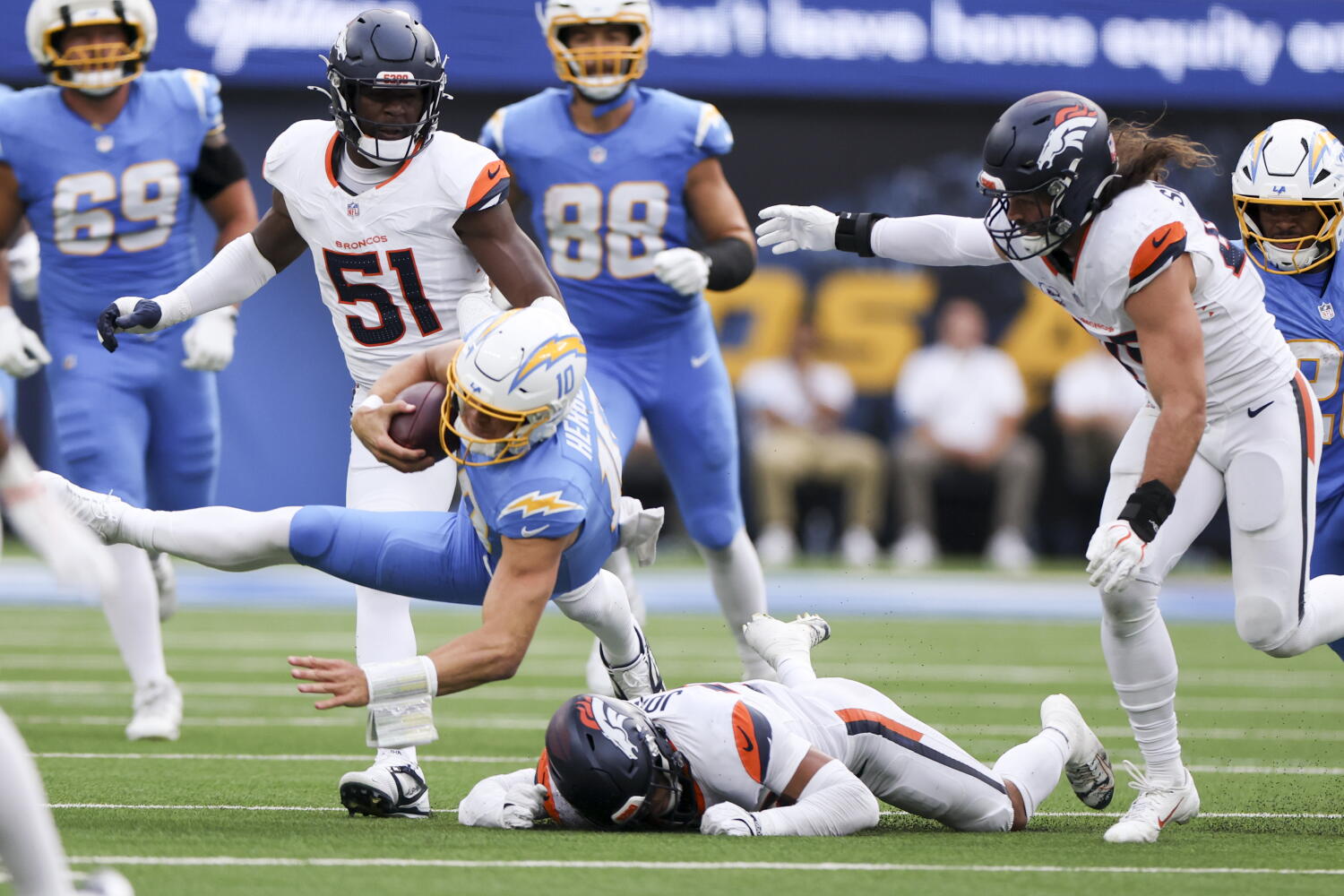
Let us look at the Broncos game specifically. Denver did not scheme up some defensive masterclass in the final fifteen minutes. They simply rushed four, dropped seven into coverage, and watched the Chargers' offensive line turn into a turnstile. When a quarterback has two seconds to process before a defensive end is eating his lunch blade-first, precision evaporates. Expecting poetry under constant physical assault is a fool's errand.
The Cost of Wasting Elite Prime Years
Football history is littered with quarterbacks who wasted their physical peaks carrying incompetent organizations. We saw it with Drew Brees in San Diego before he found his sanctuary in New Orleans. We saw it with Matthew Stafford in Detroit for over a decade.
Herbert is tracking down that exact trajectory if the front office does not undergo a radical philosophy shift. You do not win in this league by paying a quarterback top-of-market money and then skimping on the trenches. You win by building a ferocious defensive front and an offensive line that establishes an identity. Right now, the Chargers have an identity crisis wrapped in neon clothing.
The truth nobody in the local media wants to admit is that Herbert masks how bad this roster actually is. Without his elite arm talent, his ability to avoid sacks behind collapsing pockets, and his absurd third-down conversion rate under duress, this team would not be losing close games in the fourth quarter. They would be blown out by halftime every single week.
What Actually Needs to Change
Stop asking Herbert to be a magician. Start asking the general manager to draft guards who can anchor against a bull rush. Start demanding that the defense create turnovers instead of bending until they snap into tiny pieces.
The obsession with finding flaws in elite quarterbacks when the supporting cast crumbles is a lazy analytical crutch. It avoids the hard conversations about talent evaluation, cap allocation, and coaching philosophy.
If you want to fix the Los Angeles Chargers, do not trade the quarterback. Trade the delusion that a roster built on flashy skill players and fragile depth can compete in a physical conference. Until ownership addresses the foundation, every fourth-quarter collapse will end with the exact same scapegoat, and the franchise will remain exactly where it deserves to be. Nowhere.