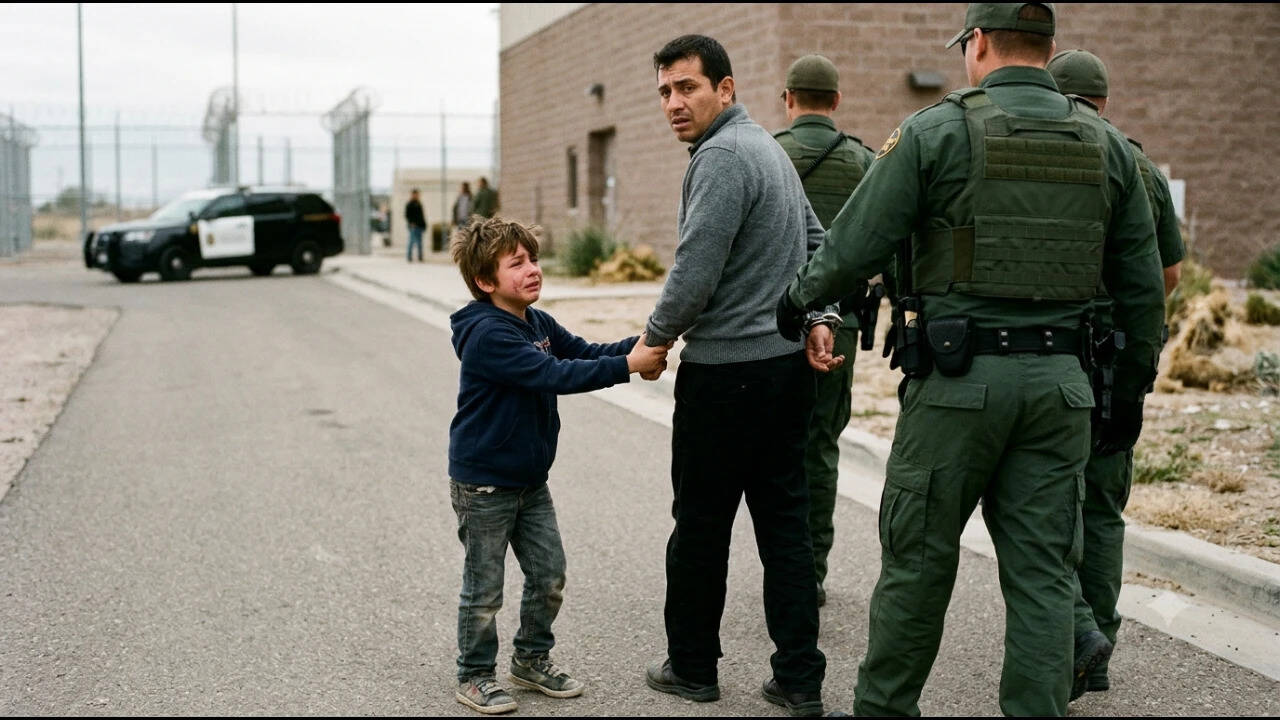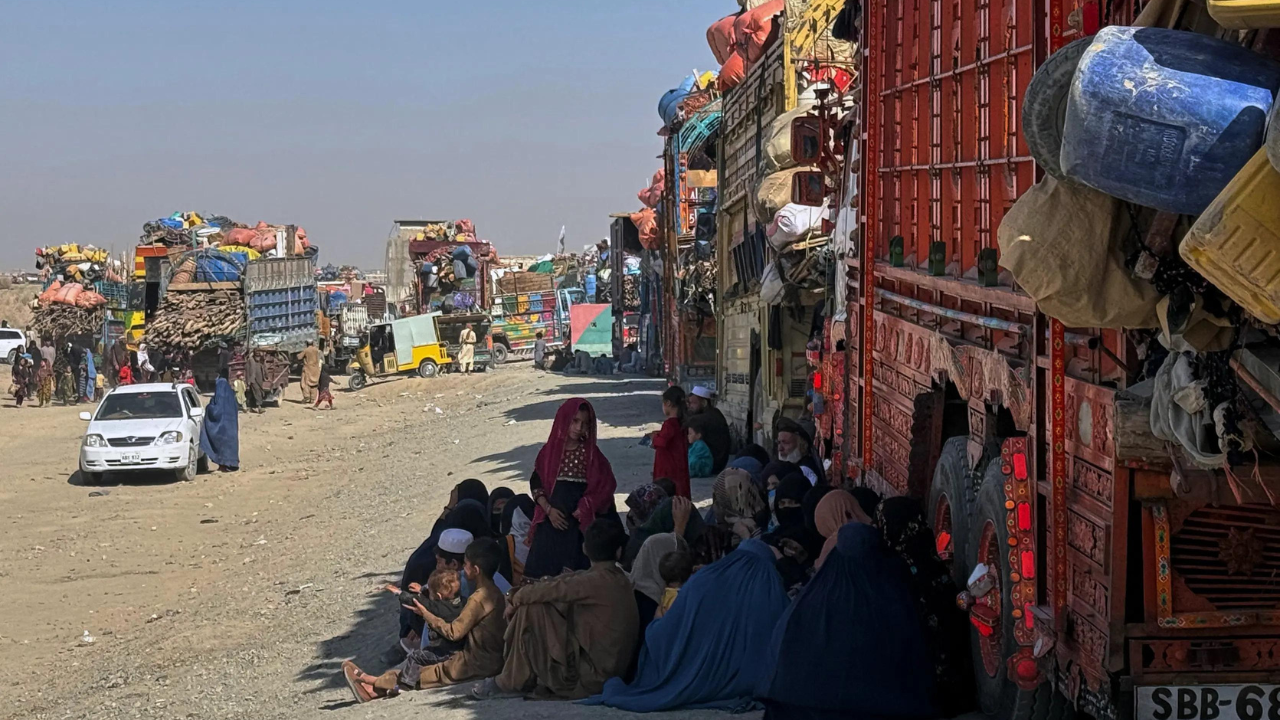
Body counts are the pacifier of failing counterinsurgency campaigns.
Whenever a press release boasts about neutralizing dozens of fighters in a ten-day window along the Durand Line, amateur analysts cheer. They treat war like an accounting ledger. Subtract seventy-four from the enemy's column, add a victory to the state's tally, and call it progress.
This is the lazy consensus of modern security reporting. It is also completely detached from how asymmetric warfare actually works.
When a conventional military has to conduct high-tempo, multi-day kinetic sweeps inside its own sovereign territory to eliminate seventy-four combatants, it is not demonstrating dominance. It is advertising an intelligence failure. It is admitting that enemy networks have grown dense enough, bold enough, and embedded enough to field platoon-sized elements right under the nose of the state.
The Mathematics of Asymmetric Attrition
If you have spent any time analyzing irregular conflicts—from the Soviet-Afghan War to the American surge in Helmand—you learn one brutal rule early on. Insurgencies do not run out of young men with rifles. They run out of legitimacy, sanctuary, and local acquiescence.
In military doctrine, counting corpses as a primary metric of success has a specific name. It is called the McNamara Fallacy. Named after former U.S. Defense Secretary Robert McNamara during the Vietnam War, it describes the fatal trap of measuring what is easy to measure—body counts, munitions expended, sorties flown—while ignoring what actually determines the outcome of a conflict, such as political will, cross-border sanctuary dynamics, and civilian alienation.
Let us look at the operational reality of the borderlands spanning Khyber Pakhtunkhwa and Balochistan.
To kill seventy-four militants in ten days requires massive deployments, Intelligence-Based Operations (IBOs), heavy artillery or air support, and sweeping cordons. Every single one of those actions carries a steep socio-political price tag. In tribal regions governed by Pashtunwali—specifically the code of Badal (revenge)—a kinetic sweep rarely eliminates a threat cleanly.
Instead, it functions as a recruitment drive.
Imagine a scenario where a security operation eliminates ten active militants in a remote valley in North Waziristan. During the firefight, two homes are destroyed, a local elder is detained for questioning, and three days of curfew prevent farmers from harvesting their crops. You have subtracted ten fighters from the battlefield today. You have simultaneously generated twenty-five deeply motivated recruits for the Tehrik-i-Taliban Pakistan (TTP) or Baloch separatist factions six months from now.
The ledger looks great in Islamabad on Tuesday morning. Six months later, the check bounces in blood.
The Durand Line Illusion
Mainstream coverage loves to frame these border clashes as an issue of "border security" or "infiltration." That framing misunderstands the geography, the history, and the anthropology of the region.
The Durand Line is a 2,640-kilometer colonial scar drawn in 1893 by Sir Mortimer Durand and Emir Abdur Rahman Khan. It sliced straight through the heart of Pashtun and Baloch tribal territories, dividing families, grazing lands, and villages down the middle. For over a century, the line existed mostly on maps in London, Kabul, and Islamabad.
Over the past several years, Pakistan invested billions of rupees constructing a massive, multi-layered chain-link fence complete with surveillance posts, ditches, and biometric crossing points. The conventional wisdom argued that steel wire and thermal cameras would finally seal the frontier and choke off militant logistics.
They didn't. They couldn't.
A fence only works if both sides of the border possess a functioning, cooperative state apparatus committed to policing the barrier. On the western side of that fence sits a regime in Kabul that refuses to recognize the Durand Line as an international border, views the TTP as ideological cousins who fought alongside them for twenty years, and lacks either the capability or the desire to dismantle their sanctuaries.
When militants operate out of Kunar, Nangarhar, or Paktika provinces in Afghanistan, they hold the strategic initiative. They choose when to mass. They choose where to cut the wire. They choose which isolated frontier post to overwhelm at 2:00 AM.
The Pakistani military, forced to defend thousands of kilometers of jagged, vertical terrain, is locked into a reactive posture. Killing seventy-four fighters in ten days sounds aggressive, yet it is fundamentally defensive. You are swatting mosquitoes while refusing—or unable—to drain the swamp sitting three kilometers to the west.
Dismantling the Flawed Questions
When news of major border operations breaks, public discourse immediately defaults to predictable, flawed questions. If you want to understand what is actually happening in South Asia, you have to throw those questions in the trash.
"Are Pakistan's counter-terrorism operations finally breaking the back of the TTP?"
No. You cannot break the back of a decentralized insurgency through localized tactical raids when its command-and-control architecture sits across an international boundary. Since the collapse of the Afghan Republic in August 2021, militant groups operating along the border acquired two priceless assets: strategic depth and massive stockpiles of abandoned Western military hardware.
Night-vision goggles, thermal scopes, M4 carbines with armor-piercing rounds, and encrypted communications gear completely altered the tactical balance. Frontier Corps troops who used to outgun insurgents at night now face adversaries who can see them in the dark from six hundred meters away. Ten days of heavy casualties will force militant commanders to disperse and lie low for a few weeks. It will not degrade their strategic capacity to regenerate.
"Why doesn't Pakistan just launch full-scale cross-border strikes to wipe out the sanctuaries?"
Because escalation dominance in Afghanistan is a mirage. Pakistan has occasionally conducted targeted airstrikes inside Afghan territory, and each time, the blowback has been immediate and severe.
A full-scale cross-border campaign risks igniting an open conventional border war with the Taliban regime—a regime that excels at bleeding larger, better-equipped militaries into exhaustion. Furthermore, widening the war guarantees an immediate surge in urban terror attacks across Peshawar, Quetta, Karachi, and Lahore, stretching domestic security forces beyond their breaking point while the national economy teeters on a knife-edge.
"Does the fencing of the border still provide a strategic advantage?"
Only against low-level smuggling and disorganized criminal gangs. Against determined, well-equipped insurgent cells, a static barrier without persistent overhead drone coverage and rapid-reaction air mobility is merely a speed bump. Militants routinely breach the fence using simple hydraulic cutters, tunnel beneath it, or simply overrun isolated observation posts during bad weather when air support is grounded.
What Counterinsurgency Experts Actually Know
David Kilcullen, one of the foremost theorists on modern irregular warfare and author of The Accidental Guerrilla, spent years studying how local populations react to external military pressure. His core thesis is devastatingly simple: when a state treats a localized political or governance grievance purely as a kinetic military problem, the military intervention itself becomes the primary driver of the insurgency.
In Pakistan's border regions, the kinetic approach has been running on a continuous loop for over twenty years. From Operation Zarb-e-Azb in 2014 to Operation Radd-ul-Fasaad in 2017, to the current wave of daily intelligence-based sweeps, the tactical playbook has barely evolved.
Here is the uncomfortable truth that security establishments hate admitting: tactical brilliance cannot rescue a broken political strategy.
Pakistan's military possesses some of the most battle-hardened counter-terrorism units on the planet. Their Special Service Group (SSG) and frontline infantry divisions know how to clear compounds, execute night raids, and fight in brutal mountainous terrain. That tactical competence is precisely why they can eliminate seventy-four militants in ten days.
Yet that same competence creates a dangerous institutional addiction. When your hammer is exceptionally well-forged, every political, economic, and diplomatic failure starts looking like a nail.
Look at the structural realities on the ground in the former Federally Administered Tribal Areas (FATA). Following the 25th Constitutional Amendment in 2018, the region was merged into Khyber Pakhtunkhwa with promises of massive development funds, modern policing, judicial reform, and economic integration.
Years later, most of those promises remain trapped in bureaucratic limbo. Local populations endure frequent internet blackouts, checkpoints that choke local commerce, unresolved land disputes, and a justice system that moves at a glacial pace. Meanwhile, militant groups offer swift—if brutal—dispute resolution, exploit local anger over missing persons, and pay young men with zero economic prospects a steady wage to carry a rifle.
You cannot airstrike your way out of a governance vacuum.
The Contrarian Playbook: What Actually Works
If body counts are a trap and static border fences are porous, what does a winning strategy actually look like? It requires abandoning the dopamine hit of daily kill-tallies and committing to unglamorous, structurally difficult reforms.
Shift Metrics from Attrition to Population Control
Stop measuring success by how many militants were killed this week. Start measuring success by how many schools remained open, how many hours of uninterrupted commerce occurred in local bazaars, and how many local elders actively share intelligence without being coerced. In counterinsurgency, the population is the prize, not the terrain and not the enemy's corpse count.✨ Don't miss: The Midnight Watch on a Border of GlassWeaponize Economic Integration Over Hard Borders
Trying to hermetically seal a frontier where millions of people share bloodlines and livelihoods guarantees permanent friction. Instead of treating cross-border trade as a security threat to be choked off, formalize and flood the border zones with regulated economic corridors. When local tribal networks make money from legal transit, customs revenue, and regional trade, they develop a direct financial incentive to police militants themselves—because violence ruins business.Decentralize Policing and Empower Local Levies
Heavy military deployments look and feel like an occupying force to local communities, even when the soldiers wear the nation's uniform. Sustainable security requires transitioning away from army-led sweeps toward locally recruited, well-paid, accountable community police forces who speak the local dialect, understand tribal blood feuds, and live among the people they protect.Tie Diplomatic Leverage Directly to Sanctuary Dismantling
Kabul relies heavily on Pakistani transit routes, ports in Karachi and Gwadar, and bilateral trade for basic economic survival. Instead of episodic military strikes that unite Afghan factions against Islamabad, apply relentless, calibrated economic and diplomatic pressure on the transit trade—linking every customs clearance and trade concession directly to verifiable actions against militant leadership cells operating on Afghan soil.
The Downside Nobody Wants to Hear
There is a massive catch to this approach, and pretending otherwise would be dishonest.
Shifting from kinetic attrition to governance-first counterinsurgency is painfully slow, politically thankless, and guarantees short-term vulnerability.
When you pull back heavy military cordons and ease restrictive checkpoints to win back civilian trust, militants will immediately exploit the breathing room. Attacks will spike in the first six to twelve months. Soldiers and local police will take casualties while trying to hold ground without leveling villages. Politicians and hawkish commentators will scream that the state is going soft, appeasing terrorists, and losing control.
It takes immense institutional discipline to absorb those early hits without reverting to indiscriminate firepower. Most governments lack the political stomach for it. It is far easier to order a ten-day sweep, release a triumphant body count to the evening news, and kick the structural crisis down the road to the next administration.
The Verdict
Seventy-four dead militants along the Afghan border is not a turning point. It is a symptom.
It is the predictable friction of a state fighting an endless, reactive war along a line drawn by colonial cartographers over a century ago, using military force to compensate for diplomatic deadlocks and local governance failures.
Until the metrics of success shift from how many insurgents die in the mountains to why young men keep walking up those mountains to replace them, the press releases will keep coming, the numbers will keep climbing, and the war will never end.