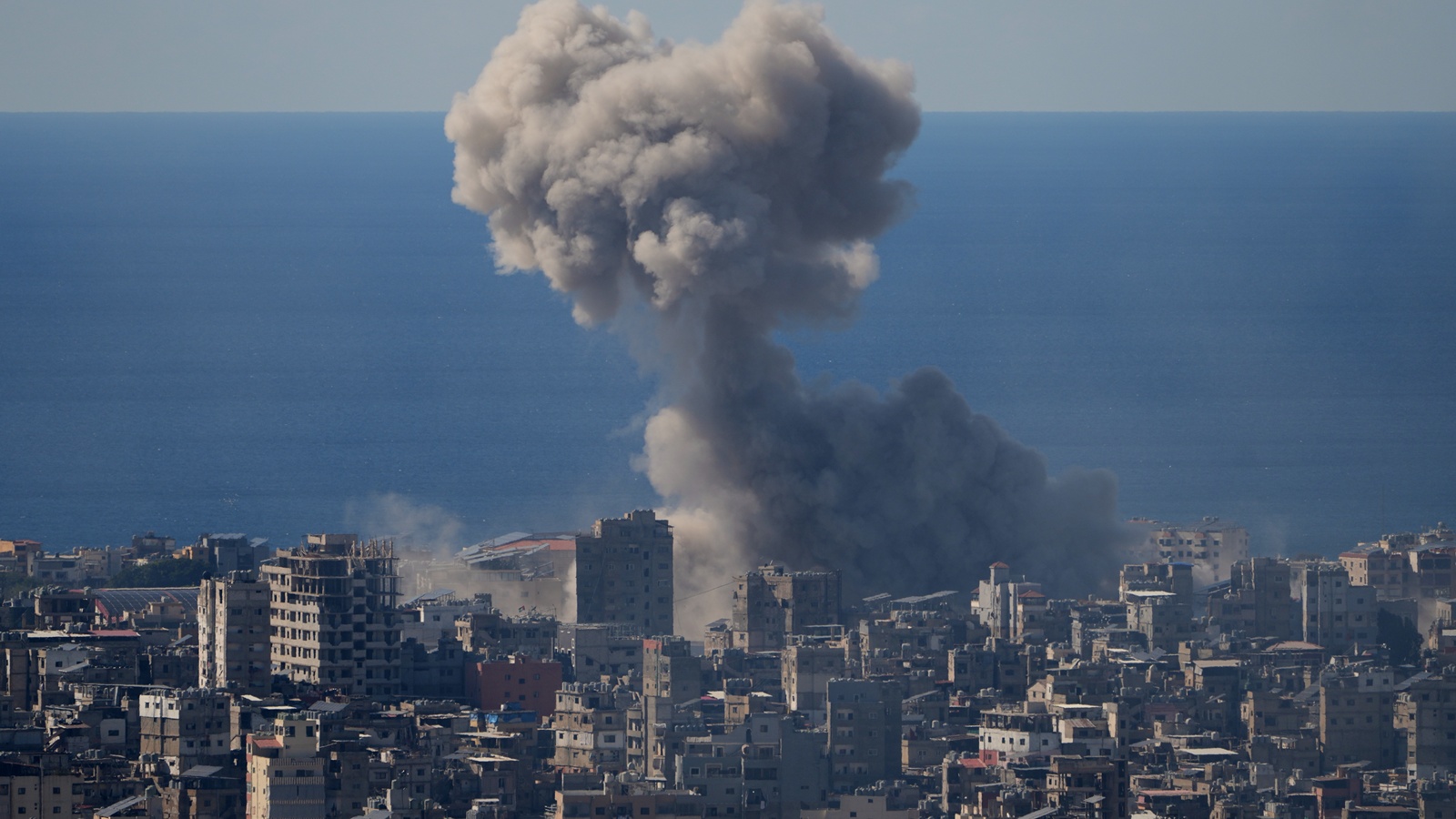
The claims by Iran’s Islamic Revolutionary Guard Corps (IRGC) that Operation Nasr-2 destroyed multiple US fighter jets and aerial refueling tankers in Jordan represent a calculated exercise in asymmetric signaling rather than a verified tactical success. State-level adversaries operating under severe conventional military disadvantages must continuously bridge the gap between physical capability and strategic deterrence. When the IRGC deploys waves of ballistic missiles and loitering munitions against highly defended logistical hubs like Muwaffaq Salti Air Base in Jordan, the primary metric of performance is not merely the immediate blast radius, but the systemic strain imposed on regional air defense architectures and the political cost inflicted on host nations.
Evaluating these developments requires looking past unverified state media claims and focusing on the rigid mechanical and economic constraints governing modern theatre electronic warfare, missile interception dynamics, and air superiority infrastructure.
The Strategic Asymmetry Matrix
To evaluate the operational logic behind the IRGC's regional bombardment, the engagement must be broken down into three distinct structural pillars:
- Logistical Chokepoint Targeting: Rather than engaging US air assets in the air, the adversary targets the terrestrial vulnerabilities that sustain them—specifically, aerial refueling platforms and fixed staging infrastructure.
- Cost-Imposition Mechanics: Forcing the deployment of multi-million-dollar air defense interceptors against mass-produced, low-cost precision-guided munitions to alter the economic sustainability of long-term deployment.
- Host-Nation Deterrence: Raising the domestic political and security costs for regional actors, such as Jordan, Kuwait, and Qatar, that provide territorial basing rights to Western forces.
The IRGC's focus on aerial refueling tankers in Jordan highlights a sophisticated understanding of Western operational limits. High-value airborne assets represent the structural backbone of regional power projection. A standard combat patrol radius for a fourth- or fifth-generation fighter jet relies strictly on regular mid-air refueling intervals. By focusing strikes on infrastructure holding these force-multiplying assets, the adversary attempts to compress the operational reach of the US Air Force without ever initiating air-to-air combat.
The Interception Bottleneck: Kinematics vs. Mass
Jordan's military reported the successful interception of three ballistic missiles over its territory during the opening waves of the attack. This highlights the complex physical constraints of integrated air defense systems (IADS). Modern missile defense relies on a kinetic calculus where interceptors must achieve definitive hit-to-kill accuracy against targets moving at hypersonic terminal velocities.
The structural limitation of any IADS is defined by its radar tracking capacity and fire-control saturation limits. An attacker seeks to exceed these limits using a specific mathematical function:
$$S = \frac{M + D}{I_c}$$
Where $S$ represents the saturation index, $M$ is the number of incoming ballistic missiles, $D$ is the volume of low-radar-cross-section loitering munitions (drones), and $I_c$ is the concurrent tracking and engagement capacity of the defending battery's radar system.
When $S > 1$, the air defense system experiences a tracking bottleneck, allowing subsequent waves of munitions to pass through cleanly. The IRGC’s deployment of a mixed, two-wave attack using both ballistic missiles and low-altitude drones is specifically engineered to force this state of saturation. Drones act as low-cost radar distractors, drawing fire-control focus and depleting interceptor stockpiles, while fast-moving ballistic missiles leverage their terminal velocity to strike high-value fixed coordinates before the system can reset its engagement cycle.
The Host-Nation Vulnerability Equation
The geographic distribution of the strikes—spanning Jordan, Kuwait, Bahrain, and the edges of Qatar—reveals an intentional shift toward targeting the broader logistical network. This expands the conflict from a direct bilateral clash between Washington and Tehran into a multi-theater security dilemma for the host nations.
| Staging Geography | Reported Target Vector | Strategic Subtext |
|---|---|---|
| Jordan | Staging Air Base / Tanker Fleets | Testing domestic political stability and forcing regional IADS to deplete long-range interceptors. |
| Kuwait | Land Logistics / HIMARS Facilities | Disrupting heavy ground-combat supply lines and regional command outposts. |
| Syria (Al-Tanf) | Forward Special Operations Hub | Striking advanced intelligence, surveillance, and reconnaissance (ISR) screening outposts. |
This regional targeting strategy aims to exploit the friction between Western military operations and host-nation domestic security. By targeting critical local infrastructure, such as desalination plants and civilian energy grids in nearby states, the adversary demonstrates that hosting Western power projection comes with direct economic and infrastructural risks to the host nation's homeland.
Technical Limitations of Information Operations
The lack of independent validation or visual confirmation of destroyed F-15, F-16, or F-35 airframes indicates that the IRGC's public narrative is heavily optimized for domestic and regional consumption. In contemporary asymmetric warfare, the information space operates under its own laws of escalation. Asserting a highly damaging strike against premium Western military hardware provides a quick propaganda victory to answer overnight infrastructure losses inside Iran, regardless of the actual damage on the ground.
However, the structural risk of this information strategy is high. If satellite imagery subsequently reveals zero structural damage to the target hangars and runways, the deterrence value of the strike decreases. The adversary must then choose between accepting a weakened bargaining position or launching even larger, more dangerous salvos to achieve undeniable physical results.
The immediate tactical requirement for Western forces is to shift from a reactive air-defense posture to an active, distributed footprint. Relying on centralized mega-bases within range of dense adversary missile inventories creates a single point of failure. Mitigating this vulnerability requires implementing Agile Combat Employment (ACE) protocols: decentralizing aircraft across smaller, austere airstrips, rapidly dispersing logistics networks, and deploying mobile, point-defense systems to disrupt the precise targeting calculations of incoming precision-guided munitions.