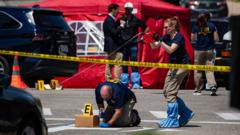
The immediate nationwide suspension of non-urgent vehicle interventions by U.S. Immigration and Customs Enforcement (ICE) exposes a profound tactical vulnerability in civil administrative enforcement: the structural failure of low-visibility mobile stops when applied to non-criminal targets. On July 14, 2026, ICE Enforcement and Removal Operations (ERO) issued an emergency directive halting vehicle stops following two fatal officer-involved shootings within a nine-day window—one involving Lorenzo Salgado Araujo in Houston, Texas, and the other involving Joan Sebastian Guerrero in Biddeford, Maine. This policy shift is not merely a reactionary compliance measure; it is an operational admission that mobile vehicle stops represent a high-friction, low-information environment that inherently elevates kinetic risk while yielding diminished strategic returns.
To understand why ICE headquarters halted this specific operational mechanism, the problem must be evaluated through a clear dual-risk calculus: the compression of tactical decision-making windows during vehicle stops versus the informational deficit inherent in civil immigration surveillance.
The Mechanics of Kinetic Escalation in Civil Enforcement
Vehicle stops conducted by civil administrative authorities differ fundamentally from routine traffic stops executed by municipal police. Municipal stops are generally initiated based on observed traffic violations, maintaining an overt law enforcement posture. Conversely, ICE ERO mobile operations frequently rely on administrative warrants rather than judicial warrants, using unmarked vehicles and plainclothes or low-visibility tactical gear to surprise targets away from fixed environments like residences or workplaces.
This operational design introduces a severe structural bottleneck:
- Informational Asymmetry: In both the Houston and Maine incidents, the individuals fatally shot were not the actual subjects of the immigration investigations. They were collateral occupants or resembled the targets. This confirms that the pre-intervention surveillance phase failed to establish positive biometric or biographical identification before the execution phase began.
- Tactical Compression: When an unmarked law enforcement asset blocks or intercepts a moving vehicle, the driver lacks the immediate contextual cues of a standard police interaction. If the driver attempts to evade what they perceive as an ambiguous threat, the vehicle is converted into a kinetic weapon.
- The Reactionary Loop: Once a driver accelerates or maneuvers defensively, the tactical window closes. ERO officers, operating under a perceived threat to public safety or imminent physical danger, transition rapidly up the force continuum to lethal force, firing into the departing vehicle.
This sequence reveals a flawed cost function. The operational objective—apprehending a target with a civil final order of removal—carries a low threat profile. However, the execution mechanism (the vehicle block) artificially introduces a high-threat scenario, creating an unsustainable risk asymmetry where civil enforcement regularly escalates into lethal kinetic outcomes.
The Technological Transparency Gap
The systemic vulnerability of these operations is exacerbated by a severe technological deficit. The Department of Homeland Security (DHS) confirmed that the ERO officers involved in the recent fatal interventions were not equipped with body-worn cameras. The absence of synchronized audio-visual recording devices strips operations of objective empirical data, creating an immediate accountability vacuum that fractures institutional trust and invites local judicial interference.
Without objective telemetry or video logs, investigations must rely entirely on conflicting subjective accounts:
[Target Surveillance] ➔ [Low-Visibility Vehicle Block] ➔ [Driver Evasion/Panic] ➔ [Kinetic Escalation / Lethal Force]
                                                                                      │
                                                                           (No Body-Worn Camera Data)
                                                                                      │
                                                             ┌────────────────────────┴────────────────────────┐
                                                             ▼                                                 ▼
                                              [Official Narrative: Self-Defense]               [Witness Account: Unprovoked Action]
This lack of structural transparency forces local jurisdictions to intervene. For example, the Harris County District Attorney’s Office initiated an independent civilian investigation into the Houston incident, bypassing federal narratives. When local prosecutors and state entities begin independently auditing federal law enforcement actions due to an absence of internal digital evidence, the federal agency loses operational autonomy. The nationwide pause on vehicle stops is an operational necessity to prevent further legal and political challenges that could compromise the broader mass deportation framework.
Operational Redesign and the Shift to Static Interventions
The temporary cessation of mobile vehicle stops forces ICE ERO to shift its resource allocation from dynamic, high-risk environments back to static, high-certainty environments. While vehicle stops allowed agents to intercept individuals in transit—reducing the legal and physical barriers associated with residential entries—they suffer from compressed decision windows.
The operational matrix shifts as follows:
- Static Residential Surrounds: High environmental control, long decision windows, low kinetic escalation risk, but higher legal thresholds (requiring consent or specific warrant conditions for entry).
- Workplace Interceptions: Moderate environmental control, structured exit points, higher political exposure, but lower rates of sudden kinetic flight compared to motorized vehicles.
- Task Force Reliance: Outsourcing mobile vehicle stops exclusively to state or local partner agencies executing explicit judicial criminal warrants, offloading the civil liability from federal administrative officers.
The directive mandates that ERO personnel undergo immediate remediation training focused on de-escalation, vehicle containment tactics, and precision threat assessment. However, tactical training cannot completely mitigate the physical reality that a moving automobile represents an un-containable variable unless pinned by heavy tactical machinery.
The Long-Term Strategic Forecast
The ERO restriction will cause an immediate bottleneck in the throughput of the administration's mass deportation campaign. Federal statistics indicate that ICE executed over 10,000 administrative arrests within a single five-day period in June 2026. Maintaining this operational cadence requires highly efficient, rapid interception methods. By eliminating non-urgent vehicle stops, the agency is stripped of its primary tool for capturing mobile targets who avoid known residential addresses.
Consequently, ICE will likely pivot heavily toward digital and financial surveillance to force targets into static locations. Expect increased reliance on automated license plate readers (ALPRs), geolocation tracking partnerships with commercial data brokers, and financial asset freezes to compel self-reporting or anchor targets to predictable, non-vehicular environments.
The strategic play for ICE leadership is clear: the agency must permanently restrict low-visibility mobile vehicle stops for civil administrative targets. The risk profile is structurally unmanageable, the cost in institutional capital is too high, and the lack of body-worn camera deployment ensures that every anomalous outcome results in an operational crisis. Future ERO playbooks must mandate that if a target cannot be positively identified and contained in a static environment, the intervention must be aborted in favor of sustained electronic surveillance.