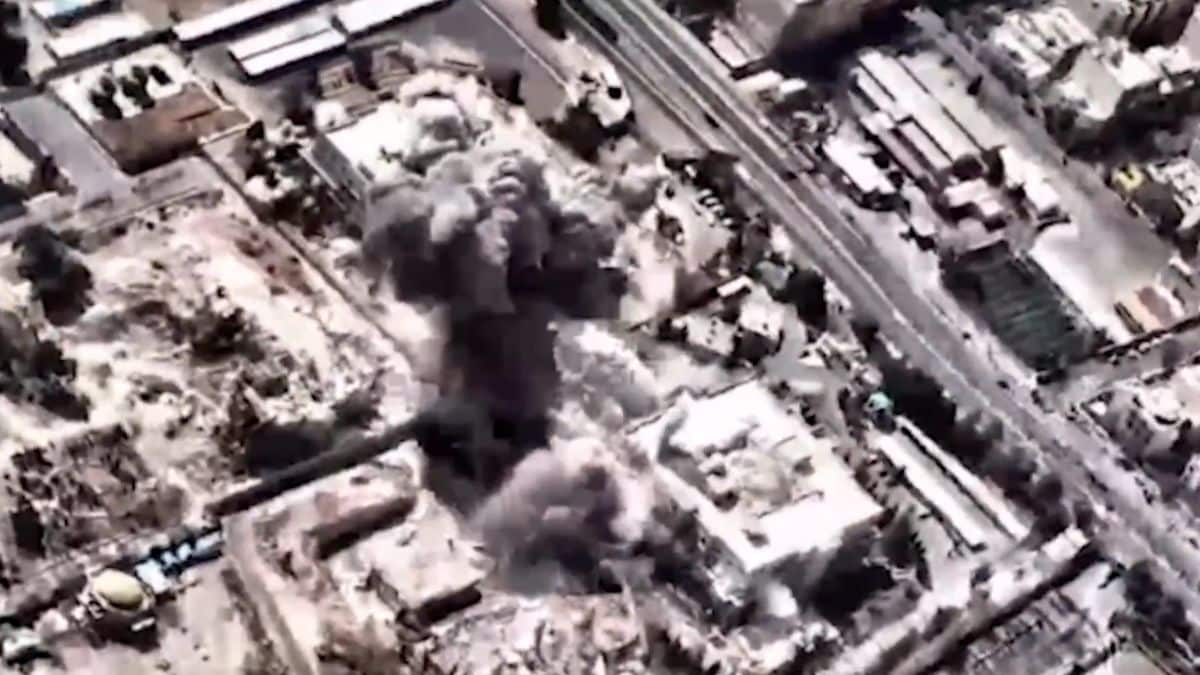
The death of three U.S. service members and the wounding of dozens more at a remote logistics node known as Tower 22 represents a structural failure in the existing deterrence architecture of the Middle East. While tactical reports focus on the immediate casualty counts, the strategic significance lies in the breach of a previously established threshold of violence. This event shifts the operational environment from a "gray zone" conflict—characterized by deniable, low-impact harassment—into a direct, high-consequence kinetic exchange. The underlying logic suggests that the previous model of calibrated responses failed to account for the increasing technical proficiency of regional proxy networks and the diminishing returns of static defensive postures.
The Triad of Vulnerability: Geography, Intent, and Capability
The strike at Tower 22 can be deconstructed through three distinct operational variables that, when aligned, created a window for a high-fatality event.
1. Geographic Ambiguity
Tower 22 sits at a critical tri-border intersection between Jordan, Syria, and Iraq. While officially on Jordanian soil, its proximity to the Al-Tanf garrison in Syria makes it a vital node for resupply and intelligence. This location creates a "seam" in regional air defense coordination. Adversaries exploit these seams by launching munitions that traverse multiple sovereign airspaces, complicating the rules of engagement (ROE) for interceptor batteries that must distinguish between routine regional traffic and incoming threats.
2. The Saturation of Precision
Previous assessments of militia capabilities often categorized their rocket and drone inventory as "harassment-grade"—imprecise and easily intercepted. The Tower 22 strike demonstrates a transition to "precision-grade" loitering munitions. When a low-cost, mass-produced drone achieves a direct hit on living quarters, the cost-exchange ratio shifts drastically in favor of the attacker. A $20,000 drone damaging a multi-million dollar facility and inflicting human capital losses creates an asymmetrical advantage that current U.S. defensive expenditures struggle to match.
3. Detection Fatigue and the False Positive Trap
Reports indicate that the attacking drone may have been confused with a returning U.S. surveillance craft. This identifies a critical flaw in the Identification Friend or Foe (IFF) protocols at small, remote outposts. In a high-tempo environment where drones are constantly launched for both offensive and defensive purposes, the cognitive load on sensor operators leads to "detection fatigue." The adversary utilized a "shadowing" tactic—timing their strike to coincide with friendly movements—thereby neutralizing superior electronic warfare (EW) capabilities through simple temporal synchronization.
The Attrition Logic of the "Gray Zone"
State-sponsored proxies operate on a logic of incrementalism. By keeping the intensity of attacks just below the threshold that would trigger a full-scale conventional war, they force the United States into a perpetual state of "active defense." This strategy aims to achieve three specific outcomes:
- Political Exhaustion: Forcing a domestic debate within the U.S. regarding the cost-benefit analysis of maintaining small, isolated garrisons.
- Resource Diversion: Compelling the Pentagon to deploy sophisticated air defense systems (like Patriot batteries or C-RAM) to peripheral sites, thereby thinning the assets available for high-priority theaters like the Indo-Pacific.
- Intelligence Mapping: Each "failed" or intercepted attack provides the adversary with data on radar coverage, response times, and frequency usage of U.S. EW suites.
The Tower 22 incident confirms that the "gray zone" has reached a saturation point. When a proxy group achieves a mass-casualty event, the deniability typically afforded to the state sponsor vanishes under the weight of political necessity for a "proportional" response. However, proportionality is a flawed metric in asymmetrical warfare. A proportional response—striking a warehouse or an empty command center—merely resets the clock for the next escalation.
Structural Failures in the Deterrence Model
The current U.S. strategy relies on a "tit-for-tat" kinetic model. This framework assumes that the adversary is a rational actor seeking to avoid escalation. That assumption ignores the ideological and strategic imperatives of the groups involved, who view regional hegemony as a zero-sum game.
The Defensive Paradox
The more a site like Tower 22 is hardened, the more it becomes a high-value target for a sophisticated strike. Investing in passive defense (concrete barriers, bunkers) without a corresponding shift in offensive doctrine creates a "fortress mentality" that cedes the initiative to the attacker. The adversary chooses the time, the method, and the scale of the engagement, while the defender remains in a reactive loop.
The Problem of Proxy Deniability
The United States faces a categorization challenge. Attributing the strike to a specific group, such as Kata'ib Hezbollah or the Islamic Resistance in Iraq, allows the primary state sponsor to remain technically unengaged. This creates a diplomatic bottleneck where the U.S. is expected to retaliate against the "hand" while ignoring the "brain" directing it. Until the cost of proxy actions is felt directly by the sponsor's primary economic or military assets, the incentive structure for de-escalation remains non-existent.
Operational Implications for Regional Logistics
Tower 22 is not an isolated outpost; it is a vital component of the "Line of Communication" (LOC) that prevents the consolidation of a contiguous land bridge from Tehran to the Mediterranean. If the U.S. scales back these small footprints due to the threat of loitering munitions, it results in a strategic vacuum.
- Intelligence Degradation: Small outposts provide human and signals intelligence that cannot be replicated by satellites.
- Partner Friction: A withdrawal or significant drawdown signaled by a successful strike undermines the confidence of regional allies (Jordan, Saudi Arabia, UAE) in the U.S. security umbrella.
- Increased Transit Costs: Shifting logistics to more "secure" but distant routes increases the operational tempo and maintenance requirements for aerial resupply, which is significantly more expensive than ground-based logistics.
The Calculus of Retaliation: Three Strategic Paths
The U.S. response will likely fall into one of three categories, each with its own risk-reward profile and strategic outcome.
1. The Limited Proportional Strike
Targeting the specific group responsible for the Tower 22 attack with precision munitions.
- Outcome: Low risk of regional war; high risk of continued harassment as the primary sponsor remains unscathed.
- Strategic Grade: C- (Status Quo Maintenance)
2. The Infrastructure Displacement Strike
Targeting IRGC-linked assets outside of Iran, such as warehouses, training camps, or commanders within Syria and Iraq.
- Outcome: Moderate risk of escalation; sends a clearer signal to the state sponsor; disrupts the logistics of future attacks.
- Strategic Grade: B (Tactical Reset)
3. The Decisive Strategic Strike
Directly targeting the source of the munitions or the command and control nodes within the sponsor's primary territory.
- Outcome: High risk of a regional conflict; maximum deterrence value; demonstrates a willingness to break the proxy-war cycle.
- Strategic Grade: A/F (High-Stakes Gambler's Play)
The United States has historically preferred the "Tactical Reset" (Path 2). This path acknowledges the need for accountability while attempting to keep the conflict contained. However, the effectiveness of this strategy is contingent upon the adversary's willingness to be deterred. If the adversary views a "proportional" response as a sign of weakness—a lack of political will for a broader conflict—the deterrent value evaporates.
Definitive Strategic Projection
The Tower 22 strike marks the obsolescence of the current Middle Eastern deterrence model. The U.S. is no longer facing a disorganized militia but a synchronized, technically capable adversary utilizing a modular warfare strategy. The strategic recommendation is not a simple retaliation but a fundamental re-architecture of regional presence. This must include:
- Automated Point-Defense Integration: Every remote outpost, regardless of size, must be equipped with active-kill air defense systems (e.g., laser-based or high-frequency EW) that operate with minimal human latency.
- The End of Proxy Immunity: The U.S. must publicly and operationally redefine any strike by a proxy that results in American fatalities as an act of war by the state sponsor. This removes the "gray zone" advantage.
- Mobile-Only Logistics: Transitioning away from fixed, vulnerable outposts like Tower 22 in favor of mobile, high-readiness task forces that can provide the same intelligence and logistical support without being static targets.
The failure at Tower 22 was not just a defensive lapse; it was a failure of the strategic imagination to keep pace with the democratization of precision-strike technology. The next phase of the conflict will be defined by whether the U.S. adapts its footprint to this new reality or continues to provide stationary targets for a mobile and evolving threat.