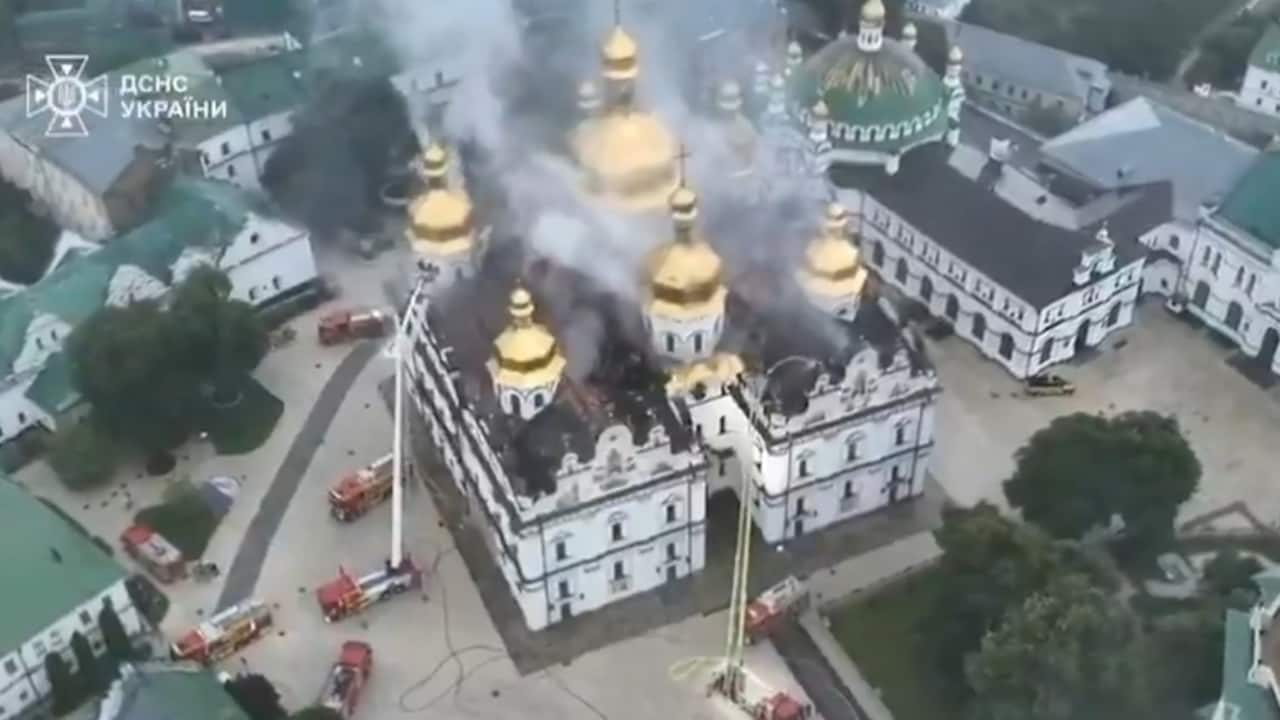
War destroys people first. It also destroys the soul of a nation's history. When military strikes hit the Kyiv Pechersk Lavra, the damage reached far beyond broken brick and shattered glass. This 1,000-year-old monastery complex, also known as the Kyiv Monastery of the Caves, is a cornerstone of Eastern Orthodox Christianity and a UNESCO World Heritage site.
The strikes on Kyiv damaged structures within this historic landmark. The fires that broke out inside the complex underscore a grim reality of modern warfare. Cultural treasures face systemic destruction. This isn't just about Ukraine losing its history. It's a direct hit to global cultural heritage. For another view, check out: this related article.
Understanding the gravity of this event requires looking past the immediate battlefield reports. You need to look at what this site represents to the world.
The Architectural and Spiritual Identity of the Caves Monastery
Founded in 1051 by the monks Anthony and Theodosius, the Kyiv Pechersk Lavra holds a central position in Slavic history. It served as a massive spiritual and cultural hub for centuries. The complex spans over twenty hectares of hills overlooking the Dnipro River. Similar coverage on this matter has been provided by BBC News.
The site splits into two main sections: the Upper Lavra and the Lower Lavra.
The Upper Lavra belongs to the state and features museums, historic churches, and print shops. The Lower Lavra contains the famous narrow caves. These underground labyrinths stretch for hundreds of meters. They house the naturally mummified remains of saints, monks, and historical figures like Nestor the Chronicler.
Architecturally, the monastery showcases Ukrainian Baroque style. The Great Lavra Bell Tower dominates the Kyiv skyline at 96.5 meters high. The Dormition Cathedral, rebuilt after its destruction during World War II, stands as a triumph of historical restoration.
Fires and structural shockwaves from missile strikes threaten these fragile foundations. The ancient brickwork and gold-leaf domes cannot easily withstand the vibrations of nearby detonations. When a historic site burns, we lose original materials that can never truly be replaced.
International Law and the Targeting of Cultural Heritage
Targeting or failing to protect recognized cultural property during armed conflict isn't just tragic. It breaches international law.
The 1954 Hague Convention for the Protection of Cultural Property in the Event of Armed Conflict explicitly forbids using these sites for military purposes or targeting them for destruction. Both Ukraine and Russia signed this treaty.
UNESCO continuously monitors the status of Ukrainian cultural sites using satellite imagery and on-the-ground experts. The organization has verified damage to hundreds of cultural sites since the conflict escalated. These include museums, libraries, religious buildings, and historic monuments.
The international community uses specific legal frameworks to document these incidents:
- The 1954 Hague Convention protects cultural property during war.
- The 1972 World Heritage Convention identifies and preserves globally significant sites.
- The Rome Statute of the International Criminal Court classifies intentional attacks against historical monuments as war crimes.
Documenting the damage at the Kyiv Pechersk Lavra helps international bodies build a legal record. Independent experts gather photographic evidence, analyze structural stability, and catalog ruined artifacts. This work ensures accountability under international law when the conflict eventually ends.
The Long Road to Preservation and Rebuilding
Fixing a bombed grocery store takes months. Restoring a 1,000-year-old monastery takes decades.
Preservation experts face massive challenges when dealing with wartime damage. You can't just slap fresh mortar on an ancient wall. Conservators must source historically accurate materials. They must use traditional construction techniques to maintain the site's architectural integrity.
The presence of the underground caves complicates matters further. The network of tunnels relies on a delicate balance of temperature, humidity, and structural pressure. Heavy explosions nearby risk triggering cave-ins. This could seal off irreplaceable historical chambers forever. Changes in soil stability can alter moisture levels, accelerating the decay of the mummified remains.
International organizations have mobilized to support Ukrainian cultural workers. Groups like the Smithsonian Cultural Rescue Initiative and the International Centre for the Study of the Preservation and Restoration of Cultural Property provide tracking, packing materials, and emergency conservation supplies.
If you want to support the preservation of global heritage, follow the work of verified international conservation funds. Educate others on the legal protections given to cultural zones during wartime. Demanding strict adherence to international heritage treaties remains our best tool for safeguarding history from modern weapons.