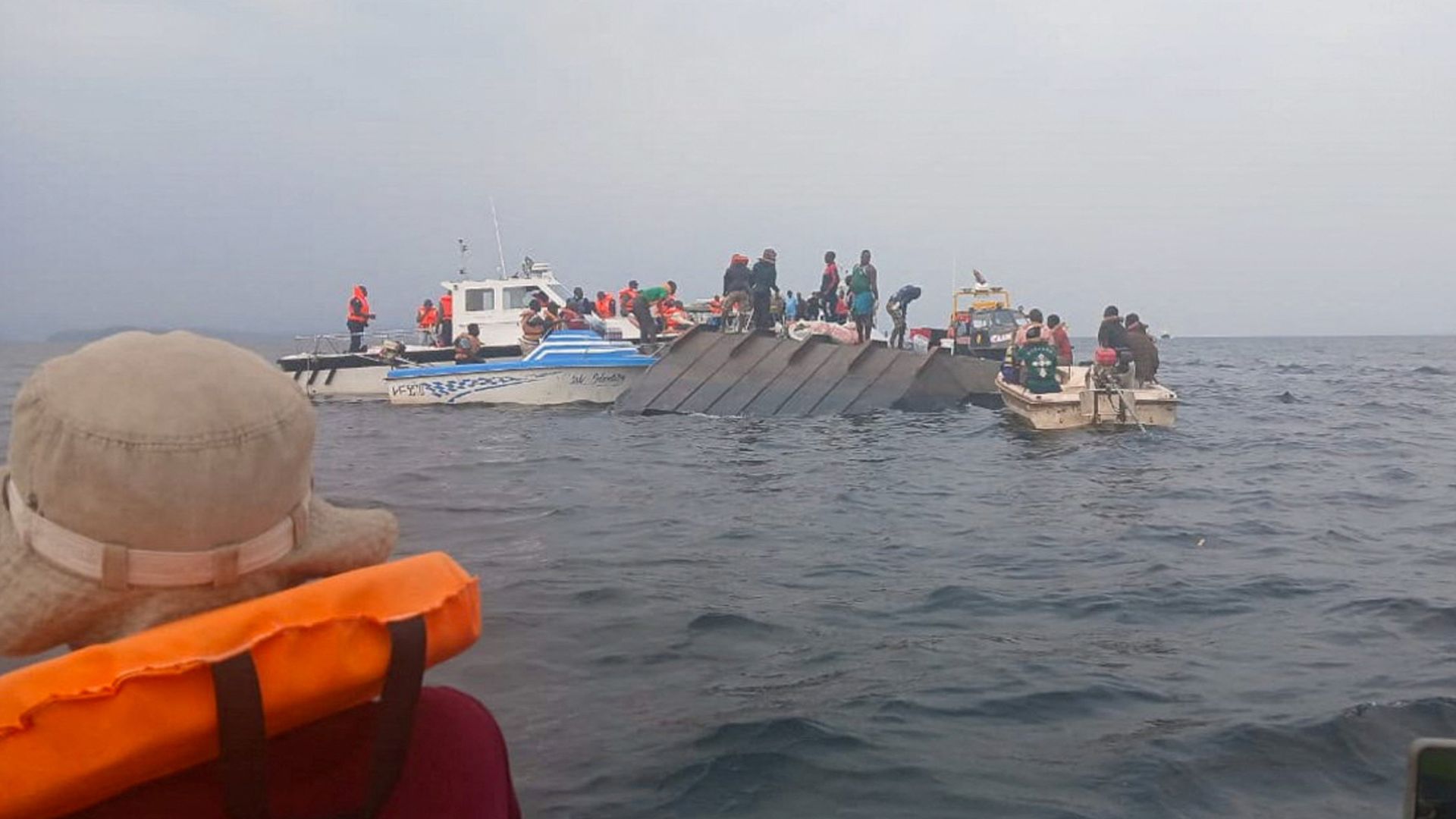
The Grim Toll on the Water
The body count keeps climbing. Seventy-two dead. More still missing in the murky expanse of an artificial sea that has long served as a lifeline and a graveyard for the region.
When a passenger vessel capsizes or sinks in inland African waters, the initial reports focus on the immediate horror: the frantic search operations, the grieving families huddled on muddy banks, the official promises of accountability. Then the news cycle shifts. The rescue boats pull back. The families are left to bury their dead in quiet desperation.
This is not an accident of nature. It is the predictable outcome of systemic neglect, regulatory failure, and a pervasive culture of impunity that treats human cargo as an afterthought. Lake Kariba, one of the largest man-made reservoirs on earth, has become a silent witness to a maritime disaster that demands a rigorous investigation into why vessels continue to operate outside basic safety parameters.
The ferry disaster in Zimbabwe is more than a local tragedy. It is an indictment of regional oversight bodies, operators who cut corners to maximize profit, and governments that react to crises with temporary shock rather than permanent structural reform.
Anatomy of a Catastrophe
Understanding how seventy-two lives were lost requires looking past the immediate weather conditions or sudden squalls often blamed by authorities. Weather on Lake Kariba can change rapidly. Sudden high winds churn up violent swells that can overwhelm a poorly designed craft in minutes.
Yet, weather is only the trigger. The loaded gun is decades of deferred maintenance and absent enforcement.
Maritime safety experts point to a recurring set of vulnerabilities in inland water transport across southern Africa. Overloading remains the primary killer. Operators face immense economic pressure in a depressed local economy. To turn a profit on a low-margin passenger route, they cram wooden and steel hulls far beyond their certified weight limits. Life jackets are rarely present in sufficient quantities, and those that exist are often locked away, rotted, or purely decorative.
Manifests are routinely ignored. No one knows precisely how many souls are on board until the manifest floats away in the wreckage.
The Regulatory Void
Inspectors stationed at regional ports often lack the resources, the training, or the institutional backing to ground unseaworthy vessels. Corruption greases the wheels of commerce. A modest bribe to a harbor master can turn a blind eye to missing safety equipment, expired certifications, or blatant over-passenger counts.
When oversight agencies are toothless, safety protocols become suggestions.
The consequences of this regulatory vacuum are borne entirely by the working-class commuters, traders, and school children who rely on these ferries to cross vast stretches of water where alternative land routes are either non-existent or prohibitively expensive. They have no other choice. They board vessels knowing the risks because staying ashore means economic starvation.
Historical Echoes on Inland Waters
Maritime history is littered with warnings that go unheeded until a body count forces the issue.
Think of the MV Bukoba disaster on Lake Victoria, where hundreds perished due to severe overloading and corporate negligence. Think of the endless string of ferry sinkings in Bangladesh, the Philippines, and across the waterways of Central Africa. The narrative arc is identical every single time.
- A vessel departs overloaded and under-regulated.
- A routine hazard or minor mechanical failure escalates into a crisis.
- The vessel sinks due to a lack of watertight compartment integrity or ballast failure.
- Emergency response is delayed due to poor infrastructure and distant rescue assets.
- High-ranking officials express profound shock and order an immediate inquiry.
- Recommendations are drafted, filed away, and forgotten until the next disaster.
This cycle of grief and amnesia shields negligent operators and corrupt officials from enduring consequences. Investigations rarely result in criminal prosecutions that target the boardrooms and administrative offices where decisions to bypass safety are actually made. Instead, the blame falls neatly on the low-level captain—often a victim of the wreck himself—who had to choose between losing his livelihood or piloting an unsafe boat.
The Economic Trap of Informal Transit
To fix the crisis on Lake Kariba, one must confront the brutal economics driving it.
Formal, highly regulated maritime transport is capital intensive. Modern ferries equipped with reliable diesel engines, modern radar, certified life rafts, and trained crews require significant upfront investment and ongoing maintenance budgets. In markets where consumers have negligible disposable income, ticket prices cannot cover those operational costs without substantial government subsidization or strict public-private partnerships.
Without state support or rigorous enforcement, a dangerous race to the bottom ensues.
Unregulated operators step in with cheap, aging hulls purchased second-hand from foreign markets, stripped of their original safety certifications, and pressed into service with minimal structural modifications. They undercut any operator trying to do things the right way. Passengers, caught in a vise of poverty, vote with their meager wallets and board the cheaper, deadlier vessel.
This creates a perverse market incentive where safety is actively penalized because it costs money, while recklessness is rewarded with higher short-term margins.
Breaking the Cycle of Neglect
Addressing the root causes of the Zimbabwe ferry disaster requires an uncompromising overhaul of inland waterways management.
First, the oversight bodies must be stripped of political interference. Port authorities need independent funding streams and direct accountability to national legislatures rather than ministries that prioritize tourism optics over worker safety. Inspectors must possess the legal authority and physical backing to impound any vessel violating weight limits or safety equipment mandates, permanently.
Second, mandatory tracking and digital ticketing systems must replace paper manifests. When a vessel leaves a dock, its exact passenger count and identity data should be logged in a centralized, cloud-based system accessible to emergency services.
Third, governments must invest in regional search and rescue infrastructure. Currently, when a boat goes down on a massive inland lake, response times are measured in days rather than minutes. Specialized dive teams, fast-response patrol boats, and modern sonar equipment should be permanently stationed at high-risk transit hubs.
Finally, criminal liability laws must be rewritten to pierce the corporate veil. Owners, shareholders, and directors who knowingly dispatch unseaworthy vessels to sea should face mandatory prison sentences for criminal negligence resulting in death. Only when the boardrooms feel the terror of the law will the docks feel the presence of safety.
The seventy-two victims of the Lake Kariba disaster deserve more than a moment of national mourning and a dusty commission report. They deserve an absolute refusal to let the waters close over this tragedy without leaving behind a transformed system that makes such slaughter impossible.