The smell of stale instant coffee and damp wool coats used to hang in the stairwell of a narrow building on Potapovsky Lane in central Moscow, a scent that clung to your sweater long after you stepped back out into the freezing slush.
For thirty-three years, that stairwell was an artery. Feet pounded up those worn stone steps carrying flash drives, court transcripts, bruised notebooks, and the kind of whispered secrets that make powerful men lose sleep. If you walked past the heavy wooden doors on the upper floors at two in the afternoon, you heard the rhythmic, percussive clatter of mechanical keyboards, the sharp bark of an editor arguing over a comma, and the low, tired hum of people who believed that putting the right words in the right order could still stop a tank. Read more on a connected topic: this related article.
Then, the doors locked.
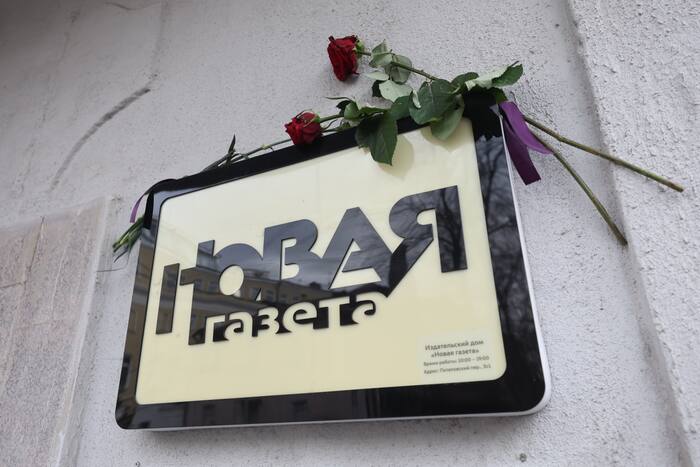
Novaya Gazeta—the last major independent newspaper left standing inside Russia—closed its physical Moscow office, citing relentless official pressure, suffocating state censorship, and the sheer impossibility of keeping its staff out of prison while operating on home soil. More reporting by Al Jazeera delves into comparable perspectives on the subject.
Silence.
To an outsider scrolling through headlines over morning toast in London or New York, a newspaper closing its doors sounds like an obituary for an institution, sad in an abstract, museum-piece sort of way. You read the wire copy. You nod sympathetically. You move on to the weather forecast.
You do not hear the sound of a packing tape gun ripping across a cardboard box in a room where six journalists were murdered for doing their jobs.
The Architecture of a Slow Suffocation
Consider a hypothetical young reporter—let’s call her Elena—sitting at a chipped laminate desk in that Moscow newsroom during its final weeks.
Elena isn't a cinematic hero in a trench coat; she is twenty-six, her lower back aches from a cheap swivel chair, and she spends half her morning checking whether her banking app still works. When she drafts a sentence about military logistics or local hospital shortages, she isn't thinking about Pulitzer Prizes or historical legacy. She is doing mental gymnastics around a criminal code rewritten overnight to turn basic nouns into felonies.
Write the word "war," and you face fifteen years in a penal colony. Quote a grieving mother whose son didn't return from the front, and you are accused of "discrediting the armed forces." Even leaving a blank space on the front page—a desperate, silent protest against censorship—draws the cold, methodical gaze of Roskomnadzor, the state media regulator that acts less like a censor and more like a boa constrictor, tightening a fraction of an inch every time the prey exhales.
People often ask why independent outlets didn't simply ignore the warnings and keep printing until the police kicked the doors down. That question misunderstands how modern authoritarianism works. It rarely arrives with dramatic midnight raids and smashed printing presses anymore; it arrives with tax audits, revoked broadcasting licenses, frozen personal bank accounts, and eviction notices from terrified landlords who suddenly refuse to renew a lease they’ve held since the 1990s.
Think of a newsroom not as a factory that spits out paper, but as an immune system for a society. When a country has a functioning press, corruption and state violence trigger an immediate fever—investigations, public outrage, court challenges, resignations. Shutting down a paper like Novaya Gazeta doesn't just stop people from reading the news; it disables the body's ability to feel pain while an infection spreads unchecked.
Ghosts in the Corridor
You cannot understand the weight of those locked doors on Potapovsky Lane without understanding who walked through them before they closed.
Founded in 1993 with money from Mikhail Gorbachev’s Nobel Peace Prize—a detail that now feels like a transmission from an alternate universe—Novaya Gazeta was born in the chaotic, intoxicating dawn of post-Soviet freedom. Back then, the air in Moscow tasted like cheap cigarettes and limitless possibility. Journalists believed they were building the fourth estate from scratch.
Instead, they built a memorial wall.
Over three decades, six of the paper’s journalists and contributors were killed in connection with their work. Anna Politkovskaya, who documented the brutalities of the Second Chechen War with unblinking, granular precision, was shot dead in the elevator of her Moscow apartment building in October 2006. Yuri Shchekochikhin, an investigative deputy editor digging into high-level corruption, died in 2003 from a sudden, mysterious illness that medical experts suspected was poisoning. Anastasia Baburova, a twenty-five-year-old freelance reporter, was gunned down on a Moscow street alongside human rights lawyer Stanislav Markelov in 2009.
Their portraits hung on the walls of that office.
When Dmitry Muratov, the newspaper's longtime editor-in-chief, accepted the Nobel Peace Prize in Oslo in 2021, he dedicated it to those six dead colleagues. He stood on a gilded stage in Norway, speaking with a gravelly, chain-smoker’s cadence about the necessity of an antidote to tyranny, while back home, the state was already sharpening the knives to carve his newsroom apart.
I remember the feeling of walking into spaces like that in Moscow during the late 2010s—the strange, electric dissonance between the cozy domesticity of the rooms and the lethal stakes of the work. Someone would offer you lukewarm tea and a stale gingerbread cookie while sitting three feet away from a framed photograph of a colleague who had been assassinated for exposing a slush fund. You felt small in those rooms, almost embarrassed by your own ordinary worries, yet terrified by the quiet, stubborn refusal of the people around you to look away from the truth.
Why a Physical Room Matters
A common misconception in our hyper-connected era is that a physical office is an obsolete relic. Why couldn't Novaya Gazeta just pack up its laptops, scatter its staff across Riga, Berlin, and Vilnius, and keep publishing online?
In fact, much of its exiled team did launch Novaya Gazeta Europe from outside Russia's borders, keeping the reporting alive in digital exile. And inside Russia, the domestic outlet had already been forced to suspend its print and online operations under the weight of official warnings and license revocations.
Yet closing the physical office inside Moscow represents a profound, irreversible rupture—a severing of the umbilical cord between a reporter and the soil they cover.
Journalism is not data processing. You cannot smell the damp plaster of a crumbling provincial school from a café in Latvia. You cannot sit across a kitchen table in a Siberian mining town, hold the trembling hands of a grandmother trying to find her missing grandson, and earn the fragile, hard-won trust required for her to tell you what really happened—not over an encrypted messaging app that she is terrified the security services have tapped, not to a voice calling from a foreign country code, but face-to-face, breathing the same air.
When a newsroom loses its physical address inside the country it covers, it loses its gravitational pull. Whistleblowers no longer have a door to knock on. Sources with manila envelopes full of bank statements no longer have a neutral sanctuary where they can sit down without leaving a digital footprint on a state-controlled telecom network.
The state knows this. The Kremlin didn't just want the printing presses stopped; it wanted the physical coordinates erased from the map of Moscow. It wanted to ensure that any citizen looking for an independent institution in the capital would find only a locked door, a blank nameplate, and the quiet, suffocating certainty that they are entirely alone.
The Invisible Tax on Everyone Else
It is tempting to view the collapse of Russian independent media as a strictly regional tragedy, a dark chapter in a distant country's long, cyclical struggle with autocracy.
That is a dangerous illusion.
We live in an interconnected information ecosystem, and when truth-telling collapses inside a nuclear-armed superpower of more than one hundred and forty million people, the fallout does not stop at the border. Without independent reporters on the ground in Moscow, St. Petersburg, and the Russian provinces, the rest of the world loses its eyes and ears inside a closed black box.
Consider what happens next when no local journalists remain to verify casualty figures, track industrial mobilization, expose environmental disasters in the Arctic, or document public dissent. Foreign intelligence agencies are left guessing. Diplomats are forced to read tea leaves and state propaganda. Global markets react to rumors instead of verified reporting.
More importantly, the playbook perfected against Novaya Gazeta—using regulatory strangulation, weaponized defamation lawsuits, and "foreign agent" labels to bankrupt and exhaust independent journalism without firing a single bullet—is already being studied and copied by aspiring autocrats from Budapest to New Delhi, and even whispered about in the corners of Western democracies.
The death of a newspaper rarely announces itself with a bang. It happens quietly, one revoked permit, one frozen account, one locked door at a time, until one morning the public wakes up and realizes that everyone shouting on television sounds exactly the same, and nobody is left to ask who paid for the yacht, why the bridge collapsed, or where the missing boys went.
What Remains in the Dark
In the final days before the Moscow office was vacated, staffers packed up decades of archives—yellowing broadsheets from the 1990s, binders of court documents, faded photographs, and the heavy brass plaques that used to sit outside the door.
The desks were wiped down. The monitors were unplugged, their black screens reflecting the gray Moscow sky outside the windows. The portraits of Anna Politkovskaya and her five fallen colleagues were carefully wrapped in bubble wrap and carried down the stone stairs, past the spot where the scent of wet wool and cheap coffee used to linger.
Someone turned the key in the deadbolt, tested the handle once to make sure the latch had caught, and walked down the steps into the street, leaving an empty room where the light switch is flipped off, the radiators have gone cold, and the silence finally belongs to the state.