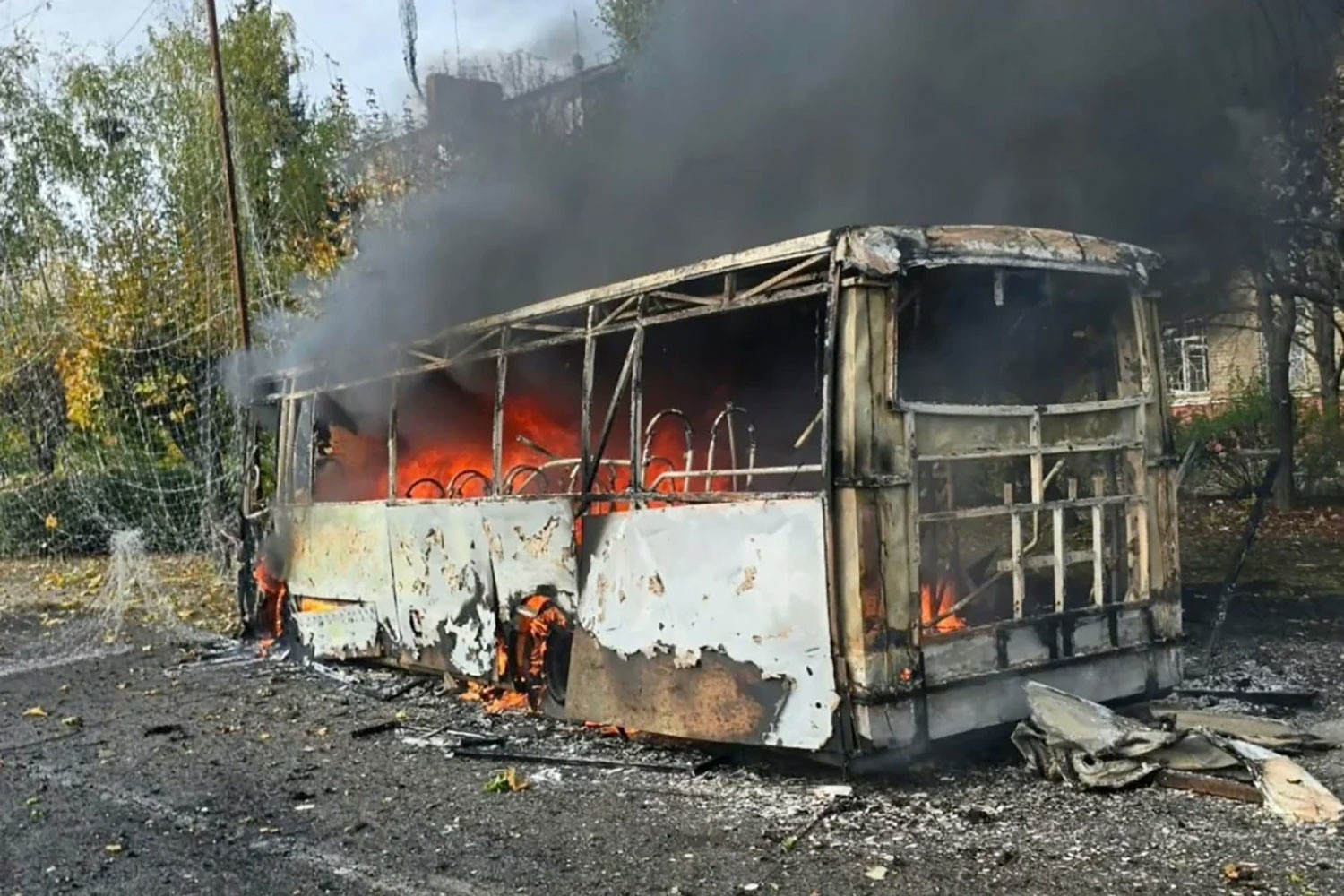
The morning air in the eastern reaches of Ukraine usually carries a sharp, metallic bite at dawn, the kind that frosts the edges of windowpanes and turns breath into ragged plumes of gray smoke. On that road, however, the cold was abruptly shattered by something far heavier than winter.
Consider the anatomy of an ordinary Tuesday morning. A bus, heavy with the weight of commuters, tired workers, and ordinary citizens trying to outrun a relentless siege, lumbers down a highway. It is a vehicle of transit, but in a war zone, it is a mobile sanctuary. Inside, the air smells faintly of damp wool, cheap tobacco, and stale coffee. Someone is reading a folded newspaper; someone else is staring blankly out a smeared window at the bleak, flat expanses of plowed earth and skeletal trees. Life is mundane. Life is happening.
Then, sound ceases to exist.
What replaces it is a concussive roar that buckles steel and erases the boundary between the living and the gone.
Reports indicate that at least thirty souls were feared killed when a violent explosion tore through a passenger bus on a stretch of asphalt in Ukraine. To read those numbers in a news brief is to glance at a statistic and turn the page. It is an abstract tragedy, neatly compartmentalized into a headline. But numbers do not bleed. Statistics do not leave behind empty boots by the front door or half-knit sweaters tossed over the back of a kitchen chair.
To understand the true weight of a bus bombing in an active conflict zone, you have to look past the smoke and consider the micro-tragedies hidden within the macro-disaster. Imagine, hypothetically, a woman named Oksana. Let us call her a schoolteacher from a town whose name has been battered into unrecognizable syllables on the evening news. Oksana carries a canvas bag filled with notebooks she was supposed to grade that evening. She sat three rows back from the driver. She had bought a single orange at a makeshift market before boarding, intending to peel it slowly during the long, bone-rattling journey.
That orange remains somewhere in the ash.
War does not merely destroy infrastructure; it dismantles the small, fragile architectures of daily routine. When a society is fractured by artillery and improvised violence, the simple act of catching a bus becomes an act of quiet, desperate courage. People are not moving across a chessboard. They are mothers, sons, mechanics, and dreamers attempting to secure a semblance of normalcy in a landscape where normalcy has been outlawed.
The mechanics of such an attack are chillingly precise, yet the aftermath is defined by absolute chaos. First responders arrive to a scene that defies human comprehension. Twisted aluminum glows dully in the pale sunlight. Emergency personnel move with a grim, practiced silence, their boots crunching on safety glass that covers the tarmac like diamond dust. In these moments, the bureaucratic language of international conflict evaporates, replaced by the raw, primal grief of survivors searching through wreckage for a familiar scarf, a wedding ring, a remnant of a loved one.
This is the hidden cost of the conflict in Ukraine. It is measured not just in square kilometers of contested territory or millions of dollars in military aid, but in the permanent absence of voices at the dinner table. Every civilian vehicle targeted, every transit route turned into a killing zone, represents a systematic erosion of the social fabric. It is an attempt to make existence itself untenable.
Yet, human resilience is an obstinate, infuriatingly persistent thing. Even as the smoke clears and the grim task of recovery begins, other buses will run. Other people will pull their wool coats tighter against the wind, step onto the freezing metal stairs, and pay their fare to a driver who grips the steering wheel with white-knuckled resolve. They do this because the alternative to moving forward is surrendering to the dark.
We are left staring at the aftermath of a single explosion, forced to confront the fragility of the threads holding communities together. The road is eventually cleared. The metal is hauled away. But the silence left behind by thirty missing lives is a void that no asphalt can ever patch over.
The engine idles in the distance, waiting for passengers who will never board.