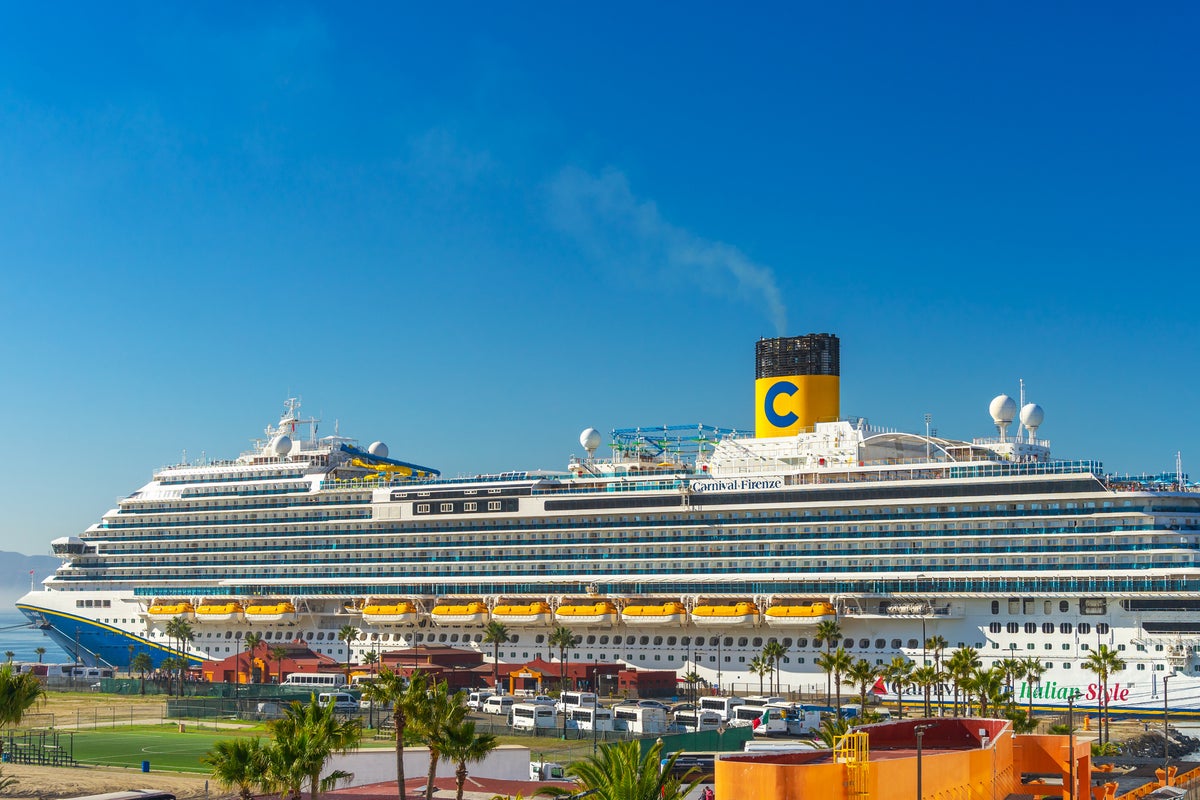
The Pacific Ocean is not blue at 3:00 AM. It is a thick, impenetrable ink that swallows light as quickly as the hull of a ship can throw it. Standing on a balcony, twelve stories above the waterline, the wind doesn’t just blow; it whispers with the weight of three miles of vertical empty space. Most passengers are asleep, dreaming of the buffet at dawn or the colorful stalls of Ensenada. But for one person on the Carnival Radiance, the world narrowed down to the cold metal of a railing and the rhythmic, white-noise churn of the propellers far below.
A cruise ship is a floating city of orchestrated joy. It is built on the promise of safety, a pressurized bubble of luxury designed to keep the chaos of the wild sea at bay. Yet, near Catalina Island, that bubble burst.
The facts are sparse because the event was swift. A man went over the side. One moment, he was a guest among thousands; the next, he was a data point in a grim maritime statistic.
The Illusion of the Railing
We trust railings. They are the psychological boundaries of our lives. On a cruise ship, the railing is the only thing separating the civilization of a carpeted cabin from the absolute indifference of the abyss. Most people lean against them to watch dolphins or toast to a sunset. They feel solid. They feel permanent.
But the sea has a way of warping perspective. Imagine a hypothetical traveler, let’s call him Elias. Elias isn't a statistic. He’s a man who packed a suitcase, worried about his boarding pass, and likely argued about which deck had the best coffee. When Elias stands on that balcony in the dead of night, the ship’s vibration is a heartbeat under his feet. The lights of the California coast are a distant, shimmering memory.
In the shipping industry, we talk about "Man Overboard" protocols with a clinical detachment. We discuss the thermal conductivity of the water and the exact radius of a turn required to bring a 110,000-ton vessel back to a specific set of coordinates. We don't talk about the silence.
The Carnival Radiance was returning to Long Beach after a three-day voyage. These short hauls are the sprints of the cruise world—quick, high-energy bursts of escape. They are meant to be seamless. They are not meant to end with the sudden, jarring illumination of searchlights cutting through the mist.
The Midnight Pivot
The transition from a vacation to a recovery mission is a violent shift in reality. At approximately 3:30 AM, the bridge received the report. The ship didn't just stop; it pivoted. A vessel of that size does not move like a car. It groans. It fights its own momentum.
The Coast Guard was summoned from the darkness. A Jayhawk helicopter was scrambled from San Diego, its rotors beating a frantic rhythm over the black water. For hours, the search area was a grid of hope and desperation. They looked for a flicker of movement, a splash of color, anything that wasn't the endless, rolling swell of the Pacific.
Consider the physics of the fall. To clear the side of a modern cruise ship, one has to contend with the wind resistance and the sheer height. From the upper decks, the impact with the water isn't a splash. At those speeds, the surface tension of the ocean makes the water act like concrete. It is a sudden, total arrest of motion.
The search lasted until the sun climbed over the horizon, turning the ink back into a deceptively inviting sapphire. By then, the Coast Guard had covered over 200 square miles. They found nothing. The ocean is too big, and a human being is too small.
The Invisible Stakes of the Open Sea
We often forget that when we step onto a ship, we are entering a realm where the rules of the land no longer apply. There is no "911" that arrives in three minutes. There is only the crew, the equipment, and the unforgiving clock.
Every year, an average of 25 people go overboard on cruise ships globally. It is a tiny number compared to the millions who sail, yet it is a haunting one. It forces us to confront the reality of our own fragility. We build these massive steel fortresses to convince ourselves we have conquered the elements, but the elements are merely waiting.
The crew of the Radiance had to maintain a haunting balance. While the search was underway, thousands of passengers began to wake up. They expected breakfast. They expected to disembark and return to their lives. The ship became a house of two stories: one of mundane morning routines and one of profound, lingering tragedy.
There is a specific kind of grief that comes with a disappearance at sea. There is no site to visit, no physical closure to grasp. There is only the coordinate on a map—a set of numbers that mean everything to a family and nothing to the waves.
The Weight of the Return
When the Carnival Radiance finally docked at the Long Beach cruise terminal, the atmosphere was fractured. Most passengers didn't know the full extent of what had happened until they saw the news crews. They walked down the gangway, dragging their suitcases, blinking in the bright California sun, unaware that they were leaving someone behind.
The ship will sail again. The cabin will be cleaned. The railing will be wiped down. To the company, it is an incident report and a liability assessment. To the crew, it is a sobering reminder of the watch they keep. But to the rest of us, it should be a moment of pause.
We live in an age where we believe everything is recoverable, trackable, and saved. We think GPS and satellite imaging have mapped every inch of our existence. But the ocean reminds us that there are still places where a person can simply cease to be.
The tragedy near Catalina wasn't just a fall. It was a reminder of the thinness of the line we walk between the bright, noisy world of the living and the silent, cold reality of the deep. It is a story told in the absence of a body, written in the foam of a wake that disappears as quickly as it is formed.
The ship moves on. The water closes over. The ink remains.