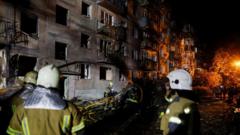
Air raid sirens don't sleep in Kyiv anymore. When a barrage of ballistic missiles slammed into the Ukrainian capital, the human cost was immediate and brutal. At least nine people lost their lives, while dozens more sustained injuries from flying glass and collapsing masonry.
If you think this is just another routine escalation in a prolonged war, you're missing the bigger picture. The reality on the ground is shifting.
The Anatomy of a Midnight Strike
The explosions started well before dawn. More than ten blasts echoed back-to-back across the city districts, triggering frantic car alarms and sending residents running for underground shelters.
In the Solomianskyi district, a five-story residential building took a direct hit from missile debris. Emergency crews pulled dozens of survivors from the upper floors, but the destruction was absolute. Down in Darnytskyi, fires tore through vehicles and non-residential structures, adding to the grim casualty count.
Local authorities and emergency services scrambled to contain the blazes across five separate districts. But infrastructure can be rebuilt. Lives cannot.
Behind the Numbers
Statistics rarely capture the sheer exhaustion of everyday life under constant threat. June recorded some of the highest civilian casualty rates since the conflict's early months, and July and August have brought no relief. Moscow has heavily intensified its long-range missile campaigns, targeting urban centers with terrifying frequency.
Kyiv's defense systems intercept many incoming threats, but the sheer volume of ballistic weapons overwhelms traditional shields. When debris falls over densely populated neighborhoods, tragedy is guaranteed.
President Volodymyr Zelenskyy has renewed urgent appeals to Western allies for more Patriot air defense systems. Without advanced interceptors, major cities remain sitting ducks for high-speed missile runs. Diplomatic talks in Washington and phone calls with international leaders keep happening, but negotiations feel terribly slow while apartment blocks burn.
The Cross-Border War Returns Fire
It is a two-way street of destruction. Ukraine hasn't just absorbed the blows. It has expanded its own retaliatory drone campaigns deep inside Russian territory, targeting logistics hubs, fuel depots, and major retail supply chains.
Russian leadership has acknowledged that these domestic strikes are creating severe supply bottlenecks. When commercial and logistical centers thousands of miles from the front line catch fire, the war creeps into the daily routine of ordinary Russian citizens, too.
Yet, pressure on Moscow hasn't forced an immediate halt to the aerial bombardment of Kyiv. Instead, both sides seem locked in a brutal cycle of attrition, trading blows with zero regard for civilian safety.
What Comes Next for Residents
If you're living in Kyiv, preparedness is survival. Packing a go-bag, knowing the closest reinforced shelter, and ignoring the fatigue of sleep deprivation are standard operating procedures.
The international community watches from afar, issuing statements of condemnation while security architectures strain under the pressure. Until air defense networks expand dramatically, the night sky over Ukraine's capital will remain a hostile zone.
Stay alert. Pay attention to local emergency alerts.