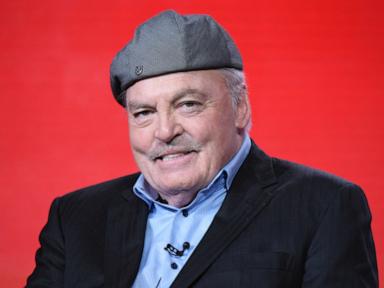
David Walliams is officially out of the shadows. After a failed legal bid to keep his identity suppressed under an anonymity order, the British comedian and bestselling children's author has been publicly named as the high-profile entertainment figure fighting allegations of grooming behavior. The High Court ruling dismantled a legal shield that celebrity legal teams have relied on for decades, exposing Walliams to intense public scrutiny and forcing a reckoning across the British publishing and television industries.
It was a catastrophic miscalculation. When wealthy public figures march into the Royal Courts of Justice to block the press from printing their names, they are playing a high-stakes game of poker with their own reputations. You either win the injunction and buy yourself silence, or you lose and turn a damaging news story into a generational media firestorm. By attempting to gag the press, Walliams effectively guaranteed that the subsequent unsealing of his identity would become a bigger story than the underlying claims themselves. In other updates, take a look at: Ron Howard's Netflix Documentary Avedon Protects the Myth Instead of Exposing the Man.
How the British Anonymity Shield Collapsed
To understand why this case matters beyond celebrity gossip, you have to look at the mechanics of English privacy law. For years, London has been the libel and privacy capital of the world, a jurisdiction where deep-pocketed claimants could routinely secure interim non-disclosure orders before a single word was published. The legal argument is always the same. A celebrity's lawyers argue that naming their client prior to formal criminal charges or a full trial causes irreparable reputational harm, breaching their right to privacy under Article 8 of the European Convention on Human Rights.
Media organizations counter with Article 10, the right to freedom of expression and the public's right to know. Historically, British judges leaned heavily toward protecting reputations during the investigative phase, especially following high-profile police botches like Operation Midland, where innocent public figures were dragged through the mud before any charges materialized. Entertainment Weekly has also covered this critical subject in great detail.
That judicial sympathy has evaporated. Judges have grown increasingly skeptical of wealthy claimants using privacy injunctions to suppress reporting on alleged misconduct, particularly when the claimant's public persona is directly tied to trust and family-friendly entertainment. When a judge weighs an individual's desire to protect their commercial brand against the public interest in scrutinizing someone who holds immense influence over young audiences, the balance shifts dramatically.
In Walliams' case, the court had to assess whether maintaining anonymity served justice or simply protected a lucrative commercial empire. Once the legal threshold for secrecy was not met, the lifting of the reporting restriction became inevitable. The Streisand effect did the rest. Every headline now carries the weight not just of the allegations, which Walliams has vehemently denied, but of the covert legal battle he fought to keep the public in the dark.
The Anatomy of a Reputational Implosion
Celebrity crisis management usually follows a predictable playbook. Deny, deflect, litigate, and wait for the news cycle to move on. That playbook fails completely when the allegations involve the grooming of young people and the accused has spent twenty years building a brand aimed squarely at children.
Walliams is not an edgy stand-up comedian whose audience expects bad behavior. He is one of the most successful children's authors in the United Kingdom, having sold tens of millions of books worldwide, alongside a long, lucrative stint as a judge on prime-time family television. His entire commercial ecosystem relies on parental trust. Parents buy the books. Parents put on the television shows. Schools host reading days built around his characters.
When allegations of inappropriate conduct toward young fans or aspiring performers surface against someone in that position, the commercial fallout operates independently of the criminal justice system. Corporate partners do not wait for a jury verdict. Publishers, broadcasters, and licensing agents operate on risk management, and association with the word grooming represents a toxic liability that no insurance policy can cover.
The industry had already seen warning signs regarding Walliams' public image. His departure from Britain's Got Talent in late 2022 followed the leak of transcripts showing him making derogatory and sexually explicit remarks about contestants during breaks in filming. At the time, Walliams apologized for what he termed private conversations that were never intended to be shared, and he launched a legal action against the production company, Fremantle, over the data breach, which was later settled.
That earlier controversy cracked the veneer. It exposed a stark contrast between the warm, camp, family-friendly persona projected on screen and the reality behind the scenes. When the subsequent legal battle over grooming allegations broke into the open, there was no reservoir of public goodwill left to cushion the blow.
Why Celebrity Legal Teams Keep Making This Mistake
You might wonder why top-tier London media lawyers continue to advise clients to seek anonymity injunctions when the backlash from a failed bid is so devastating. The answer lies in the psychology of extreme wealth and the structural incentives of defamation law firms.
High-net-worth individuals live in ecosystems where problems are routinely solved with money and non-disclosure agreements. When a journalist sends a right-of-reply letter—usually giving a subject 24 to 48 hours to comment on serious allegations before publication—the immediate instinct is to call a specialist media lawyer to stop the presses. Lawyers, paid by the hour to fight for their client's immediate objective, file an urgent application in the High Court.
In the short term, this works. It stalls publication for days, weeks, or sometimes months while hearings are scheduled and arguments are heard behind closed doors. For a celebrity hoping the story will simply go away, buying time feels like winning.
It is an illusion. Journalists who have spent months verifying allegations do not drop a story because a lawyer files an injunction application. Instead, media outlets pool their legal resources, challenge the reporting restrictions in court, and prepare two versions of their story—one anonymized, and one ready to publish the second the judge lifts the ban.
Furthermore, fighting an anonymity battle creates a rich paper trail. Arguments made in open court, judicial rulings explaining why secrecy was denied, and details of the legal maneuvering all become fair game for reporting under qualified privilege. By fighting to hide the story, the celebrity hands the press an unimpeachable, court-sanctioned news hook to publish it.
The Shifting Standard of Public Interest in British Media
The unsealing of Walliams' name signals a broader transformation in how British journalism handles power and accountability. For decades, an informal code of silence protected major television stars, comedians, and entertainers. Rumors circulated in green rooms, production offices, and Fleet Street pubs, yet rarely made it into print because media lawyers deemed the legal risk too high without a criminal conviction.
The post-Savile era, followed by the MeToo movement and recent scandals involving major British broadcasters like the BBC and ITV, has permanently altered that calculation. Newsrooms are no longer willing to sit on credible, multi-sourced allegations of predatory or inappropriate behavior simply because the subject threatens litigation.
Investigative units now spend months corroborating digital footprints, direct messages, witness accounts, and patterns of behavior before approaching a subject. When a newspaper decides to defend a high-profile anonymity challenge in the High Court, it is rarely guessing. It is walking into court armed with a dossier of evidence designed to prove to a judge that publishing the individual's name is essential to protect the public and encourage other potential witnesses to come forward.
That last point is crucial in cases involving alleged grooming. Judges increasingly recognize that maintaining anonymity for a famous figure prevents other individuals who may have had similar interactions from realizing they are not alone. Naming the person serves an active investigative and safeguarding function.
The Gray Areas of Trial by Media
Acknowledging the necessity of press freedom does not mean ignoring the severe consequences of naming suspects before any formal legal guilt is established. This is the central tension of modern media law, and there is no neat resolution.
An allegation is not a conviction. Walliams has strongly denied any wrongdoing, and under the law, he is entitled to the presumption of innocence. Yet in the court of public opinion, the distinction between an allegation reported in a national newspaper and a proven crime often disappears within minutes on social media.
Once a name is attached to a headline containing the word grooming, the reputational damage is permanent. Even if a police investigation yields no charges, or a civil claim is dropped, the digital footprint remains forever. Search engines do not forget High Court battles. Publishers quietly stop commissioning new books, television networks scrub repeat broadcasts from their streaming platforms, and charities sever ties to avoid donor backlash.
Critics of the press argue that naming individuals prior to arrest or charge creates an irreversible punishment without due process. There is real merit to that concern, particularly when dealing with non-celebrities whose lives can be ruined by false accusations.
However, public figures who actively monetize their reputation occupy a different category. You cannot spend decades leveraging the public's trust to sell millions of products to children, and then demand complete secrecy when credible questions are raised about how you interact with young people behind closed doors. Fame is an asymmetric bargain. You take the money and the adulation when things go well, and you face the spotlight when serious scrutiny arrives.
What Happens to the Walliams Empire Now
The immediate aftermath of losing an anonymity battle is always swift, quiet, and ruthless. In the British entertainment and publishing sectors, executives rarely issue dramatic public condemnations. Instead, they execute a slow, methodical erasure.
Publishing houses face the most acute dilemma. HarperCollins, which has published Walliams' children's books for over fifteen years, sits on a massive backlist of titles that generate steady revenue every year. Pulling books from shelves is an expensive, logistically complex decision that publishers try to avoid unless commercial pressure becomes unbearable. More often, upcoming releases are quietly delayed, promotional tours are canceled, and marketing budgets are redirected toward other authors.
Television broadcasters operate even faster. Commissioning editors are notoriously risk-averse, and no network executive wants to explain to a board of directors why they greenlit a family entertainment show fronted by someone embroiled in a High Court battle over grooming allegations.
For Walliams, the legal battle is far from over. Lifting an anonymity order is merely a procedural milestone, not the end of the underlying dispute. Whether the matter progresses through civil litigation, regulatory inquiries, or police involvement, every future development will now play out in full view of the public.
He gambled that the British courts would pull the curtains shut and let him handle a crisis in the dark, and he lost the only asset a celebrity cannot buy back.