The southern ocean at night does not feel like water. It feels like a throat. It is an immense, black, swallowing vacuum that moves with a heavy, rhythmic breathing, indifferent to anything caught on its surface. When you are stranded in it, the horizon vanishes. The sky and the sea merge into a singular, crushing darkness.
On a biting night off the coast of southeastern Australia, two scuba divers found themselves dissolving into that darkness. Their boat was gone. The shore was an abstraction. Every rolling swell lifted them briefly into the freezing wind before dropping them back into the trough, isolating them completely from the rest of the living world. They had spent hours in the water. Hypothermia was no longer a threat; it was a physical weight settling into their bones. They were waiting for the end. Don't miss our earlier article on this related article.
Miles away, a group of travelers from Hong Kong were looking in the exact opposite direction. They were looking up.
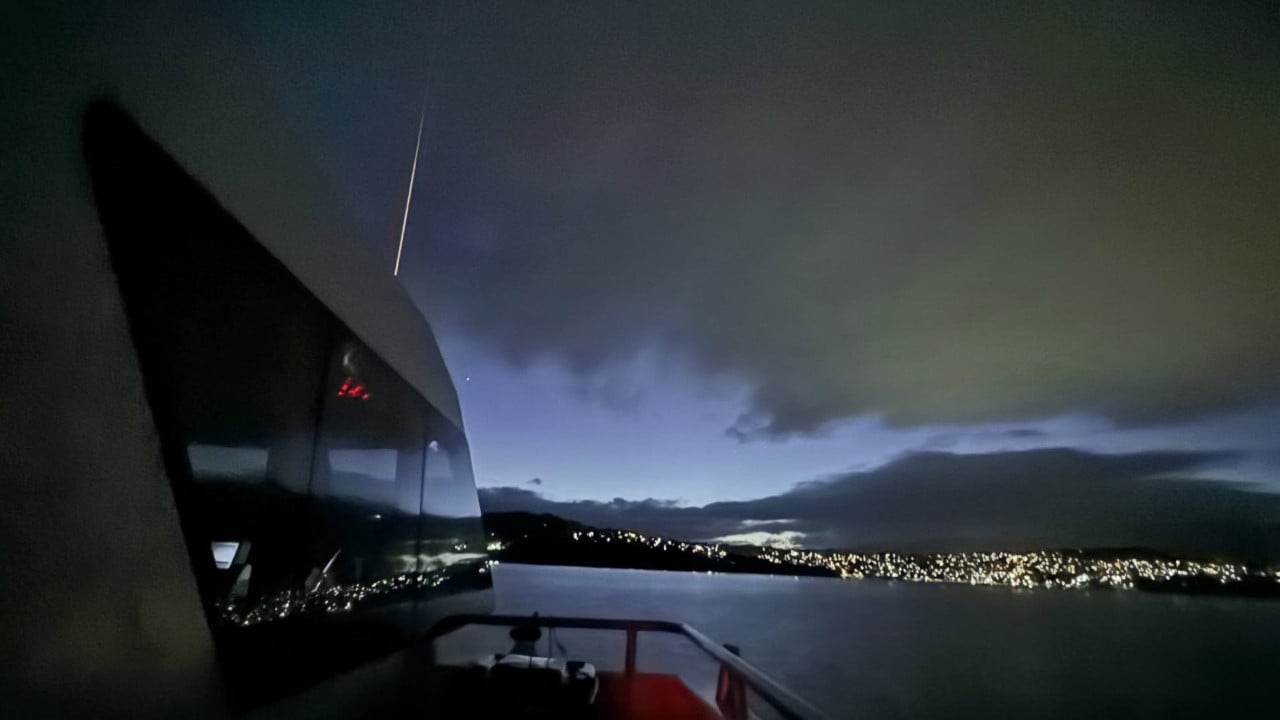
They had traveled halfway across the planet for a glimpse of the cosmic. Led by a veteran photographer, this group belonged to a loose global network of aurora chasers—people who spend their lives tracking solar storms, reading geomagnetic indexes, and waiting in freezing fields for a glimpse of the lights. They wanted to witness the Aurora Australis, the Southern Lights, painting the atmosphere in neon ribbons of violet and green. To read more about the context here, National Geographic Travel offers an excellent summary.
They did not expect that their pursuit of the heavens would force them to look straight down into the abyss.
The Geometry of Disappearance
To understand how easily a human being vanishes at sea, you have to understand the math of the ocean surface. A human head in a dark wetsuit rises barely eight inches above the water line. Amidst whitecaps and swelling waves, spotting those eight inches from a moving vessel is mathematically improbable. It is like searching for a specific coin flipped into a dark, moving field of high grass.
The two divers had been exploring the deeper reefs during the day, but a sudden shift in the currents—a violent, invisible river beneath the surface—had swept them away from their dive boat. By the time they surfaced, the boat was a speck. Then, it was gone.
In the maritime world, this is the quietest nightmare. There is no explosion. There is no dramatic crash. There is only the sudden realization that the distance between you and safety is widening by six feet every second.
They tied themselves together. It was a tactical choice but also a deeply psychological one. In the open ocean, loneliness can unmoor a mind long before the cold stops the heart. They blew their whistles until their lungs burned and the plastic balls inside the whistles jammed with salt water. They flashed their small dive torches against the vastness of the sea. The beams were swallowed instantly, looking less like distress signals and more like bioluminescent sparks dying in the dark.
Meanwhile, the tour boat carrying the Hong Kong travelers creaked through the swells. The atmosphere on board was electric with anticipation.
For these travelers, the trip was an escape from the vertical, crowded concrete of Hong Kong, a city where the sky is often reduced to a narrow strip between skyscrapers. They had spent thousands of dollars and flown for over ten hours to stand on a cold deck in the Southern Hemisphere, hoping the sun would spit enough plasma toward Earth to trigger a show.
The cameras were mounted on tripods. Lenses were set to wide apertures. The travelers checked their screens, dialing in long exposures to catch the first faint glows that human eyes often miss in the dark.
When the Skies Open
The aurora arrived not as a roar, but as a slow, haunting bleed of color across the southern horizon. First came a deep, velvety crimson, followed by pillars of pale green that shot upward into the stars like the columns of a ghostly cathedral.
On deck, the tour group erupted. Gasps, frantic shutters clicking, and shouts of joy filled the cold air. The photographer adjusted a camera, pointing it toward a particularly vibrant patch of sky where the solar wind was tearing through the upper atmosphere.
Then, someone looked away from the sky.
It was an accidental glance. When you are looking through a viewfinder for an extended period, your eyes fatigue. You blink. You look down at the water to rest your vision. One of the tour members noticed a flicker. It was not the grand, sweeping light of the cosmos, but a tiny, rhythmic, unnatural pulse on the water.
A strobe. A tiny, desperate strobe, miles from where any boat should be.
The tour leader paused. In the tourism industry, sticking to the itinerary is a powerful reflex. You have a schedule, a route, and a group of paying clients who have waited their entire lives to see a natural wonder. Turning a boat around on a hunch disrupts everything.
But the sea teaches you to trust the anomaly.
The captain of the tour charter was notified. He killed the engine noise, letting the boat idle on the heavy swells. The sudden silence on the vessel was absolute, punctuated only by the lap of water against the hull. The captain scanned the dark swells with binoculars.
There, in the trough of a massive wave, the light flickered again.
The ship’s powerful searchlights were spun around. The beam sliced through the night, abandoning the sky and carving a bright path across the black water. The light tracked left, then right, dancing over the whitecaps.
Suddenly, the beam caught them. Two figures, clad in black, arms locked together, illuminated in the stark glare like actors on a dark stage.
The Physics of the Pull
What followed was a frantic scramble of muscle and adrenaline. A tourist vessel is not an emergency response cutter. It does not have low rescue decks or specialized hydraulic lifts to haul waterlogged bodies out of a freezing swell.
A fully geared scuba diver, soaked in water, weighs upwards of two hundred and fifty pounds. Pulling that dead weight over the high gunwale of a rolling boat requires sheer physical defiance.
The Hong Kong travelers abandoned their cameras. Tripods were knocked aside. The very hands that had been gently adjusting delicate focus rings seconds before were now gripping rough nylon ropes and slippery wetsuit straps.
Consider what happens next when a boat tries to rescue someone in high seas: the vessel itself becomes a weapon. If the hull slams into the divers, it can crush them. If they get too close to the stern, the propellers can mangle them. The captain had to thread the needle, bringing the heavy boat close enough to reach, but not close enough to kill.
The first diver was reached. Three pairs of hands grabbed the shoulder straps of the buoyancy compensator.
"Pull!"
The boat rolled violently to the port side, helping them. With a collective, guttural heave, the travelers hauled the first diver over the rail. He collapsed onto the deck, a puddle of salt water pooling around his shivering body. He was incoherent, his jaw chattering so hard he could barely form words.
The second diver was heavier, slipping from their grip twice as the grease of the sea made everything impossible to hold. The wind was picking up, threatening to push the boat over the top of her.
The tour leader threw his weight over the side, locking his forearms under her arms. Another traveler grabbed her weight belt. Together, with a final, agonizing lift that strained muscles to the tearing point, they dragged her onto the deck.
The two divers lay there, face up, staring at the sky.
Above them, the aurora was reaching its peak. Green and purple curtains of light danced directly overhead, reflecting off the wet neoprene of their suits and the pools of seawater on the deck. It was a surreal, terrifyingly beautiful tableau. The two people who had been hours away from drowning were now being bathed in the light of an atmospheric miracle, surrounded by a circle of stunned tourists from the other side of the world.
The Intersection of Accidental Paths
We like to think of our lives as highly organized trajectories. We plan our vacations, our careers, and our days down to the minute. But survival is often a matter of absurd, chaotic synchronization.
If the sun had not erupted two days prior, sending a coronal mass ejection toward Earth, the tour group would have stayed in port. If the sky had been cloudy, the boat would have turned back early. If a single photographer had not looked down to rest their eyes from the glare of the aurora, the two divers would have drifted into the open ocean, where the currents would have carried them beyond the reach of any rescue grid.
The divers were wrapped in every dry jacket, blanket, and emergency foil sheet available on the boat. The tour group fed them warm tea from thermoses. As the boat accelerated back toward the harbor to meet a waiting ambulance, the adrenaline began to fade, replaced by a quiet, heavy awe.
The cameras remained on their tripods, some still running automated intervals, silently capturing the rescue against the backdrop of the celestial show.
When the boat finally docked and the paramedics took over, the travelers stood on the pier. They were exhausted, cold, and smelling of diesel fumes and sea salt. They had come to see something larger than humanity, something cosmic and distant. Instead, they found something intensely local, fragile, and human.
The sky eventually faded back to a quiet, starry black. The ocean continued its heavy, indifferent breathing against the pier. The travelers packed away their lenses and their memories, knowing that the most beautiful thing they had photographed that night was not the light in the heavens, but the sudden, miraculous flash of life pulled back from the dark.