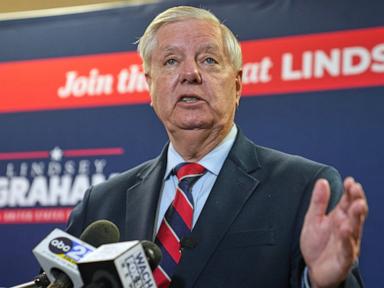
Lindsey Graham shouldn't be this safe. If you listen to the loudest voices on social media or talk to grassroots activists in Greenville, you'd think the senior senator from South Carolina was on life support. They call him a chameleon. They mock his shifting alliances. Yet, here we are on primary day in June 2026, and Graham is cruising toward a fifth term with the institutional backing of the entire Republican apparatus and a war chest that makes challengers weep.
The disconnect between how the political class talks about Graham and how he actually performs at the ballot box is massive. Democrats haven't won a Senate seat or the governor's mansion in South Carolina since the late 1990s. The state GOP has a decades-long winning streak that isn't showing any signs of breaking. Understanding why Graham keeps winning tells you everything you need to know about modern Republican survival instincts.
The Ultimate Shape Shifter
To understand Graham's longevity, you have to look at his ability to adapt to whoever holds the keys to the party. He went from being John McCain's loyal sidekick to Donald Trump's preferred golfing buddy. That wasn't an accident. It was a calculated strategy to protect his right flank in a state that has grown increasingly conservative.
The grassroots base back home didn't buy the conversion immediately. Honestly, a lot of them still don't trust him. They remember the old days. But Graham did something smart: he secured the ultimate insurance policy.
By tying himself directly to Trump, Graham effectively neutralized the threat of a serious primary challenge. When your state loves the former president, getting that gold-plated endorsement means your opponents are essentially running uphill in a snowstorm.
Squeezing Out the Challengers
Look at how the 2026 primary field shook out. Early on, big names were floating around. People like Project 2025 architect Paul Dans and former Lieutenant Governor André Bauer were in the mix. They could have given Graham a real run for his money by running to his right.
Instead, they dropped out months ago. Why? Because Graham accumulated a staggering $20.6 million war chest. Trying to outspend an incumbent with that much cash is a fool's errand.
The main challenger left on the ballot is Mark Lynch, a Greenville businessman who tried to position himself as the true "America First" candidate. In any other universe, a wealthy businessman running on a populist platform might cause trouble. Not this time. Trump actively trashed Lynch on social media, calling him a "lunatic" and a "disaster." That single move functionally ended the primary before the first vote was cast. Recent polling from early June shows Graham comfortably holding a majority of likely voters, sitting above 50% while Lynch struggles to break out of the high 20s.
Foreign Policy as a Local Issue
Most senators try to focus heavily on local, bread-and-butter issues when they're up for reelection. They talk about roads, local tax breaks, or small businesses. Graham does some of that, but he primarily builds his brand on global conflict.
South Carolina has a deep military tradition. With major bases like Fort Jackson, Shaw Air Force Base, and the Marine Corps Recruit Depot Parris Island, national defense matters here in a way it doesn't in other states. Graham's position on the Senate Appropriations and Armed Services committees gives him massive leverage over federal military spending flowing into the state.
Lately, his hawkish foreign policy has aligned perfectly with Washington's aggressive stance against Tehran. Graham openly cheered the administration's decision to strike Iranian nuclear sites last year. He reminds voters constantly that he has the president's ear on these choices. While a broader national audience might worry about the ongoing international friction, Graham uses it to show South Carolina voters that their senior senator is sitting in the room where the biggest decisions on earth are made.
Why Democrats Can't Break the Streak
Democrats love to target South Carolina when they want to raise money online. They look at the changing demographics of places like Charleston and the booming tech sector in the Upstate and convince themselves that a blue wave is just around the corner.
It's a fantasy.
The last time a Democrat won a Senate race here was Ernest "Fritz" Hollings in 1998. The 2020 race between Graham and Jaime Harrison was supposed to be a dead heat. National donors poured over $100 million into Harrison's campaign, making it the most expensive Senate race in history at the time.
The result? Graham won by ten percentage points. It wasn't even close.
South Carolina Senate Election Results (Recent Benchmarks)
2020 General: Lindsey Graham (R) 54.4% vs. Jaime Harrison (D) 44.2%
2022 Gubernatorial: Henry McMaster (R) 58.1% vs. Joe Cunningham (D) 40.7%
The underlying math just doesn't work for the left. Governor Henry McMaster blew out his opponent by nearly 18 points in 2022. The state's political map is designed to keep Republicans in power, and despite recent high-profile drama where the state Senate rejected a frantic, Trump-backed push to aggressively redraw congressional lines right before the primary, the existing structural advantages for the GOP are overwhelming.
The Democratic primary features candidates like Annie Andrews, but whoever emerges faces an electorate where the conservative floor is simply too high to breach. Early polling from internal party groups shows Graham leading a generic Democrat by several points even before the general election machinery kicks into gear.
What Happens From Here
If you want to track where this race goes next, stop looking at the primary challengers and start watching the general election fundraising numbers over the next few weeks.
The real test for Graham isn't whether he wins—he will. The test is whether he can win by a margin large enough to silence his critics within his own party. If he underperforms his polling on Tuesday night, it signals that the conservative base is still nursing a grudge, which could complicate his influence in Washington over the next six years.
For voters in South Carolina, the choice comes down to influence versus ideological purity. If you want a senator who commands national headlines and directs federal dollars to local military installations, Graham is the only game in town. Keep an eye on the official returns coming out of the state election commission tonight to see exactly how much leverage the establishment still holds.