The Click.
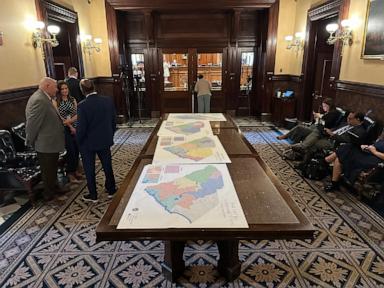
It is a remarkably quiet sound for something that can dismantle a community. It happens in air-conditioned rooms in state capitols, usually late at night, when a staffer hits 'save' on a proprietary mapping software program. With that single click, a line moves three blocks to the left. Read more on a related issue: this related article.
To the software, it is just a geometric adjustment, a minor calibration of census blocks to optimize partisan density. But on the ground, that line behaves like a sudden, invisible fault line ripping through a neighborhood.
Consider a hypothetical citizen named Clara. She has lived in the same brick house on Elm Street for forty years. She knows which neighbors need help raking leaves, which streetlights are flickering, and which local high school needs funding for its band program. For decades, Clara and her neighbors walked down to the local elementary school every November, stood in line, and voted for a representative who had to listen to them because their collective voice mattered. More reporting by Associated Press highlights comparable views on this issue.
Then came the new map.
With no physical warning, Clara’s house was sliced away from the rest of Elm Street. Her neighbors across the asphalt remained in District 4. Clara was zipped into District 7, an expansive, sprawling territory that stretches eighty miles north into rural farmlands she has never visited. The issues that matter to her urban neighborhood—the crumbling storm drains, the underfunded community clinic—are entirely foreign to the voters who dominate her new district.
Clara did not move. Her house did not change. Yet, her political voice was effectively muted.
This is the human reality of the redistricting scrambles currently sweeping across the nation. While political pundits analyze these shifts through the cold lens of national midterms and congressional control, the true story is being written on the doorsteps of everyday Americans.
The Chemistry of the Gerrymander
We tend to treat politics like a sport, tracking wins and losses on colorful television graphics. But redistricting is closer to chemistry. It is the precise manipulation of human elements to achieve a predictable, synthetic reaction.
When a political party holds total control over a state’s legislative bodies, the temptation to reshape the electoral map is rarely resisted. The strategy relies on two fundamental techniques, known colloquially in political science as "packing" and "cracking."
Imagine you have a jar filled with sixty blue marbles and forty red marbles. If you divide them evenly into ten groups, the blue marbles win every time. But if you pack forty of the blue marbles into just two groups, they win those two overwhelmingly. The remaining twenty blue marbles are then cracked—scattered thinly across the remaining eight groups. Suddenly, the red marbles win an eight-to-two majority, despite being the minority overall.
This is not a theoretical exercise. It is a mathematical certainty.
When state lawmakers rush to finalize these maps ahead of crucial midterm elections, they are essentially trying to lock in the results before a single ballot is cast. They are designing districts where the primary election is the only contest that matters. If a district is drawn to be seventy percent Republican or seventy percent Democratic, the general election in November becomes a mere formality.
The real race happens in the extremes. Candidates no longer need to appeal to the broad middle, to the independents, or to the moderates of the opposing party. They only need to fire up their most ideological base to win the low-turnout primary.
The result is a legislative body that looks less like a deliberative assembly and more like a collection of opposing trenches. Compromise becomes a form of political suicide.
The Vanishing Swing District
The exhaustion is palpable. Speak to voters anywhere, and you will hear a familiar refrain: a deep, systemic weariness with a government that seems incapable of solving basic problems. We blame the individuals in office, labeling them as uniquely stubborn or corrupt.
But the system is performing exactly as it was designed.
A decade ago, the American political landscape featured dozens of true swing districts—places where an election could genuinely go either way based on the strength of a candidate's arguments or the mood of the country. These were the arenas where national consensus was forged. To win, politicians had to show up at town halls, look skeptical voters in the eye, and defend their records.
Today, those arenas are being systematically dismantled.
In the rush to redraw boundaries, mapmakers are prioritizing safety over competition. They create "incumbent protection plans," drawing lines that guarantee safe seats for both parties, trading away competitive elections for political predictability. It is a cozy arrangement for the politicians, but a disastrous one for the public.
When competition dies, accountability goes with it. If a representative knows their district is mathematically unloseable, they have very little incentive to return phone calls from disgruntled constituents. They don't need to explain why a infrastructure bill stalled or why inflation is squeezing family budgets. They are insulated by the geometry of the map.
The Emotional Toll of Disenchantment
It is easy to get lost in the legal jargon of these battles. We hear about population deviations, the Voting Rights Act, compact districts, and communities of interest. Courtrooms fill with expert witnesses brandishing complex statistical models and efficiency gaps.
But walk away from the courthouses and talk to the people who actually live within these jagged, gerrymandered borders. The feeling they describe isn't usually anger. It is something far more dangerous for a democracy: cynicism.
When a voter realizes that the lines have been drawn to neutralize their input, a quiet resignation sets in. Why stand in the rain to vote? Why study the policy positions of the candidates? Why bother participating at all when the outcome was decided two years ago by a software algorithm in a capital city?
This erosion of trust is the hidden cost of the redistricting rush. It breaks the unwritten contract between the citizen and the state. That contract relies on a simple premise: if you show up, if you participate, your voice will be weighed fairly against your fellow citizens.
Once that premise is exposed as an illusion, the entire architecture of civic life begins to degrade. Neighbors stop talking about local politics over the fence. School board meetings turn into ideological battlegrounds instead of practical discussions about classrooms. The sense of shared destiny that binds a town together evaporates, replaced by a lingering feeling that the game is rigged.
The sun sets over Elm Street, casting long shadows across the porches. Clara sits on her front steps, watching the evening traffic. A few years ago, a congressional candidate might have walked up her sidewalk, clipboard in hand, asking for her perspective on local schools or Medicare.
Not anymore.
Her street is no longer a community in the eyes of the political apparatus; it is a border wall. The candidates are elsewhere, focused on the deeper, safer pockets of their pre-packaged districts where they don't have to answer difficult questions.
We will watch the incoming election returns with breathless anticipation, analyzing the shifting balance of power in Washington. The pundits will talk of waves and mandates, of strategic triumphs and historic shifts. But the real story will remain quiet, hidden in the neighborhoods that were quietly broken apart so that power could be preserved.
The lines have been drawn. The software has done its job. The people are left to wonder who, if anyone, is left representing the house on the other side of the street.