The marble corridors of Capitol Hill carry a specific kind of quiet right before a political storm hits. It is not the silence of peace, but the heavy, charged stillness of people holding their breath, waiting for the first wave to crash.
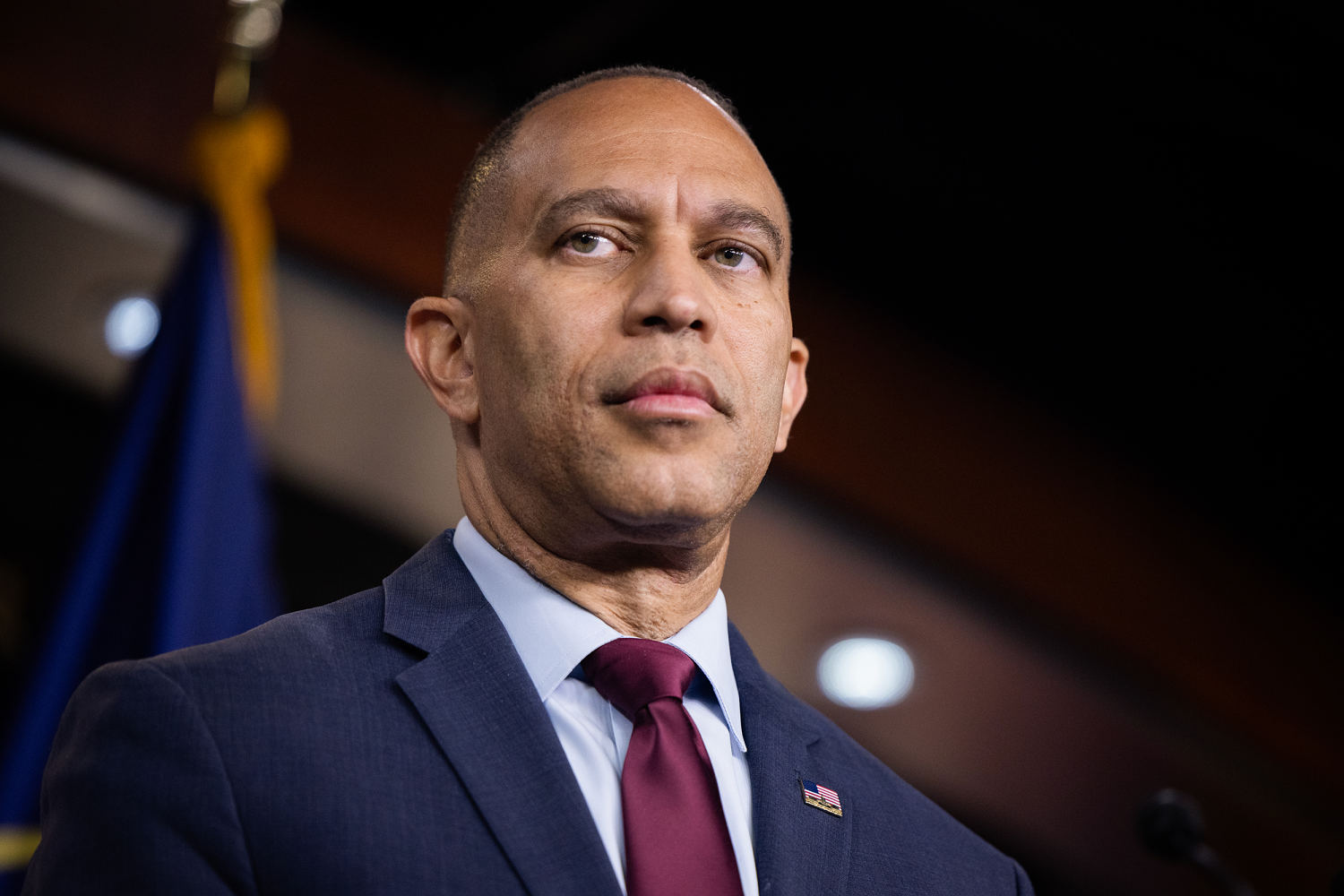
House Minority Leader Hakeem Jeffries stood near the center of that silence, his stance deliberate, his words stripped of any hedging. When asked about Defense Secretary Pete Hegseth, Jeffries did not pause to calibrate a nuanced political dodge. He did not offer the standard beltway caveat that leaves room for backroom bargaining.
He declared himself a hard yes on impeachment.
Two words. Clear. Absolute.
To understand why a constitutional nuclear option is suddenly on the table for a Cabinet member requires stepping past the soundbites and looking into the friction point where raw political ambition collides with the massive, bureaucratic machinery of national defense.
The Pentagon is not a startup. It is an institution forged through centuries of precedent, governing millions of uniformed men and women who operate on strict chains of command and unyielding codes of conduct. When a political appointee steps into that building, they do not just take on an administrative role; they step onto a high-wire tightrope strung over a floor of immense geopolitical stakes.
Consider what happens when the leadership of that institution becomes a battleground.
Inside the halls of Congress, the call for impeachment is rarely just about a single individual. It is an explicit declaration of war over institutional boundaries. For Jeffries, taking a stance this unequivocal is a high-stakes calculation. It sends a ripple straight through the Democratic caucus, signaling that the era of polite procedural pushback is over. It signals to the executive branch that every decision, every policy shift, and every personal controversy surrounding the Defense Secretary will be met with maximum resistance.
Pressure builds fast in Washington, but inside the Pentagon, the tension registers differently. Generals and tactical commanders look at political crossfire through a single lens: mission readiness and morale. When the civilian head of the military becomes the target of an aggressive impeachment effort, the tremors are felt all the way down to the recruitment office and the forward operating base.
Political battles are usually fought with metaphors, but the consequences here are tangible.
The debate surrounding Hegseth touches on deeper questions about leadership, accountability, and what code of conduct society demands from those who hold the power to deploy troops. When critics push for impeachment, they argue that the standard for holding the keys to the world's most powerful military must be absolute and unforgiving. When defenders push back, they frame the move as an escalation of partisan warfare designed to hamstring an administration before its policies can take root.
Jeffries’ position leaves no middle ground. By placing himself firmly in the camp of removal, he turns a legislative threat into an imminent political showdown.
Think of a courtroom where the jury spokesman stands up before the defense has even finished its opening statement and announces the verdict. That is the psychological weight of a legislative leader calling a hard yes long before formal proceedings reach their climax. It narrows the exit ramps. It forces every member of the caucus to choose a side, pulling moderate lawmakers into deep waters where neutral ground no longer exists.
This is where the invisible stakes become clear.
Impeachment of a Cabinet secretary is a rare, drastic instrument in American history. It is a lever designed to be pulled only when the institutional fabric itself feels stretched to the tearing point. By reaching for that lever now, Congressional leadership is signaling that the conflict between Capitol Hill and the Department of Defense is no longer about routine policy disagreements over budgets or troop allocations. It is about authority. It is about who sets the moral and operational boundaries of the armed forces.
The debate will escalate. Statements will be dissected on news networks, press releases will flood inbox folders, and committee rooms will turn into pressure cookers.
Yet far away from the cameras, in quiet rooms across the country, families of service members watch these developments with a very different kind of scrutiny. They do not care about political points or caucus discipline. They care about stability at the top. They care whether the chain of command above their daughters and sons is steady, focused, and untangled from political combat.
The cameras will eventually turn off, the press briefings will end, and the floor votes will be tallied. But the line drawn in the marble halls remains, sharp and unyielding, marking a moment where compromise gave way to absolute division.