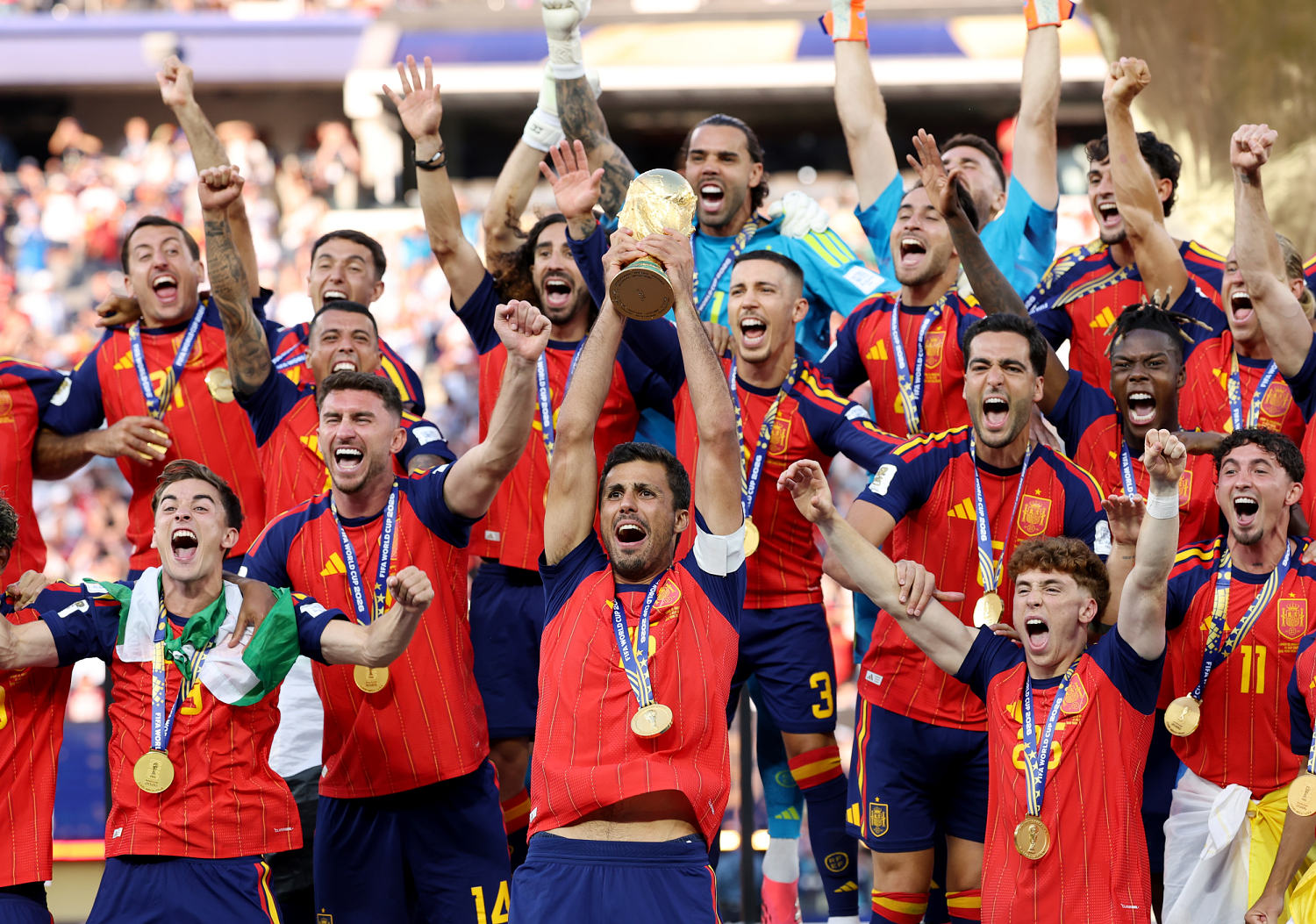
Lionel Scaloni stood up, offered a quick apology to the room full of reporters, and walked out before anyone could ask another question. The 48-year-old manager had just spent several minutes trying to hold himself together, but the weight of Argentina's defeat to Spain in the 2026 World Cup final finally broke him. Tears streamed down his face as he admitted he didn't know if he could keep going. Lionel Scaloni crying during a news conference isn't just a dramatic TV moment; it's a stark reminder of how brutal elite football management really is, even for a coach who won it all in Qatar four years earlier.
When a manager who brought home a World Cup trophy and back-to-back Copa América titles reaches a breaking point on live television, you have to look beyond the immediate match result. The 1-0 extra-time loss to Spain at New York New Jersey Stadium stung deeply. Yet the raw emotion Scaloni displayed had less to do with a single lost final and everything to do with total physical, mental, and emotional drain. Expanding on this topic, you can find more in: Why Spain Editing Donald Trump Out of Their World Cup Photo Was the Right Choice.
Hearing a manager openly say he doesn't know if he can rebuild a winning culture tells you everything you need to know about modern sport. Success creates an appetite that standard human endurance can rarely sustain.
Lionel Scaloni Crying Over His Argentina Future Exposes a Brutal Reality
Coaching at the absolute top level isn't just about tactical boards and substitution timings. It requires constant emotional management, media scrutiny, and the crushing expectation of tens of millions of fans who view national football as a national identity. Experts at FOX Sports have shared their thoughts on this trend.
When Scaloni took over the Argentine national team in 2018 as a temporary replacement, nobody expected him to last six months. Critics routinely called him inexperienced. Yet he built one of the most cohesive national squad environments seen in decades, culminating in the historic 2022 World Cup triumph in Qatar.
By the time the 2026 tournament wrapped up, that journey had taken its toll. Sitting in front of the press microphones, Scaloni openly admitted that recreating a squad with that exact spirit is almost impossible.
"In order to continue you need a great deal of things, especially resetting your mind, rebooting, creating a group like this again," Scaloni said through tears. "That is very difficult to create again."
He didn't make excuses. He didn't blame the referee or point fingers at his players after a grueling 120 minutes where Ferran Torres ended Argentina's bid to become the first repeat champions since Brazil in 1962. Instead, he acknowledged an uncomfortable truth in sports: burnout is real, and winning makes it harder, not easier.
High Stakes and Emotional Exhaustion After the 2026 Final
Reaching back-to-back World Cup finals is a rare achievement in modern international football. Germany did it, Brazil did it, and now Scaloni's Argentina joined that elite club. But the price paid behind the scenes is massive.
During the month-long tournament across North America, Scaloni managed a squad under relentless media pressure. Argentina arrived as defending champions, carrying the heavy expectations of a nation that celebrates football with unmatched fanaticism. Every press briefing felt like an interrogation. Every tactical choice was analyzed under a microscope.
The match against Spain showed a team running on fumes. While Argentina fought valiantly, Spain's youthful midfield controlled long stretches of play. Argentina spent over 90 minutes defending deep, unable to create clean shots on target. When Torres struck in the 106th minute, the emotional dam broke.
Watching Lionel Messi, now 39, break down on the pitch after what was likely his final World Cup match hit Scaloni hard. During his post-match comments, Scaloni struggled whenever Messi's name came up. The pair shared a famous hug after their semi-final victory over England, where Messi told his coach they were making history. Facing the reality that an era had closed proved too much to bear in the media room.
It takes immense courage for a coach to admit publicly that he lacks the immediate energy to start over. In a corporate or sporting culture that usually demands fake confidence, Scaloni's raw honesty felt strikingly genuine.
The Massive Challenge of Rebuilding After Back to Back Final Runs
Why is restarting so difficult for a manager who already knows how to win?
First, there's the natural aging of a championship core. Several key figures who formed the backbone of Argentina's success between 2021 and 2026 are either retiring or approaching the final years of their careers. Replacing leadership isn't as simple as swapping one talented winger for another. Tactical skills can be trained; chemistry and dressing room trust take years to cultivate.
Second, the psychological burden of maintaining elite standards is exhausting. When you win a World Cup, anything short of another trophy feels like a failure to the public. Finishing as runner-up in 2026 is an incredible sports achievement, yet the immediate aftermath carries the heavy stench of disappointment.
Scaloni highlighted this exact point before leaving the podium:
- Winning creates a baseline expectation that is unsustainable over multiple four-year cycles.
- Squad dynamics change when senior leaders phase out, requiring the coach to build trust all over again with younger players.
- Mental fatigue accumulates across endless tournament camps, international travel, and constant high-stakes preparation.
He recognized that staying in the job just to collect a paycheck or appease the federation would be a disservice to the team. If a leader cannot reset their own mind, they cannot expect their players to follow them into the next grueling qualification campaign.
Managing Lionel Messi and an Aging Core
You cannot separate Scaloni's emotional state from his relationship with Lionel Messi. When Scaloni inherited the team, Messi's international career was defined by heartbreak—lost finals in 2007, 2014, 2015, and 2016. Scaloni didn't just fix the tactics; he created a warm, protective environment where Messi could thrive without feeling like he had to carry the entire country on his back alone.
That bond produced the magical night in Lusail in 2022 and carried Argentina all the way to the final in 2026. But managing a team centered around a aging icon requires intense tactical compromise and constant emotional calibration.
Throughout the 2026 tournament, Scaloni had to balance Messi's minutes, manage team workloads, and adapt to high-pressing opponents while keeping the dressing room united. Doing that across four major tournaments demands every drop of mental energy a manager possesses.
When the final whistle blew against Spain, Scaloni knew he wasn't just reflecting on a single lost game. He was witnessing the final chapter of a generational cycle that may never be replicated in Argentine football history.
What Scaloni and Argentina Need to Do Before December
Scaloni's current contract with the Argentine Football Association runs through December 2026. He clearly stated that he intends to honor his contract term while taking necessary time away from the pitch to consult with federation president Claudio Tapia.
If you are following this situation or managing high-pressure team environments yourself, here are the practical steps and lessons that emerge from Scaloni's candid moment:
- Acknowledge Emotional Limits Early: Scaloni didn't pretend everything was fine. Recognizing when your mental cup is empty prevents long-term toxic burnout and allows organizations to plan transparently.
- Prioritize the Reset Period: Stepping away from immediate decision-making after a major campaign allows leaders to evaluate their future with clarity rather than reacting purely out of grief or post-match exhaustion.
- Plan for Generational Succession: Whether Scaloni stays or hands over the reins, the Argentine FA must immediately begin building a tactical framework that relies less on legacy superstars and more on sustainable system play.
- Separate Identity from Results: A single extra-time loss doesn't erase five years of historical dominance. Evaluating success holistically keeps teams grounded when high-stakes moments don't go their way.
Scaloni's tearful exit wasn't a sign of weakness. It was the honest reaction of a leader who gave every ounce of himself to his country's shirt and understood that true leadership requires knowing when you need to recharge before you can lead again.