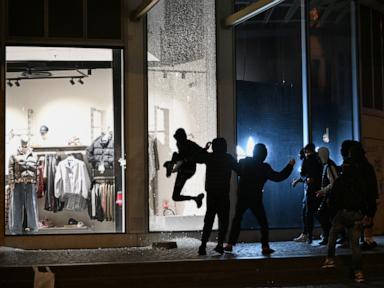
Calling for localized curfews treats an acute symptom of urban disorder as if it were the disease itself. When French Prime Minister Sébastien Lecornu proposed targeted, time-bound curfews in October 2026 following nationwide demonstrations, looting, and arson, the underlying mechanics of civil escalation were left unaddressed. Curfews compress street activity into narrower windows and simplify perimeter checks for law enforcement, yet they cannot resolve cost-of-living grievances, tight sovereign borrowing constraints, or the gap between peaceful mass marches and opportunistic property destruction.
Standard wire coverage of civil unrest typically follows a predictable sequence: tallying arrests, listing damaged storefronts or public buildings, and quoting officials promising to restore order. That reporting style captures immediate scale but treats unrelated behaviors as a single uniform wave. Separating peaceful protest from opportunistic looting, mapping the fiscal ceiling constraining executive concessions, and tracking how spatial restrictions shift disorder rather than eliminating it transforms a routine news summary into a clear operational diagnosis.
Deconstructing the Competitor Narrative and Its Analytical Gaps
A headline focused on a prime minister calling for localized curfews to curb rioting and looting frames the situation around executive action and street behavior. In practice, that framing compresses several distinct phenomena into one chain of causation. Protests by students, teachers, workers, and unions over school funding and the cost of living do not automatically produce arson or shop looting. Even when hundreds of thousands of people march across dozens of cities, violent clashes, arson against public buildings, and looting of commercial premises involve smaller subsets and distinct incentives.
Reporting that stops at the curfew announcement also overlooks timing and institutional strain. When police oversight is stretched across simultaneous demonstrations, barricades, and peripheral flashpoints, reactive perimeter rules arrive after initial property damage and momentum shifts have already occurred. Officials have noted that a large share of those arrested during the October 2026 unrest were adults and lacked clear ties to organized political movements, while authorities also pointed to violent factions and opportunists exploiting large crowds. Treating mass demonstrations and criminal opportunism as interchangeable blurs policy choices and distorts public debate over both civil liberties and public safety.
Three Mechanics Driving Urban Unrest and Curfew Limits
To evaluate why localized curfews produce mixed results in dense European cities, it helps to examine the crisis through three interlocking mechanics rather than a single cause-and-effect loop.
1. Crowd Dynamics and Opportunistic Spillover
Large demonstrations create high-density environments where crowd size lowers the perceived probability of immediate individual identification. Peaceful marches—whether driven by high living costs, fuel prices, or school conditions—generate predictable routes and focal squares. Opportunistic actors and violent subgroups operate differently: they monitor where security forces are concentrated, exploit blind spots along commercial corridors or civic landmarks, and rely on crowd cover to disperse quickly.
This distinction is a known operational pattern in public-order policing, though attributing specific acts to particular groups in real time remains a hypothesis until investigations conclude. When hundreds of thousands of demonstrators turn out nationwide, even a small fraction engaging in vandalism, arson, or looting produces visible shockwaves—from ransacked shops and damaged municipal offices to blocked cultural sites. Images of burning buildings and broken glass then dominate coverage, overshadowing peaceful participants and hardening political polarization.
2. The Fiscal Cost Function of State Concessions
Historically, governments facing sustained social unrest have often combined crowd management with targeted spending or policy concessions to cool tempers. When sovereign borrowing costs are elevated and budget deficits already constrain public finance, that fiscal lever loses elasticity. Every euro of emergency subsidy, wage adjustment, or school investment carries a higher financing cost or forces cuts elsewhere in the budget.
This creates a feedback loop between the street and sovereign debt markets. Unrest that signals prolonged domestic friction and policy gridlock can weigh on bond prices and push yields higher. Higher borrowing costs narrow fiscal room further, making costly concessions harder to finance without triggering market pushback. A government caught between rising street demands and tight fiscal constraints faces a narrow corridor: spending more risks fiscal stress, while holding firm risks prolonged mobilization.
3. Spatial Containment Versus Displacement
A localized curfew operates as a time-and-space filter. By restricting movement in defined zones during specific hours, authorities seek to reduce civilian exposure, clear commercial streets, and give police a clearer rule for stopping individuals in high-risk areas. In dense cities with interconnected transit lines and mixed-use neighborhoods, however, containment has sharp boundaries.
Disorder often adapts in one of three ways:
- Geographic displacement: Activity shifts from restricted districts into adjacent neighborhoods, suburban corridors, or secondary cities where curfew orders do not apply or enforcement is thinner.
- Temporal displacement: Gatherings and flashpoints move earlier in the day or shift toward daytime marches, school blockades, and daytime transit disruptions outside curfew hours.
- Friction with non-participants: Strict perimeter enforcement can snarl commuting, retail deliveries, and evening service work for residents who played no role in the unrest, eroding goodwill toward local authorities.
Operational Realities and Strategic Limitations
From an operational standpoint, declaring a curfew is far easier than enforcing it evenly across a large metropolitan area. Effective enforcement requires clear boundary definitions, rapid communication to residents and businesses, sufficient patrol capacity to check compliance without sparking standoffs, and coordination between municipal officials, prefectures, and national police. When rules are announced incrementally or vary sharply across neighboring jurisdictions, confusion rises on both sides of the line.
No public-order measure is a silver bullet. Blanket bans on protests or broad curfews can reduce visible nighttime looting in specific pockets, yet they can also inflame grievances if perceived as collective punishment or politically motivated ahead of elections. Conversely, relying solely on de-escalation without credible deterrence leaves shopkeepers and public infrastructure exposed when crowd control falters. Credible state authority depends on matching proportional force and clear rules with transparent legal follow-through and realistic fiscal commitments.
Strategic Play for Containing Escalation Without Widening the Rift
Executives and crisis managers confronting recurring urban unrest should treat localized curfews strictly as a short-term tactical bridge rather than a standalone strategy. Pair narrowly bounded nighttime restrictions around proven commercial and civic flashpoints with clear exemptions for essential workers and commuters, paired with visible protection of high-value public buildings and retail corridors before evening peaks. Simultaneously, separate crowd-management briefings and prosecution tracking from broader policy talks with unions, students, and local mayors so legitimate grievances are addressed through institutional channels rather than being bundled into criminal disorder.
France imposes partial curfews in several cities provides useful reporting on the October 2026 unrest, arrests, damaged shops, and political reactions surrounding the curfew decision.