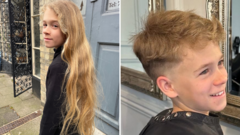
Most kids spent the 2020 lockdowns obsessed with Minecraft or complaining about Zoom school. Jack Mills did something different. He grew his hair. What started as a simple case of "can't get to the barbers" turned into a multi-year mission that ended with a significant donation to the Little Princess Trust. It's a story that highlights a side of the pandemic we don't talk about enough: the quiet, long-term commitment of young people who decided to turn a global mess into something helpful.
Lockdown hair wasn't always a choice. You remember the look. Shaggy fringes, DIY buzz cuts that went wrong, and a general sense of follicular chaos. But for Jack, the length became a goal. He didn't just let it grow because he was lazy. He saw an opportunity to help children who lose their hair due to cancer treatment or other conditions like alopecia.
Why donating hair is harder than you think
Donating hair sounds simple. You grow it, you cut it, you mail it. That's not how it works in reality. If you want to actually help a charity like the Little Princess Trust, you have to follow a strict set of rules. Most people don't realize that charities can't use just any hair. It needs to be healthy. It needs to be a certain length.
For the Little Princess Trust, the "gold standard" is usually 12 inches or more. While they accept 7 inches, the greatest need is always for longer locks. Why? Because when you make a wig, a significant portion of the hair length is lost during the knotting process. If you donate seven inches, the resulting wig might only have three or four inches of visible hair. Jack knew this. He didn't just stop at the minimum. He kept going until he had enough to make a real difference.
The maintenance is the part that kills most people's resolve. Long hair is a pain. It requires more washing, more brushing, and more patience. When you’re a young boy, suddenly dealing with a mane of hair that gets in your eyes during sports or takes forever to dry after a shower is a legitimate test of character. Jack stuck with it for over two years. That’s not a "lockdown trend." That’s a long-term project.
The hidden costs of making a wig
There’s a massive misconception that once the hair is donated, the job is done. Honestly, that’s where the real work begins for the charity. A single wig can cost the Little Princess Trust upwards of £500 to £700 to manufacture and fit. They don't charge the families a penny, but the money has to come from somewhere.
This is why Jack’s contribution was twofold. He didn't just hand over the hair. He used the haircut as a fundraising event. It's a smart move. If you're going to chop off years of growth, you might as well get the community involved. By raising thousands of pounds alongside the physical donation, he covered the "hidden" costs of his own gift. He ensured that the charity wouldn't have to dip into their reserves just to process his hair.
The psychology of hair loss in children
We often underestimate how much hair matters to a child’s identity. When a kid goes through chemotherapy, the physical toll is obvious, but the psychological impact of looking "different" is often what hits the hardest in social settings. A wig isn't about vanity. It's about a sense of normalcy. It's about a kid being able to walk into a park and not have every stranger immediately see a "patient." They just see a kid.
The Little Princess Trust has provided over 15,000 wigs since its inception in 2006. Each one is made from real hair to ensure it looks and feels as natural as possible. Synthetic wigs are okay, but they don't move the same way. They don't breathe the same way. For a child who has already lost so much control over their body, having a high-quality, real-hair wig is a massive boost to their mental health.
What you should know before you cut
If Jack's story makes you want to reach for the scissors, hold on. You need a plan. You can't just sweep hair off a barbershop floor and bag it up.
First, the hair must be clean and dry. Damp hair will mold in the post, and then it's useless. Second, it needs to be put into ponytails or braids before it's cut. This keeps all the strands running in the same direction. If the "roots" and "ends" get mixed up, the hair becomes "turned," and it's impossible to weave into a wig without it tangling permanently.
Third, check the color requirements. Most charities love natural colors. While some now accept gray hair or hair that has been dyed a natural shade, they generally can't use "fantasy" colors like blue or purple. The chemicals used to strip those colors often ruin the integrity of the hair anyway.
Jack managed to keep his hair in great condition despite the daily wear and tear of being a kid. That takes discipline. It means less heat, less harsh chemicals, and a lot of combing.
Changing the narrative on "lockdown projects"
We spent a lot of time talking about the negatives of the pandemic. The isolation. The lost learning. The anxiety. Stories like Jack's flip that script. He took a period of forced stagnation and used it to grow something—literally—that would eventually benefit someone he'll likely never meet.
It’s a selfless act that requires a specific kind of delayed gratification. Most kids want rewards now. They want the "like" on the photo or the immediate prize. Growing hair for charity is the opposite. You look slightly awkward for two years, deal with the knots, and only get the "reward" when you finally cut it all off.
How to support the cause if you're bald
You don't need a full head of hair to help. As Jack demonstrated, the financial side is just as important as the hair itself. If you can't grow 12 inches of hair, you can sponsor someone who is. You can run a bake sale. You can donate the price of your own monthly haircut.
The Little Princess Trust also funds research into pediatric cancers. They’re looking for kinder treatments that don't have the devastating side effects of traditional chemo. So, every pound raised doesn't just go toward a wig; it goes toward a future where maybe these wigs aren't even necessary.
Your next steps for a hair donation
If you’re sitting there with long hair and thinking about a change, don't just go to the salon and let the trimmings go to waste.
- Visit the Little Princess Trust website to read their latest hair donation guidelines. They change occasionally based on their current stock.
- Find a hairdresser who knows how to do a "charity cut." They’ll know how to section the hair into multiple ponytails to maximize the length you can give.
- Set up a JustGiving page. Even if you only raise £50, that helps cover the shipping and sorting costs.
- Use a sturdy, padded envelope. Include your donation form inside so the charity can send you a certificate. They want to thank you. Let them.
Jack’s lockdown locks are gone now, but the impact of that choice is just starting for the child who receives his wig. It’s a reminder that even when the world feels like it's standing still, you can still be moving toward something meaningful. Get the hair ties ready. Start growing. It's worth the wait.


