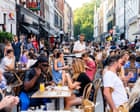
The romanticized vision of open-air dining in Soho is a lie wrapped in a postcard.
City Hall wants you to believe that overriding local opposition to pedestrianize Soho next summer is a triumph of progressive urban planning. They paint a picture of a vibrant, European-style piazza where culture thrives and businesses boom.
It is a fantasy.
The reality is an aggressive, short-sighted intervention that actively guts the economic and cultural fabric of one of the world's most unique entertainment districts. By forcing alfresco dining down the throats of residents and independent operators, the city is not modernizing Soho. It is corporate-washing it.
The Al Fresco Illusion: Why the Data Lies
The push to permanently pedestrianize Soho relies on a flawed premise: more tables outside equals more economic vitality.
During the pandemic, emergency outdoor seating was a necessary life support machine. But treating an emergency medical intervention as a permanent lifestyle choice is a policy failure. Data from Westminster City Council's previous consultations showed a deeply fractured ecosystem, not a consensus of joy. Over 70% of local residents opposed making the schemes permanent, citing a collapse in basic city services.
When you block traffic in a historic, dense grid like Soho, you do not eliminate the logistical needs of a city. You merely displace them.
- The Supply Chain Nightmare: Soho operates on a delicate, just-in-time delivery system. The independent theaters, film post-production houses, and legacy restaurants rely on constant servicing. Block the arteries, and delivery trucks are forced to idle on the perimeter, skyrocketing emissions and delaying time-sensitive deliveries.
- The Accessibility Erasure: Pedestrianization is deeply ableist in its current execution. Removing taxi access completely isolates elderly theatergoers and disabled patrons who cannot navigate crowded, uneven historic pavements on foot for blocks.
- The Trash Conundrum: Soho produces tons of commercial waste daily. Without vehicular access during peak hours, waste sits. You are not dining in Paris; you are eating a £30 pasta dish next to a mountain of baking refuse in a humid London summer.
The Death of the Creative Ecosystem
I have watched Westminster and City Hall policymakers fiddle with urban design for two decades. They consistently mistake foot traffic for economic health.
Soho’s true value is not its capacity to hold cheap plastic chairs on the asphalt. Its value lies in its status as a high-value creative cluster. This is the square mile where major films are edited, global ad campaigns are conceived, and independent theater thrives.
These industries require quiet, accessibility, and a functioning urban infrastructure.
When you prioritize the temporary monetization of the street over the permanent infrastructure of the buildings, you drive out the high-margin creative businesses. Post-production houses cannot operate when the street below is a non-stop, alcohol-fueled carnival until midnight. They move to Fitzrovia or King’s Cross. What replaces them? Global hospitality chains that can afford the skyrocketing rents driven by artificial street expansion.
By overriding local opposition, the Mayor is effectively subsidizing large-scale pub conglomerates at the expense of Soho’s creative soul. It is a gentrification scheme masquerading as a continental lifestyle upgrade.
The Financial Fallout Nobody Talks About
Let’s talk about the brutal reality of British weather.
The economic model of outdoor dining relies on an assumption of Mediterranean climates. London has, on average, 140 rainy days a year. Even in summer, a heatwave is an anomaly, not a guarantee.
To combat this, restaurants install massive, energy-hogging gas heaters and heavy plastic awnings. The result is a bastardized architectural mess that completely blocks the historic facades of Soho's listed buildings. You are left with a street that looks like a cheap airport terminal extension.
Furthermore, the rent dynamics are predatory. When councils grant pavement licenses, landlords immediately factor that extra covers capacity into the commercial property valuations.
Imagine a scenario where a small, independent bistro suddenly has its rent hiked because they now have theoretical access to ten outdoor tables. When October hits and the rain sets in, those tables disappear, but the rent hike remains. The corporate chains with deep pockets absorb the seasonal loss. The independent dumpling shop or legacy jazz club goes under.
Dismantling the Wrong Questions
People frequently ask: "How do we make London more walkable?"
That is the wrong question. The real question is: "How do we maintain a multi-use historic district without turning it into a monoculture theme park?"
The current strategy treats Soho as a playground for tourists rather than a living, working neighborhood. If you want a walkable city, you invest in comprehensive outer-borough transit and wide, permanent pedestrian boulevards in areas designed for high-capacity retail, like Oxford Street. You do not force it into a 17th-century grid of narrow alleyways that serves as the beating heart of the UK's entertainment industry.
The Hard Truths of a Real Alternative
There is a way to handle urban spaces without dictating terms from City Hall, but it requires admitting a few uncomfortable facts:
- Cap corporate hospitality footprint: If a street is pedestrianized, ban international chains and pub conglomerates from expanding their outdoor footprint. Reserve the space exclusively for independent operators who have been in the area for over a decade.
- Implement strict time-zoning: Street closures should be highly dynamic, not seasonal blankets. Deliveries and heavy service vehicle access must be fiercely protected between 6:00 AM and noon, with zero exceptions for outdoor setups during those hours.
- Tax the pavement space heavily: Instead of giving away public space to private businesses for a nominal license fee, charge a premium that directly funds local social housing maintenance and waste management infrastructure in Soho.
If the city is unwilling to implement these guardrails, then the upcoming summer override is nothing more than a asset grab disguised as a street party.
Stop pretending this is about vibrant culture. It is about maximizing beer sales at the expense of urban survival.