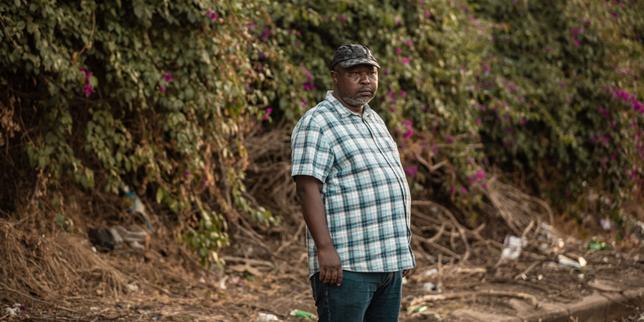
Stop Glorifying the Martyrdom of Thabiso Zulu
The standard media narrative surrounding South African corruption is painfully predictable. An honest individual stands up to a corrupt state machine, gets targeted, lives as a "dead man walking," and gets framed as a solitary savior holding back the tide of ANC decay.
It makes for dramatic reading. It feeds a comforting western narrative about individual heroism against systemic evil.
It is also completely useless for fixing the problem.
The prevailing coverage of figures like Thabiso Zulu in Pietermaritzburg paints them as lone crusaders fighting an isolated war against rogue local officials. This framing misses the entire structural reality of how political patronage operates in KwaZulu-Natal and across South Africa. By fixating on the spectacle of personal sacrifice, commentators treat political violence as an aberration caused by "bad apples" rather than what it actually is: a fully rational, highly organized market mechanism for wealth redistribution.
Celebrated whistleblowers are not failing because they lack courage. They are failing because individual morality cannot dismantle an institutionalized economy built on political rents.
The Patronage Economy is Not broken. It is Working Exactly as Designed
To understand why the "lone hero" model fails, you have to throw out the assumption that local municipal governance in South Africa is merely suffering from "inefficiency" or "mismanagement."
When tender processes are hijacked and political opponents are assassinated in KwaZulu-Natal, the system is not breaking down. It is performing its actual intended function: transferring public funds into private protection networks that sustain local political power.
+-----------------------------------------------------------------------+
|                       MUNICIPAL BUDGET / TENDERS                      |
+-----------------------------------------------------------------------+
                                    |
                                    v
+-----------------------------------------------------------------------+
|                  POLITICAL PATRONAGE NETWORK (KZN)                    |
|  - Siphons resources to secure local factional loyalty                |
|  - Enforces discipline through targeted violence / political hits     |
+-----------------------------------------------------------------------+
                                    |
                                    v
+-----------------------------------------------------------------------+
|                         THE WHISTLEBLOWER                             |
|  - Exposes the transfer                                               |
|  - Operates without institutional backing or collective leverage      |
|  - Absorbs 100% of the physical risk without shifting structural power|
+-----------------------------------------------------------------------+
I have spent years analyzing governance failures across emerging markets, and the pattern is always identical. When an economic system rewards factional loyalty over institutional compliance, blowing the whistle on a single tender does not break the chain. It merely opens up a vacancy for the next faction in line.
- The Myth of the Lone Savior: Exposing a corrupt mayor or tender board member changes the driver, not the car.
- The Reality of Risk: Individual whistleblowing isolates the target, making assassination cheap and low-risk for the network enforcing the status quo.
- The Institutional Vacuum: Without legal protections that guarantee economic security and physical immunity, public outrage produces zero long-term structural reform.
Media outlets love praising the brave insider who risks everything. But glorifying personal risk while ignoring the lack of institutional machinery behind them isn't support. It's romanticized neglect.
Why Media Coverage Actually Protects the Corrupt System
When journalists frame corruption as a moral battle between "good guys" and "bad guys," they give the political elite a massive tactical advantage.
It depoliticizes systemic incentives.
By focusing heavily on the personal drama—the safehouses, the death threats, the bulletproof vests—the underlying mechanisms of municipal procurement fraud get buried under human-interest reporting.It creates a false sense of accountability.
Citizens read the profile, feel a surge of moral sympathy, share the article, and assume that because the crime is known, justice is inevitable. In reality, public awareness without organized legal or economic leverage changes nothing on the ground.It signals to other insiders that honesty is fatal.
When the public narrative around whistleblowing highlights constant fear, poverty, and abandonment by the state, it serves as a warning to anyone else thinking of stepping forward: Stay quiet or become another tragic hero.
"Whistleblowing in a weak institutional setting isn't a strategy for governance reform; it's an extreme sport with a guaranteed loss rate."
✨ Don't miss: The Vanishing Lights of the Gulf
How to Actually Break Local Corruption Networks
If pointing out corruption and relying on individual martyrs doesn't work, what does? We have to stop asking "How do we protect whistleblowers?" and start asking "How do we make corruption financially and operationally unviable?"
1. Shift from Moral Appeals to Economic Friction
Corrupt networks operate on cash flows and procurement contracts. Anti-corruption efforts must focus entirely on stripping away discretion from local procurement boards rather than relying on individuals to report stolen funds after the fact. Automated, open-ledger municipal bidding systems remove human gatekeepers entirely.
2. Build Collective Immunity, Not Individual Martyrs
An isolated individual reporting fraud is an easy target for a hit squad. A cartel of regional businesses, civic associations, and legal bodies filing joint, anonymous, class-action style disclosures creates a structural shield. You cannot assassinate a decentralized syndicate of informants.
3. Incentivize Internal Defection Economically
Moral duty is a weak counterweight to a multi-million rand tender payout. If you want high-level operatives to turn on their networks, the state or international transparency funds must offer financial bounties tied to recovered assets, paired with immediate relocation packages. Expecting people to destroy their own lives out of pure civic virtue is a childish policy strategy.
The Hard Truth About South Africa's Path Forward
The narrative that South Africa will be saved by courageous individuals standing against the machine is a comforting lie.
Thabiso Zulu and those like him deserve credit for their bravery, but using their plight as moral theater does nothing to fix Pietermaritzburg, KwaZulu-Natal, or the country at large. Courage is not a governance model. Systemic problems require systemic engineering, structural friction, and a cold-blooded assessment of power dynamics.
Until the focus shifts from celebrating martyrs to constructing cold, unyielding legal and financial barriers that make corrupt patronage impossible to execute, the body count will keep rising while the tenders keep flowing.
Stop asking for heroes. Start building systems that render them unnecessary.