Hong Kong is currently obsessed with its own sadness. The recent headlines are predictable: one in five residents feels lonely, half a million people are self-isolating, and the city is supposedly on the brink of a mental health collapse. It makes for great clickbait. It justifies massive government budgets for "community outreach" and "social cohesion" programs. But it misses the fundamental reality of urban survival in a hyper-capitalist pressure cooker.
We aren't looking at a loneliness epidemic. We are looking at a logical, calculated retreat from a high-friction social environment that no longer offers a return on investment. Recently making headlines in this space: Why Saskatchewan Mosquito Numbers Are Exploding This Summer.
The Myth of the Sad Hermit
The common narrative treats the 520,000 self-isolators as victims of some mysterious psychological virus. The "lazy consensus" assumes that being alone is a failure of character or a systemic breakdown. It’s not. For a significant portion of Hong Kong’s population, self-isolation is a rational response to a city that demands everything and gives back nothing but cramped living spaces and exhausting social obligations.
Social interaction in Hong Kong is expensive. It’s expensive in terms of money, time, and emotional labor. When a survey says 20% of people feel lonely, it fails to ask the follow-up: "Is that loneliness, or is it just the realization that your 'friends' are actually just professional networking contacts?" Further information on this are detailed by Glamour.
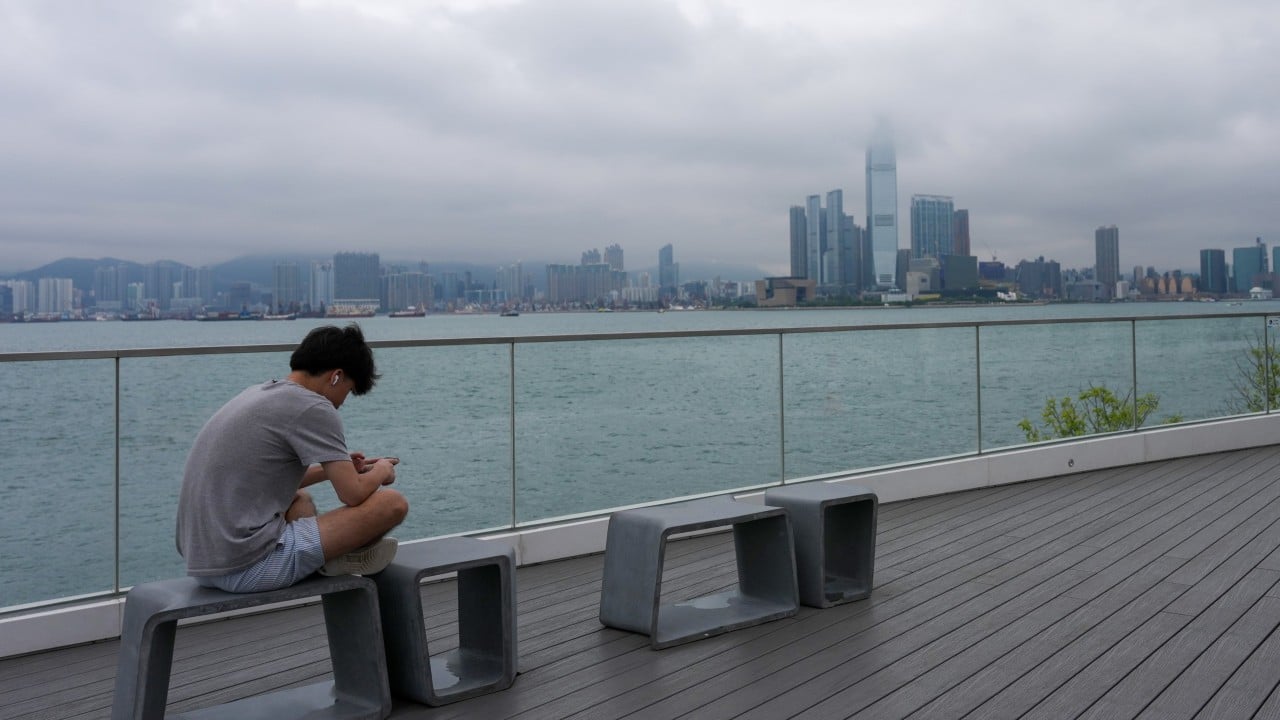
The data cited by local NGOs often conflates "living alone" or "staying in" with "suffering." This is a catastrophic analytical error. We are pathologizing privacy. In a city where you can’t walk down Nathan Road without bumping into a thousand strangers, the act of retreating into a digital or physical shell isn't a symptom of illness. It’s a defense mechanism.
The ROI of Socializing Has Bottomed Out
Imagine a scenario where every time you go out, you spend $500 HKD on a mediocre meal, endure two hours of transit, and spend the entire night talking about property prices or insurance pivots. Most people would eventually choose the four walls of their subdivided flat and a Netflix subscription.
The "loneliness" reported in these surveys is often a proxy for social exhaustion.
- The Transactional Trap: In Hong Kong, social circles are frequently built on utility. When your utility drops—perhaps you lost your job or changed industries—the circle shrinks. This isn't "loneliness" in the poetic sense; it's the market correcting itself.
- Digital Sovereignty: The 520,000 people "isolating" are often more connected than the boomers complaining about them. They are on Discord, Twitch, and private telegram groups. They aren't lonely; they are just done with the physical city’s version of socializing.
- The Space Constraint: You cannot "foster" (to use a term the bureaucrats love) community in a city where there is no physical "third place" that doesn't require a credit card swipe.
If you want to fix the "loneliness," don't hire more social workers to knock on doors. Fix the rent. Give people enough square footage to host a dinner party without someone sitting on a toilet.
Why the Solutions are Insulting
The current "expert" advice is a parade of banality. They suggest "joining a club," "volunteering," or "attending community workshops." This is like telling a person in a drought to just "think about rain."
These interventions ignore the stigma of poverty. A huge chunk of that 20% isn't avoiding people because they forgot how to talk; they are avoiding people because they can't afford to participate in the middle-class rituals of friendship. When the government or NGOs try to "re-integrate" these people, they are essentially trying to shame them back into a consumerist social model they’ve already opted out of.
I’ve seen community centers spend millions on "friendship apps" and "wellness festivals" that nobody under the age of 60 attends. It’s a performative waste of capital. These programs are designed to make the non-lonely feel better about the state of society, not to actually provide value to the isolated.
The Hikikomori Evolution
The survey mentions "self-isolators," a term often linked to the Japanese hikikomori phenomenon. Critics look at this as a tragedy. I look at it as a labor strike against reality.
In a traditional Hong Kong career path, you work 12 hours a day to pay for a room you only sleep in. If you choose to isolate, you are effectively withdrawing your labor and your consumption from a system that exploits you. The "lonely" person is often someone who has realized that the juice isn't worth the squeeze.
Is there a segment of the elderly who are genuinely suffering? Yes. That is a failure of the family structure and the social safety net. But the "epidemic" among the youth and working-age adults is a different beast entirely. It’s a conscious decoupling from a toxic urban culture.
Stop Trying to "Cure" Solitude
The most dangerous thing about these surveys is that they create a "problem" that requires a "cure." This leads to invasive social policies. We need to stop viewing the desire to be left alone as a public health crisis.
We should be asking:
- Why is our version of "society" so unappealing that half a million people want no part of it?
- Why do we define "mental health" as the ability to be a happy, productive cog in a dysfunctional machine?
- How much of this "loneliness" is actually just a normal reaction to an abnormal environment?
The truth is that some people are lonely in crowds, and some are perfectly content in solitude. By lumping them all into a 20% statistic, we erase the nuance of the human experience. We turn citizens into "cases" to be managed by the state.
The Brutal Reality of the Modern City
Hong Kong isn't losing its soul because people are staying home. It lost its soul because it became a city of transactions rather than relationships. You can’t manufacture "belonging" through a government initiative.
If you feel lonely, the answer isn't a community workshop. The answer is to stop pretending that your worth is tied to your social calendar. Accept the isolation. Use it. The most dangerous person in a high-pressure society is the one who no longer needs the approval of the crowd.
Stop pathologizing the retreat. Start questioning the environment that made the retreat necessary.
The half-million people staying indoors aren't the problem. They are the feedback.