To understand what it means to run a small business in the shadow of a prolonged political era, you have to smell the morning air inside a dusty workshop in the heart of Józsefváros. The coffee is bitter, brewed in a pot that has seen better administrations, better exchange rates, and better days.
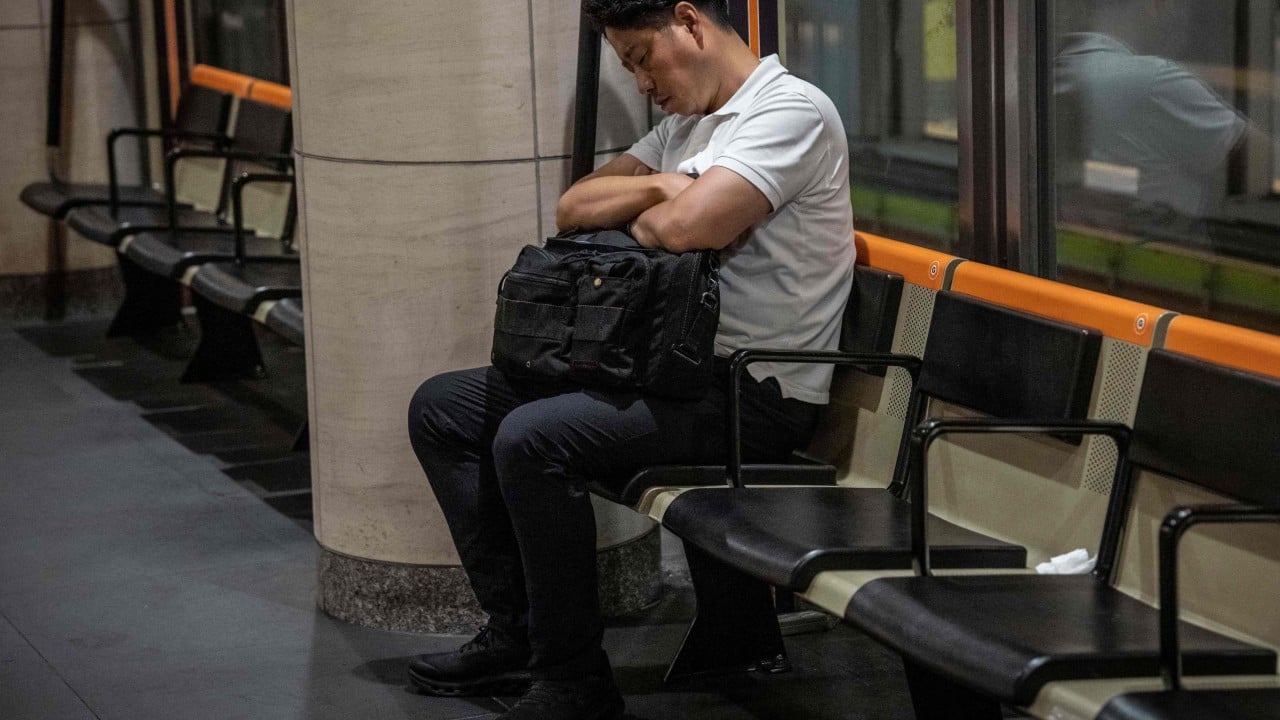
Let us call him Gábor. He is fifty-four, with hands that have spent three decades coaxing life back into broken printing machinery. He is not a politician. He does not care about the grand theater of constitutional amendments or the breathless dispatches of foreign correspondents. Gábor cares about the price of gas, the sudden evaporation of mid-level contracts, and the quiet, crushing realization that his enterprise has spent the better part of a decade running on a treadmill.
For years, the macroeconomic indicators coming out of Budapest told a story of steady numbers and controlled growth. But walk away from the sleek glass towers of the multinational hubs and step into the brick-and-mortar reality of Hungarian small and medium-sized enterprises. You find something entirely different. You find stagnation disguised as stability. You find a quiet, persistent exhaustion.
Hungary’s economic landscape has long been defined by a peculiar duality. On one side stands the muscular, state-favored national champion model—an ecosystem where political alignment often dictates commercial survival and access to tender spoils. On the other side stands the vast, independent archipelago of family-run bakeries, software micro-shops, local logistics firms, and precision metalwork outfits like Gábor’s. For this second group, the rules of the game have felt increasingly like running a marathon with heavy stones tied to your ankles.
Consider what happens when the institutional environment becomes unpredictable. Inflation does not merely alter prices; it alters psychology. When business owners spend more time decoding overnight tax decrees than they do developing new products, innovation dies a slow, unheralded death. Credit dries up for those lacking the right connections. Talented young programmers, accountants, and engineers pack their bags for Vienna or Berlin not because they hate their homeland, but because they can no longer afford to wait for a horizon that never seems to get any closer.
Years blur together when you are simply treading water. Gábor remembers 2018 clearly, and not fondly. That was the year he realized his expansion plans would have to wait. Then came 2021, and the global shocks that tested every business on earth. But in Hungary, those external waves crashed against a shoreline already weakened by structural predictability problems. The feeling among local entrepreneurs was not panic. Panic has a sharp, clean edge. This was worse. It was the dull ache of irrelevance.
Yet, human resilience is an obstinate thing. It refuses to logic itself out of existence.
Lately, walking through the quieter commercial districts of the capital, something subtle has shifted in the conversations behind closed doors. There is a new cadence to the talk over lunch at the local bisztró. It is not blind optimism—Hungarian business owners are far too cynical for that—but it is something sharper: a cautious, whispered anticipation.
The political horizon is changing. The word Orban no longer functions as an eternal punctuation mark at the end of every economic sentence. Whether the current administration falls tomorrow or gradually yields to a coalition of exhausted challengers, the psychological lock is beginning to pick. Business leaders are daring to think past the next fiscal quarter. They are asking a dangerous, liberating question: What does a post-transition economy actually look like?
To answer that, you have to look at the untapped potential currently trapped inside the domestic market. Hungarian SMEs employ the vast majority of the private sector workforce. They are the true nervous system of the economy. When they hold back investment, the whole body goes numb. When they finally let go of their breath, the movement is sudden and kinetic.
Imagine a machine shop finally able to secure a long-term commercial loan without whispering about political patronage. Imagine software developers returning from abroad because the regulatory environment rewards merit rather than compliance. This is not a utopian fantasy; it is the baseline requirement of a normal European market economy. And it is precisely what Hungarian entrepreneurs have been starved of for years.
The transition, whenever and however it arrives, will not be a magic wand. Clearing away years of administrative distortion takes time. The scars of delayed technological upgrades, underfunded training programs, and fractured supply chains will take years to heal. Gábor knows this better than anyone. He looks at his aging milling machine and knows it needs replacement, regardless of who is sitting in the parliament building across the Danube.
But the shift is already happening in the minds of the people who actually build things, fix things, and sell things.
The coffee in the Józsefváros workshop is gone now, the cup left empty on a grease-stained workbench. Outside, the trams rattle down the boulevard, cutting through the crisp autumn air of Budapest. Gábor wipes his hands on a rag, looks at an inquiry from a prospective client in western Europe—a client who had almost given up on Hungarian reliability—and starts typing a reply. He is not waiting anymore. The future, with all its messy, complicated promise, is finally allowed to begin.