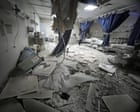
When an Israeli airstrike hit Nasser Medical Complex in Khan Younis in November 2026, it killed six people, including veteran surgeon Dr. Rezik Abushira, and left around two dozen wounded. Worse, it struck a surgical department inside one of the few medical facilities still standing in southern Gaza.
People searching about the Nasser hospital strike usually want two things right away. First, they want the basic facts of what happened in Khan Younis. Second, they want to know why the death of one doctor matters so much when thousands have already died in the war.
Here's the blunt truth. Replacing a building takes cement and money, though even that is brutal in Gaza right now. Replacing a seasoned trauma surgeon with more than two decades of hands-on experience takes years you simply don't have.
What Happened During the Nasser Hospital Strike
The strike hit around 12:30 a.m. on November 12, 2026, without warning, tearing into the surgical ward on the second floor of the Al Yasin building inside Nasser Medical Complex. Eyewitnesses and hospital officials reported shrapnel injuries, collapsed ceilings, and surgical patients waiting for operations in the ward at the time of the blast.
Six people died in the attack, including Dr. Rezik Abushira, while roughly 20 to 28 others were wounded. Among the dead was a young surgical patient who had been scheduled for an operation later that morning and had already lost his father and two brothers earlier in the conflict.
This wasn't a one-off tragedy at a quiet clinic. Hospital officials and reporting on the conflict note that Nasser Medical Complex has been struck at least seven times since the war began in October 2023—including a double-tap strike in August 2025 that killed 22 people, among them five journalists. Every repeat hit compounds the damage to wards, operating rooms, power lines, and staff morale.
Why Losing a Veteran Trauma Surgeon Hurts So Deeply
Anyone who has worked in or studied emergency medicine knows that a hospital's real engine isn't the MRI machine or the bed count. It's the clinical team making life-or-death calls under chaos.
Dr. Abushira trained in Ukraine back in the 1990s—at a time when Gaza didn't have medical schools—and went on to spend more than 20 years working at Nasser Medical Complex. American trauma surgeon Dr. Feroze Sidhwa, who worked alongside him in Gaza and later spoke about his death, described him as deeply devoted to surgery and tireless on rounds even while living displaced and trying to feed his own family.
In war zones, trauma surgery isn't textbook medicine. Blast injuries, mangled limbs, shrapnel tracts, and severe infections demand fast judgment with limited supplies and spotty electricity. When a surgeon with two decades of local trauma experience dies—and surgical theaters on the upper floors are knocked out of commission—patients across southern and central Gaza face a massive bottleneck in urgent care.
You can't just fly in a dozen new doctors on a Tuesday and expect the same institutional memory. Foreign surgeons rotate in and out, often for short stints. Local specialists know the layout, the supply quirks, the patient population, and how to stretch scarce resources when everything else fails.
Conflicting Claims and International Law
Any honest look at this strike has to put the competing accounts side by side without sugarcoating either.
The Israeli military has stated that it targeted militant fighters or a senior Hamas commander and has repeatedly accused Hamas of operating out of hospitals and using medical sites to store weapons or plan attacks. Hamas denies using hospitals for military purposes. Meanwhile, local medics, civil defense officials, and humanitarian observers point to dead patients, wounded civilians, and the loss of vital medical capacity inside a heavily displaced area.
Under international humanitarian law—including the Geneva Conventions—hospitals, the sick and wounded, and medical staff enjoy special protection. At the same time, legal scholars and military analysts note that a medical facility can lose its protected status only under strict conditions if it is used to commit acts harmful to the enemy, and even then, attackers must follow rules of distinction, proportionality, and precaution to spare civilians.
In practice, fog of war, disputed intelligence, and dense urban fighting turn every strike on or near a hospital into a fierce legal and moral flashpoint. What's indisputable on the ground is the human toll: over 74,000 Palestinians killed since October 2023 according to Palestinian health authorities, following the October 7 Hamas-led attack on southern Israel that killed around 1,200 people and took 251 hostages.
Common Misconceptions About Hospital Strikes in Gaza
A lot of arguments online flatten a complex legal and operational reality into slogans. Let's clear up a few common misconceptions:
- "If a hospital is hit, international law was automatically broken." Not automatically in every theoretical case, because legal assessments depend on specific facts, military necessity, warnings, and proportionality. Still, repeated strikes hitting wards and medical staff raise severe compliance questions and draw intense scrutiny from human rights groups and UN bodies.
- "A ceasefire means the hospital front is quiet." Even after the October 2025 ceasefire agreement, deadly strikes and military incidents have continued to be reported in Gaza, with Palestinian health officials reporting more than 1,600 people killed since that truce took effect. Ceasefires on paper often fray fast on the ground.
- "Medical evacuations solve the shortage of care." Evacuating a small fraction of patients abroad helps those individuals, yet it doesn't rebuild damaged wards or replace the daily surgical workforce needed by hundreds of thousands of people still inside Gaza.
What You Can Do Right Now If You Want to Follow or Help
If this story makes you want to do more than doomscroll, focus on verified reporting and concrete relief channels rather than viral rumors:
- Cross-check breaking claims across multiple wire and news outlets. Early casualty numbers and strike details shift fast in active conflict zones; compare reporting from established outlets like The Guardian, The National, and The World, alongside UN humanitarian updates.
- Vet any medical charity before donating. Look up charities' financial transparency, operational presence in southern Gaza or neighboring crossings, and restrictions on medical supplies and fuel before sending money.
- Contact your elected representatives with specific questions. If you live in a country involved in diplomatic or military aid decisions, ask your representatives concrete questions about civilian harm mitigation, medical aid access, and accountability mechanisms.