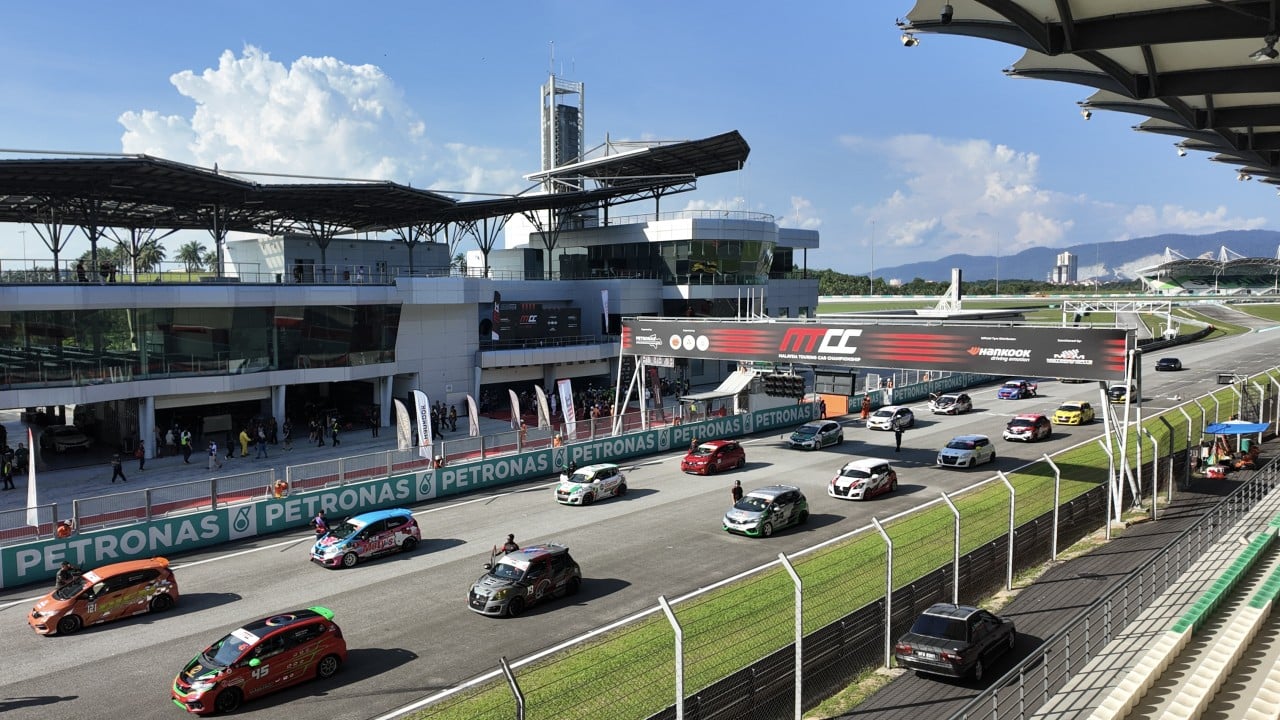
The cancellation of the Malaysian Formula 1 Grand Prix after 2017 exposed a fundamental structural flaw in the nation's motorsport ecosystem: the reliance on a premier sovereign event to subsidize and validate local athletic development. For nearly two decades, the Sepang International Circuit functioned as a high-visibility marketing asset, creating the illusion of a self-sustaining racing culture. The withdrawal of fiscal support by state apparatuses dissolved the immediate justification for corporate capital injections, leaving Malaysian racing drivers without a clear economic path to global tiers.
The issue facing contemporary Malaysian talent is not an absence of raw competence, but a misaligned funding mechanism. Developing elite drivers demands a multi-million-dollar commitment that local public-sector budgets cannot justify in isolation. Resolving this bottleneck requires analyzing the transition from real-world capital barriers to digital talent identification and regional commercial ecosystems.
The Cost Function of Global Open-Wheel Progression
Ascending the European open-wheel ladder toward a Formula 1 superlicense requires a highly capital-intensive development process. The financial requirements expand exponentially at each progressive tier of competition:
- International Karting (KF3/KF2): $150,000 to $300,000 per annum.
- Formula 4 (Regional): $400,000 to $700,000 per annum.
- Formula 3 (FIA Championship): $1,200,000 to $1,800,000 per annum.
- Formula 2 (FIA Championship): $2,500,000 to $4,000,000 per annum.
The cumulative capital required to secure a competitive seat in Formula 2 exceeds $7,000,000. When the host nation lacks a domestic Grand Prix, corporate entities cannot easily justify this expenditure through local tax incentives or immediate regional visibility.
This asset allocation problem is further complicated by geographic arbitrage. European drivers operate within a mature ecosystem of teams, specialized mechanics, and component suppliers, minimizing transport and logistics costs. Conversely, an Asia-based athlete faces structural premiums, including international travel overheads, visa restrictions, and limited testing access on European tracks.
The domestic corporate sector, historically anchored by state-owned energy firms like Petronas, has shifted its focus. Capital that once backed developmental drivers now targets top-tier global partnerships where brand equity is decoupled from the driver's nationality. Consequently, a funding gap has formed between grass-roots karting and elite international competition.
Digital Arbitrage and the Virtual Pipeline
To bypass the traditional financial barriers of entry-level motorsport, stakeholders have turned to digital simulation as a legitimate talent acquisition channel. Sim-racing has evolved from a training supplement into a data-driven mechanism for identifying elite drivers.
+----------------------------+
|  Esports / Sim-Racing      |  <-- Low-cost entry barrier
+----------------------------+
              |
              v  (Data Validation: Telemetry & Adaptability)
+----------------------------+
|  Regional Academy Pooling  |  <-- Specialized Talent Identification
+----------------------------+
              |
              v  (Commercial Integration: Corporate Funding)
+----------------------------+
| Real-World GT/One-Make Racing |  <-- Porsche Carrera Cup Asia / GT World Challenge
+----------------------------+
The migration of drivers like Naquib Azlan from competitive simulator racing to the Porsche Carrera Cup Asia demonstrates the viability of this model. The economic efficiency of virtual talent identification rests on two main factors:
The Capital-to-Data Ratio
A top-tier professional simulator setup demands an initial fixed capital investment of $15,000 to $300,000, with nominal operational marginal costs. Conversely, a single weekend of Formula 4 testing generates comparable expenditure when factoring in tire degradation, fuel consumption, track rental fees, and mechanical support. Simulators allow drivers to log thousands of hours of high-fidelity training, generating granular telemetry data across tire thermal degradation, brake pressure modulation, and corner-entry slip angles without real-world financial risk.
Skill Transferability Mechanics
Modern simulation engines offer high physical accuracy, matching real-world vehicle dynamics with tight tolerances. The psychological and neuromuscular inputs required to optimize a digital race car match those needed in physical motorsport. The primary variable shifting in a real vehicle is physical G-force exposure, which can be managed through targeted physiological conditioning.
By using esports as a primary selection filter, programs like the SRO GT Academy and regional talent pools significantly lower scouting costs. Instead of funding an unproven driver's karting career for five years, corporate sponsors can analyze digital telemetry datasets to identify elite prospects, directly investing capital into drivers with verified performance metrics.
Structural Rebalancing: The Pivot to Touring and GT Formats
The open-wheel path to Formula 1 remains a high-risk, low-probability endeavor. A more viable strategy for regional drivers centers on sports cars, touring cars, and multi-class endurance disciplines. Championships such as the GT World Challenge Asia and the Asia Road Racing Championship (ARRC) offer structurally sound business models for sustainable driver careers.
The underlying economy of GT and sports car racing relies on a split-capital model. Unlike open-wheel racing, which depends entirely on sponsorships or personal wealth, GT racing utilizes Pro-Am line-ups. In this structure, a funded amateur driver subsidizes the team's operational overhead, creating a market for skilled professional drivers to compete without bringing personal sponsorship.
Furthermore, market alignment favors regional championships over European formulas. Southeast Asian corporate sponsors find greater value in events hosted at venues like Sepang, Mandalika, and Buriram compared to junior categories in Europe. The proximity of these races allows sponsors to activate domestic campaigns and host corporate hospitality events, generating immediate regional brand equity.
The technical diversity of these platforms also opens up multiple career paths. A driver who adapts to GT3, GT4, or touring car regulations can transition between regional sprint formats and global endurance events like the 24 Hours of Spa or Le Mans. This flexibility reduces dependence on a single series, establishing a more stable foundation for long-term professional development.
Strategic Framework for Regional Driver Sustainability
To build a reliable pipeline for Malaysian talent in a post-F1 landscape, stakeholders must move away from ad-hoc sponsorship models and establish a structured developmental framework.
Phase 1: Tiered Digital Sourcing
Governments and corporate partners should establish national sim-racing initiatives to serve as a low-cost entry point. This phase filters out competitors based on objective telemetry benchmarks, focusing on corner-exit velocities, trail-braking efficiency, and race-distance consistency.
Phase 2: Targeted Regional Prototyping
Top performers from the digital phase should step up to domestic one-make series or regional karting shootouts to evaluate their real-world adaptability and physical durability. This step validates simulated performance metrics in a physical environment while keeping logistics costs low.
Phase 3: B2B Commercial Integration
Drivers moving into regional GT or touring car fields should be positioned as brand assets for regional businesses. Marketing campaigns should leverage live racing telemetry, interactive virtual fan engagement, and corporate business-to-business events across ASEAN growth centers to drive return on investment.
This approach acknowledges the realities of the modern motorsport economy. Rather than chasing a rare spot on the F1 grid, this strategy focuses on developing professional drivers who can sustain long-term careers within the global sports car and GT ecosystems. By building on virtual talent scouting and regional corporate alignment, Malaysia can develop a sustainable motorsport infrastructure that thrives independently of a sovereign Grand Prix.