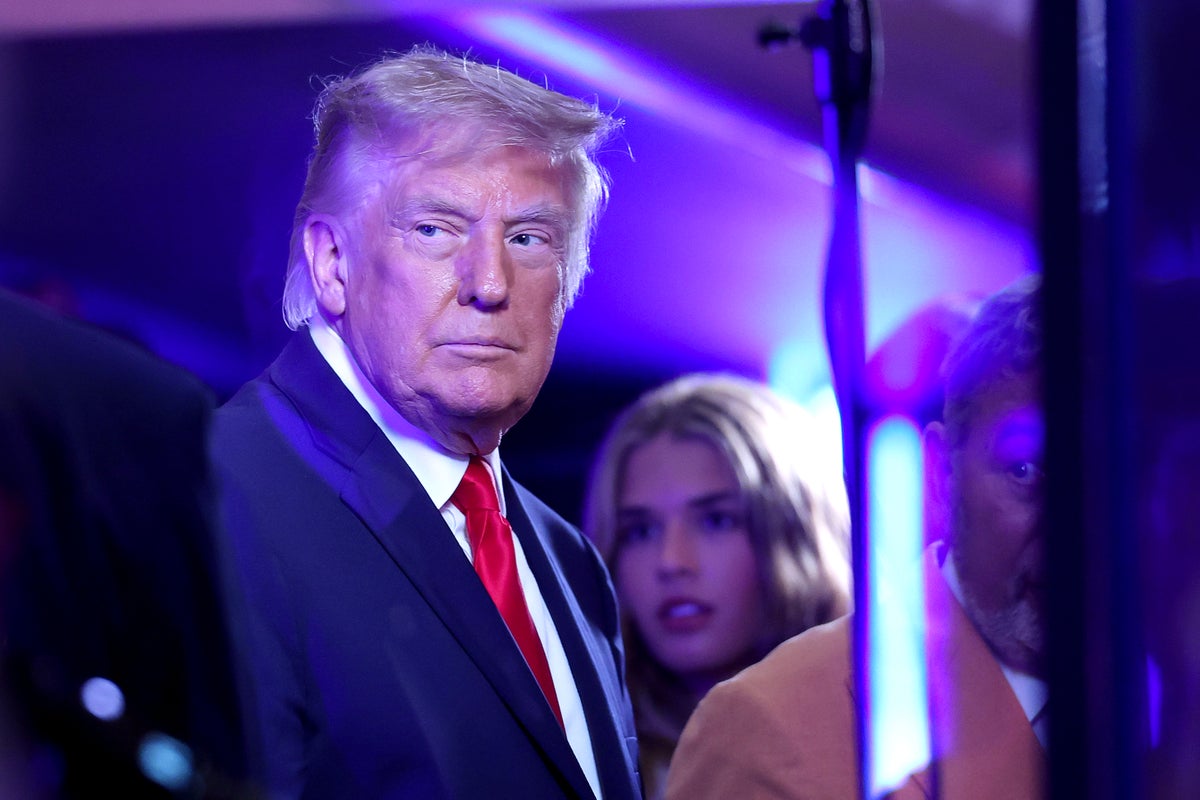
The headlines wrote themselves before Donald Trump even took his seat at Madison Square Garden for the NBA Finals. "Crowd Boos Trump," the standard-issue bulletins blasted, operating on a predictable, copy-pasted script that treats a sports stadium like a pristine political science laboratory.
It is a lazy consensus. It is bad reporting. Worst of all, it fundamentally misunderstands the mechanics of live sports culture.
The mainstream media views a stadium crowd through a flat, two-dimensional lens: a monolithic block of people registering a pure, unified ideological vote. If there is a decibel spike when a politician walks in, the press immediately labels it a definitive referendum on their approval rating. This narrative is comforting to pundits, but it completely ignores how live audio, crowd psychology, and arena dynamics actually function.
I have spent two decades managing live event production and analyzing crowd logistics at major sports venues. I have stood near the mixing boards, monitored decibel meters, and watched how a room changes when a lightning-rod figure appears on the Jumbotron.
The truth about what happened at the NBA Finals is far more complex than a simple binary of approval or rejection. Arena noise is a chaotic mix of audio engineering, geographical bias, and raw, tribal performance art.
The Sound Engineering Fallacy
To understand why the standard "booed out of the building" narrative is flawed, you have to understand how modern arena audio works.
When a polarizing figure appears on a stadium screen, the reaction is never uniform. It is a violent collision of two opposing forces: intense cheering and intense booing.
Here is the mechanical reality of live audio: Booing is a low-frequency sound. Cheering is a high-frequency sound.
Low-frequency sounds (booing) travel further, bend around obstructions better, and carry a much heavier acoustic weight in an enclosed concrete cavern like Madison Square Garden. High-frequency sounds (cheering and whistling) are directional, easily absorbed by clothing, and dissipate quickly in a massive room.
Acoustic Dynamics of Arena Noise:
- Booing: Low-Frequency (100–250 Hz) -> Long wavelengths, omnidirectional, fills concrete spaces easily.
- Cheering: High-Frequency (1 kHz–4 kHz) -> Short wavelengths, highly directional, easily absorbed by crowd mass.
If a crowd is split down the middle—50% cheering and 50% booing—the audio feed captured by a broadcast microphone or a smartphone in the upper deck will almost always register as a muddy, dominant boo. The physics of sound distort the actual headcount in the room. Pundits run with the audio clip because it fits a narrative, completely ignorant of the fact that acoustic engineering favored that exact sonic outcome.
The Myth of the Monolithic Sports Fan
Every sports arena has a distinct cultural DNA, shaped entirely by ticket pricing, geography, and corporate distribution. Writing a sweeping declaration about national political sentiment based on a crowd at Madison Square Garden is like judging global culinary trends based on the menu at a local country club.
Consider the reality of an NBA Finals crowd in Manhattan:
- The Corporate Filter: Courtside and lower-bowl tickets for an NBA Finals game at MSG do not go to average voters. They go to Wall Street firms, tech executives, and international luxury brands.
- The Regional Bubble: New York City voted overwhelmingly against Trump in consecutive elections. Expecting a Manhattan crowd to cheer for him is like expecting a Dallas crowd to give a standing ovation to a tax hike.
- The Perceived Intrusion: Sports fans treat the arena as a sanctuary. When a massive security detail disrupts the entry gates, slows down concession lines, and pauses the pre-game hype to introduce a politician, a significant portion of the crowd boos the inconvenience, not the individual.
When you mix these factors together, a negative reaction is not a shocking political statement. It is a predictable demographic certainty. The real news story would have been if the crowd stayed completely silent.
Spectacle Over Politics
Live sports crowds are fundamentally performative. People do not attend a game to express deeply considered civic philosophy; they go to participate in a high-energy spectacle.
When a polarizing figure is put on the screen, it triggers a reflex. It is the same impulse that causes fans to boo the opposing team's star player or mock a referee's call. It is theatrical. The crowd is playing its part in a televised drama.
Imagine a scenario where a Roman colosseum crowd reacts to an emperor. The roar is a product of the moment, the alcohol consumption, the score of the game, and the collective desire to be loud. Isolating that sound clip and analyzing it as a precise data point for an upcoming election is an exercise in creative writing, not journalism.
Why the Media Cannot Give Up the Narrative
The press clings to stadium reaction stories because they provide an easy, visual shortcut to validation. Polling requires nuance, margins of error, and complex demographic weighting. A stadium booing video offers instant gratification. It requires zero intellectual effort to hit share and declare a cultural victory.
But this reliance on stadium optics creates a dangerous blind spot. We saw this exact dynamic play out over the last two election cycles. Pundits pointed to massive stadium rallies as proof of an unstoppable wave, while opponents pointed to arena booing clips as proof of total rejection. Both sides fell victim to the same trap: confusing a loud room for a statistical reality.
If you want to know where the electorate stands, look at localized polling data, economic sentiment indices, and voter registration shifts. Do not look at a crowd of corporate ticket holders who are four beers deep during the national anthem.
Stop treating the Jumbotron like a ballot box. It is just a screen in a noisy room, and the people holding the microphones are usually listening to what they want to hear.