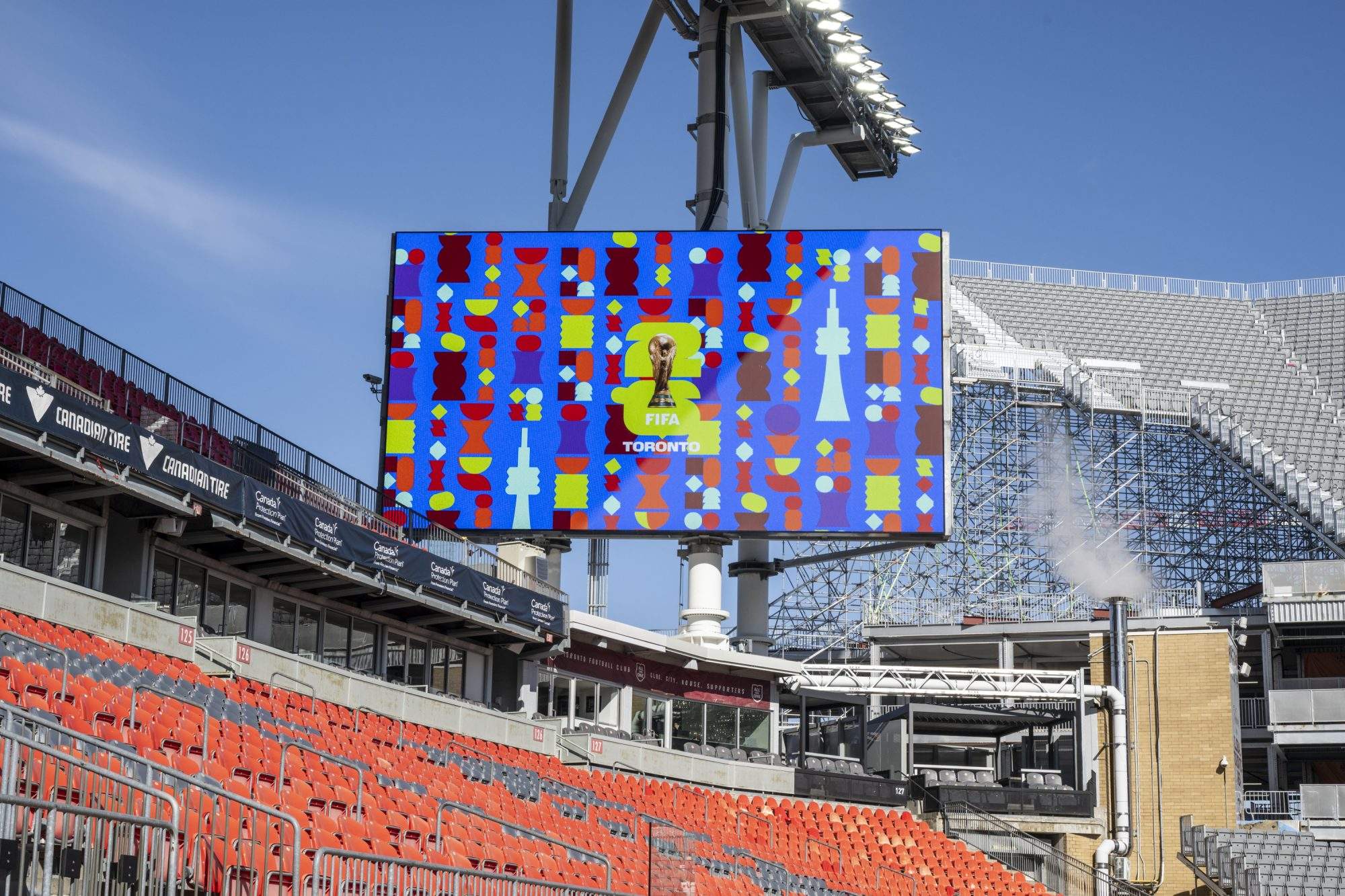
Metrolinx is celebrating a massive statistical victory after Toronto wrapped up its hosting duties for the FIFA World Cup. The regional transit agency revealed that nearly 180,000 passengers flooded into GO Transit and UP Express trains across the six match days held at Toronto Stadium. According to internal data released by the Crown corporation, this surge represents an average of 30,000 riders per match, a figure that eclipsed the average transit ridership of a 2025 Toronto Blue Jays World Series game by 51 percent.
The comparison makes for a brilliant public relations victory. It looks clean on a corporate slide deck. But a closer look at the mechanics behind these numbers reveals that this ridership explosion was less about a sudden shift in commuter behavior and more about absolute operational coercion.
The Reality of Forced Compliance
Transit agencies love to credit improved crowd management and voluntary transit adoption when ridership spikes. The truth is far more clinical. For the six matches played on the Exhibition grounds, city officials pulled a lever that stripped sports fans of any alternative.
They banned cars entirely.
With zero public parking available at Toronto Stadium or any adjacent World Cup event sites, driving became a structural impossibility. If you held a ticket to watch Portugal play Croatia or see Morocco face off against Canada, the transit system was not an option chosen for convenience. It was an infrastructure bottleneck through which every single body had to pass.
Comparing this captive audience to a Major League Baseball World Series game is a fundamental analytical error. When the Blue Jays play at the Rogers Centre, fans retain choices. They can park in commercial lots across the downtown core, take rideshares directly to the gates, or walk from nearby neighborhoods. The transit ridership numbers for those baseball games represent organic choices within an open ecosystem. The World Cup numbers represent a closed loop.
The True Operational Price Tag
Moving 30,000 people per match required a radical redistribution of regional resources. Metrolinx added roughly 3,000 weekly trips across its network during the tournament window, boosting standard service levels by nearly 30 percent compared to the same period in the previous year.
The Lakeshore Strain
To prevent absolute gridlock at Exhibition GO Station, the agency compressed headways on the Lakeshore East and Lakeshore West lines down to 15-minute intervals for most of the day. During peak match hours, trains arrived up to six times per hour between Union Station and the stadium.
This level of frequency is what regional transit advocates have demanded for a generation. The tournament proved that Metrolinx can deliver rapid, reliable service when the eyes of the international community are fixed on Ontario. It also proved that doing so requires an extraordinary concentration of staff, security officers, and rolling stock that the agency simply cannot sustain under its current structural budget.
Daily regional commuters paid for this temporary efficiency with their patience. While soccer fans experienced enhanced service, regular workers navigating Union Station faced severe bottlenecks, modified platform access, and intense platform crowding. Metrolinx explicitly warned non-event passengers to alter their work schedules just to avoid the infrastructure strain. The regional network briefly ceased to be a public utility for locals and became an exclusive shuttle service for international ticket holders.
Security and the Crowded Platform Illusion
Metrolinx pointed to an increased presence of frontline officers and specialized crowd management teams as a permanent upgrade for future operations. Special constables paired up with Toronto Police Service personnel to form a visible wall of enforcement at key transit hubs.
This heavy deployment masks a deeper systemic vulnerability. Managing crowds through brute force staffing is a temporary fix for permanent architectural limitations. Union Station and Exhibition GO were not designed for the simultaneous mass exit of tens of thousands of international visitors unfamiliar with the regional tap-on system.
Transit Metrics: World Cup vs. Baseball Comparison
+-----------------------------+-------------------+----------------------------+
| Metric                      | FIFA World Cup    | 2025 World Series Average  |
+-----------------------------+-------------------+----------------------------+
| Total Match Ridership       | 180,000           | N/A                        |
| Per-Game Transit Average    | 30,000            | ~19,800                    |
| Percent Difference          | +51%              | Baseline                   |
| Parking Availability        | Zero              | Open Market                |
+-----------------------------+-------------------+----------------------------+
The system survived because Metrolinx deployed passenger counting tech and doubled its staff presence to manually direct traffic. They added temporary payment machines to clear the queues. But when the tournament tents come down and staffing levels return to baseline, the underlying friction points of regional transit remain unchanged.
The Pedestrian Safety Valve
One of the most telling details buried in the transit plan was the official promotion of a 45-minute walk from Union Station to the stadium. City planners openly used the city streets as a pressure-release valve for a rail system operating at its absolute limit.
When a transit provider suggests a three-kilometer hike as a viable alternative to taking the train, it admits that the rails cannot handle the volume. Thousands of fans chose the pavement over the platforms, balancing the physical walk against the prospect of being trapped on a packed streetcar or a gridlocked platform.
The Toronto Transit Commission tried to assist by running streetcars along King, Harbourfront, and Bathurst every five minutes. They even carved out dedicated rapid transit lanes on Fleet Street to keep the vehicles moving. Yet even with these measures, the physical geometry of Toronto's waterfront infrastructure meant that clearing a stadium crowd took hours, not minutes.
What Happens When the Circus Leaves Town
The metrics published by Metrolinx are accurate, but their interpretation lacks journalistic skepticism. A 51 percent ridership increase over a World Series baseline is a testament to strict event management, comprehensive driving bans, and emergency service injections. It is not evidence of a transit system that has solved its long-term capacity issues.
The tournament leaves behind a regional transit system that knows how to execute under extreme duress when backed by limitless political will. The real test is whether this level of frequency, safety, and coordination can ever be delivered to the millions of office workers, shift laborers, and student commuters who use the system every ordinary Tuesday in November.
Forcing soccer fans onto trains by making driving illegal proves that the demand for public transport can be manufactured instantly through policy. Maintaining that momentum without the glamor of a global tournament is an entirely different game, and history suggests that once the international spotlights turn off, the old delays, service cuts, and maintenance backlogs will slowly creep back into the schedule.