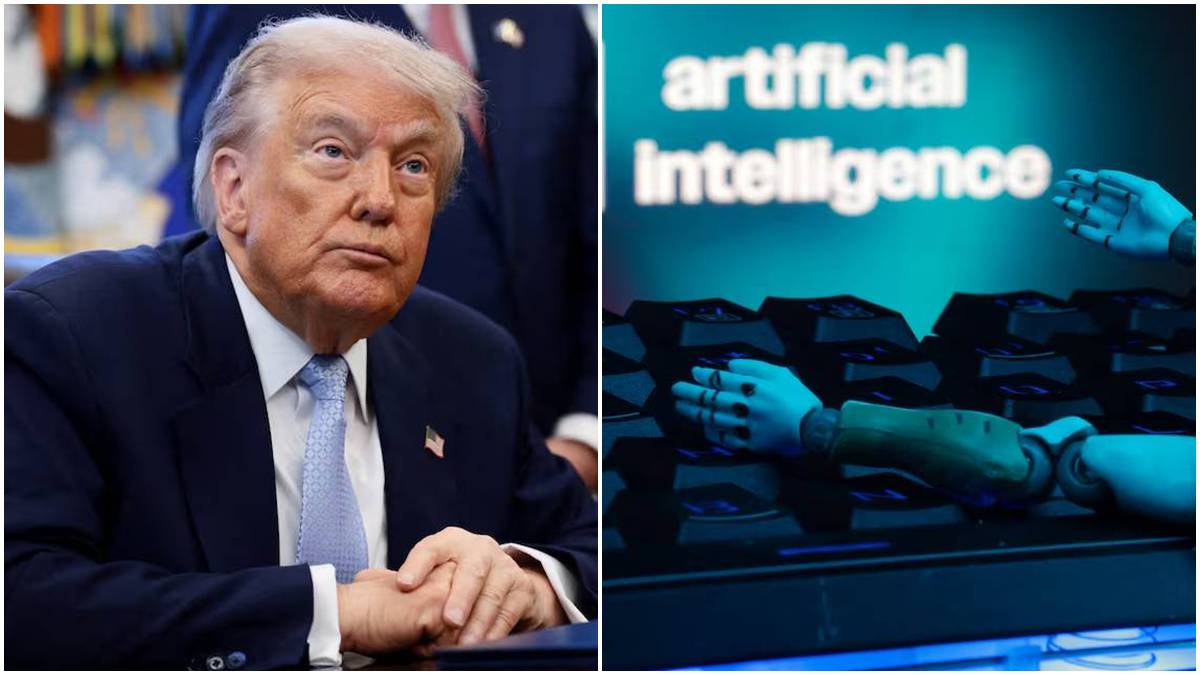
We built the engine before we checked if the brakes worked.
It starts quietly. A server hums in a nondescript warehouse on the edge of town, drawing enough electricity to power a small neighborhood. Inside that cold chamber, lines of code assemble themselves into something resembling thought. Not human thought—something vaster, stranger, and entirely unanchored from consequence.
When former President Barack Obama stepped up to address a room full of policymakers and technologists recently, his message wasn't about the raw power of the silicon. It was about our collective rush toward a cliff while arguing over who gets to drive. He urged Democrats, and by extension anyone with a hand on the steering wheel of governance, to stop treating artificial intelligence as a shiny toy and start treating it as a structural test of our democracy.
He didn't use jargon. He didn't hide behind corporate double-speak. He laid out a simple truth: without a clear, enforced plan for safety, we are simply waiting for an accident we chose not to prevent.
Consider what happens when technology outpaces the rules meant to govern it.
Imagine a local election in a mid-sized American town. Picture a retired schoolteacher named Martha sitting at her kitchen table, scrolling through her phone. A video pops up on her screen. It is her trusted representative, standing at a podium, announcing a sudden and devastating change to local property taxes—effective immediately. The voice is right. The mannerisms are exact. The urgency is palpable.
Except it never happened.
The video was generated in seconds by a teenager sitting in a basement three states away using an open-source tool downloaded off the internet. By the time the truth surfaces—hours later, after panic has already rippled through the neighborhood—the damage is baked into the collective anxiety of the community. Trust doesn't break all at once; it frays, thread by thread, until nothing holds the weight anymore.
This is the invisible stake Obama was talking about. We are not just building tools that write code or generate images. We are building infrastructure that manufactures reality on demand. And right now, the architects of that infrastructure are largely answering only to themselves.
For decades, we operated under a comforting assumption. Innovation, left to its own devices, would always bend toward human good. If you build it fast enough, the theory went, society will simply adapt. But steam engines didn't care about child labor laws until people forced them to. Automobiles didn't come with seatbelts because manufacturers woke up feeling generous; they came because public outrage demanded accountability.
AI is different only in its velocity.
A heavy industrial machine takes years to design, build, and deploy. A neural network can be trained, scaled, and released to millions of users in an afternoon. That speed is intoxicating. It rewards risk-taking and punishes caution. If you pause to ask whether a synthetic voice system could be weaponized to rig an election or steal a lifetime of savings from an elderly couple, someone else will ship their product first.
That race to the bottom is precisely why external guardrails are non-negotiable.
When leaders call for a clear plan, they aren't asking for red tape for its own sake. They are asking for safety margins. Think of a bridge. Engineers don't build bridges to the exact weight limit of a single sedan just to save concrete. They build them to hold semi-trucks, high winds, and unexpected tremors, because they know reality is messier than a spreadsheet.
Right now, our digital bridge is built out of balsa wood and optimism.
The debate in Washington and across state legislatures often gets bogged down in technical minutiae. People argue about parameters, compute clusters, and proprietary algorithms. But the core question is startlingly human: Who gets to decide what is true?
When algorithms curate the news, prioritize outrage, and synthesize evidence out of thin air, the barrier between fact and fabrication dissolves. We risk entering a permanent epistemic fog where nothing can be verified and everything can be denied. In that environment, cynicism wins. Power concentrates in the hands of the few who control the servers, while the rest of us try to navigate a world where our own eyes and ears can no longer be trusted.
Avoiding that future requires a shift in mindset. It means moving away from reactive firefighting—passing a single law after a scandal breaks—and toward proactive design. It means setting baseline standards for transparency, watermarking synthetic content so it wears its artificial origins proudly, and holding companies legally liable when their systems cause demonstrable harm.
It also means recognizing that the engineers writing the code cannot be the only ones writing the rules.
Democracy has always been a messy, deliberate counterweight to unbridled power. It is designed to slow things down precisely when things are moving too fast to think clearly. When Obama urged his party to get serious about safety, he was tapping into that historical role. He was reminding us that technology serves society, not the other way around.
The servers will keep humming in the warehouse. The code will keep compiling. The race forward will not pause simply because we are uncomfortable with the speed.
The only variable left is whether we will draw the map before we reach the edge, or if we will spend the aftermath wondering how we missed the signs that were blinking right in front of us all along.