You spend years tracing the contours of an unfamiliar country, learning its mountains, mapping its rivers, and memorizing its weather patterns, only to discover someone handed you the wrong atlas entirely.
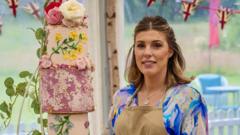
Consider what happens when the label you have worn like a second skin—the explanation for every erratic heartbeat, every sudden surge of frantic midnight productivity, every inexplicable crash—turns out to be a ghost. For Georgina Grasso, who captured hearts as the first Welsh winner of the Great British Bake Off, that moment arrived not with a dramatic cinematic crash, but with the quiet, unsettling realization of a medical chart being rewritten.
For a long time, the narrative of her internal world was anchored by Attention Deficit Hyperactivity Disorder and autism. She researched it. She advocated for it. She built a vocabulary around it to explain why holding down a steady job felt like trying to run through waist-high water. Millions watched her command the tent under the intense pressure of television baking, seeing a vibrant, capable artisan. They did not see the invisible undertow. They did not see the stretches of time where the engine simply refused to turn over, where the lights stayed off for weeks or months because physical momentum had evaporated.
Then came the turning point. Total honesty in a psychiatrist's office.
The diagnosis shifted from ADHD to Bipolar 2, accompanied by autism.
Bipolar 2 is a lifelong neurological condition defined by a treacherous pendulum. It swings between deep, heavy troughs of major depression and elevated, high-energy states known as hypomania. Unlike its more volatile counterpart, Bipolar 1, the highs do not always reach full-blown mania, but they possess their own terrifying brand of velocity. Grasso confessed to navigating four severe hypomanic or manic episodes over the span of eight years.
Tunnel vision. Zero control. The terrifying sensation of watching yourself pilot a vehicle while locked in the trunk.
"I feel like I am not sure who I am right now," she shared with her followers, baring the raw vulnerability of a public figure staring down the barrel of a completely new identity.
This identity fracture is familiar to anyone who has lived through a late-in-life psychiatric reevaluation. Psychiatry is rarely a clean science of blood tests and clear imaging; it is an archaeology of symptoms. Because the overlapping traits between ADHD and bipolar disorder are vast—racing thoughts, distractibility, erratic energy output—misdiagnosis is astonishingly common. People spend decades treating the symptom while the root cause sits quietly in the dark, pulling different strings.
When the truth finally lands, it brings a strange dual sensation. Relief, sharp and cold, because the past finally makes sense. Why certain periods of life felt effortlessly superhuman while others felt like an insurmountable climb through grey mud. But alongside that relief comes an acute grief for the years spent fighting the wrong enemy.
To be a content creator or a public personality in the modern era is to sign an unwritten contract demanding relentless consistency. The algorithm does not sleep. The feed must be fed. When your internal weather system relies on a neurochemical forecast you cannot predict or control, trying to maintain a steady output is like building a house on a tectonic plate.
Grasso stepped forward to share her transition into new medication, acknowledging the anxious arithmetic of side effects weighed against the desperate hope for stability. She did not pretend to have all the answers. She admitted she knew next to nothing about bipolar disorder compared to the years she spent decoding ADHD. In a digital ecosystem saturated by polished certainty and instant expert culture, that kind of confession is radical.
We demand that our public figures be either entirely healed or safely struggling behind closed doors. We want our narratives neat, wrapped in an inspirational bow where the pain is neatly redeemed by a trophy or a title. But real life resists the edit bay. Real healing looks like standing in the kitchen of your own mind, looking at a pantry full of ingredients you never ordered, and deciding to figure out how to bake with them anyway.
The maps will change. The labels will shift.
She is still her. Just a little closer to the truth of how the fire burns.