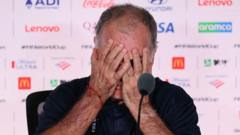
Marcelo Bielsa does not do middle ground. You either buy into his exhausting, hyper-intense football gospel completely, or you get pushed out. For a while, the marriage between the legendary Argentine manager and the Uruguay national team looked like a masterstroke. They beat Brazil. They battered Argentina. The young squad ran themselves into the ground for him. But the cracks were always there, hidden just beneath the surface of those thrilling high-press performances. Now that the dust has settled on the Bielsa Uruguay reign, the bitter ending feels less like a surprise and more like an inevitability.
When Luis Suarez went public with his explosive criticisms of Bielsa, it shocked the football world. It shouldn't have. Suarez exposed a culture of isolation, coldness, and intense psychological strain inside the camp. He talked about players being forbidden from greeting fans, staff members being treated like ghosts, and a squad pushed to its emotional limit. This is the classic Bielsa cycle. It is a pattern we saw at Marseille, at Lazio, and even during his final days at Leeds United. The flame burns incredibly bright, but it consumes its fuel way too fast.
The real question isn't why it ended, but why anyone thought a philosopher king like Bielsa could survive the delicate politics of international football without a spectacular crash.
The illusion of control in modern international football
International management is different from club football. You don't get nine months a year with your players to drill them into submission. You get them for ten days at a time. Because of this restriction, international managers usually have to be politicians and motivators first, and tacticians second. They need to build a happy camp where players enjoy escaping the intense pressure of their clubs.
Bielsa threw that playbook out the window. He tried to treat the Uruguay national team like a club side, demanding total compliance and grueling double sessions during short international breaks.
Darwin Nunez thrived initially under this system because his raw athletic power fits the Bielsa mold perfectly. Federico Valverde ran miles across the midfield. But human beings aren't machines. When you treat elite athletes like chess pieces for long stretches, they eventually push back. Suarez wasn't just speaking for himself. He was voicing the quiet frustration of a locker room that felt completely disconnected from its leader.
The intense press requires complete mental buy-in. Once a player starts questioning whether the physical agony is worth it, the entire system collapses. You can't play Bielsa-ball at ninety percent intensity. It's all or nothing.
The tactical obsession that broke a dressing room
Football purists love Bielsa because his tactics are uncompromising. He demands man-marking across the entire pitch, constant vertical running, and immediate counter-pressing when possession is lost. When it works, it is beautiful.
Look at Uruguay's famous 2-0 victory over Argentina at the La Bombonera. They completely choked the World Cup champions out of the game. It was a tactical masterpiece.
Bielsa's High-Press Trigger Points:
[Opponent Fullback Receives Ball] -> [Winger Presses Inside-Out] -> [Midfield Shifts to Man-Mark] -> [High Turnover]
But that style carries a massive physical tax. Over a long tournament like the Copa America, players get exhausted. When fatigue sets in, the man-marking system leaves massive gaps behind the midfield. Opponents notice this pattern quickly. They stop trying to play through the press and start hitting long balls into the space vacated by Bielsa's marauding fullbacks.
The tactical rigidity became a prison. When games went wrong, Bielsa rarely had a Plan B. He simply demanded that his players run harder, press faster, and commit deeper to the plan. That rigidity creates friction. Modern players are highly tactically literate. They play for top clubs under managers who adapt to changing circumstances. When they see a system failing on the pitch and receive nothing but demands for more physical output from the bench, faith evaporates.
Cult of personality versus the collective
We love the myth of the eccentric football genius. The bucket sitting, the obsessive video analysis, the refusal to give individual interviews. It makes for great media copy. But living with that eccentric genius every single day is an entirely different story.
Former players often speak of Bielsa with a mix of reverence and deep exhaustion. They praise him for improving their game, but few describe him as a warm human being. In a national team setting, where national pride and camaraderie usually drive performance, Bielsa's cold distance felt alienating to the Uruguayan squad.
The decision to isolate the squad from the public during tournaments was a major breaking point. Uruguayan football culture is deeply rooted in the concept of garra charrua—a gritty, collective spirit shared with the fans. By cutting the players off from the people, Bielsa severed the emotional connection that often fuels the national team during difficult moments. He replaced national passion with mechanical duty.
What happens when the running stops
The end of the Bielsa Uruguay reign leaves the federation at a massive crossroads. They have a golden generation of talent in their prime, but they've spent months operating in a high-stress environment that has left many mentally drained.
The next step for Uruguayan football isn't to tear down everything Bielsa built. The physical conditioning and tactical sharpness he instilled are valuable assets. Instead, the federation needs to find a manager who can bring human empathy back into the dressing room. They need someone who understands that elite footballers need to be managed as people, not just as tactical units.
If you're tracking the future of this squad, watch how the senior players react under new leadership. The tactical shackles are off. The intensity might drop slightly, but the emotional release could be exactly what this team needs to perform on the biggest stage without burning out before the final whistle. Keep an eye on how Valverde and Nunez occupy space in the coming matches. Their positioning will tell you everything about how much freedom they've truly regained.