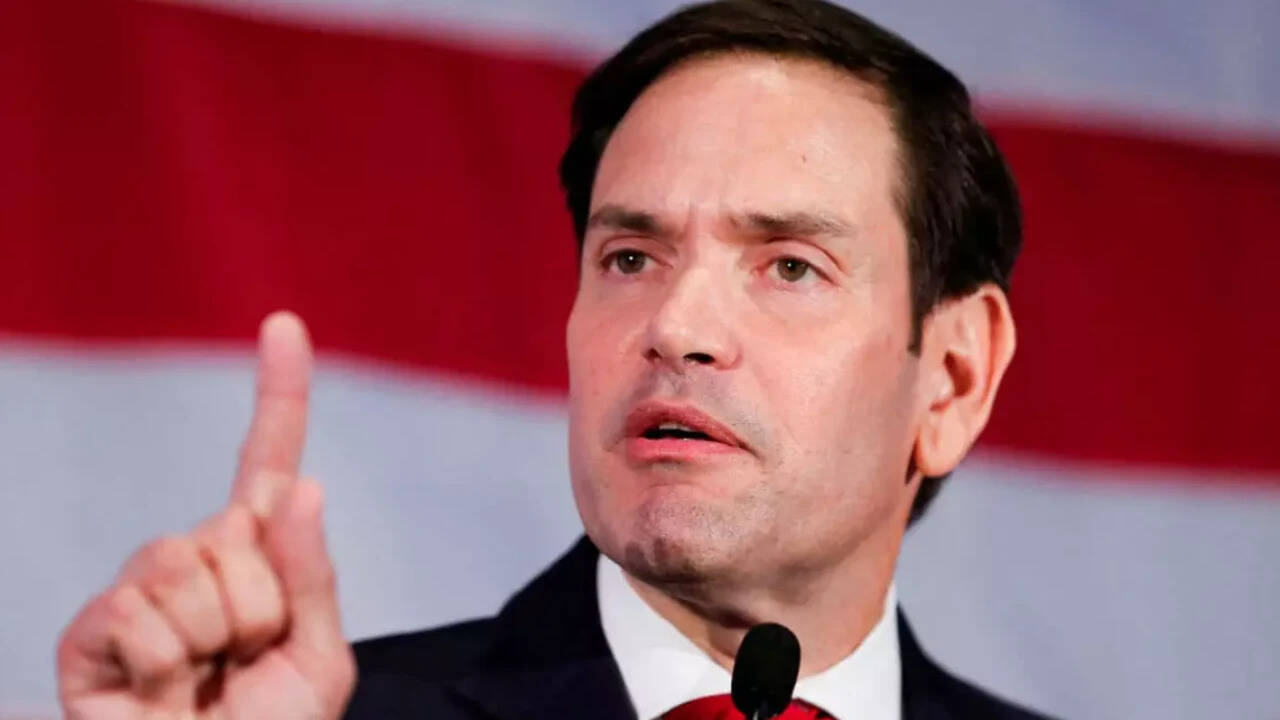
Secretary of State Marco Rubio is signaling a sharp escalation in Washington's posture toward Havana, framing recent U.S. pressure against Iran as a direct preview of what awaits the Cuban government. By declaring that "now is the time" for change and urging Cubans to "join hands," Rubio is attempting to connect Middle Eastern deterrence with Caribbean regime pressure, arguing that the collapse or weakening of Tehran's regional influence strips Havana of a critical ideological and logistical partner.
That message did not emerge in a vacuum. For decades, American foreign policy hawks have viewed the alliance between Tehran and Havana not merely as a diplomatic convenience between two sanctioned nations, but as an active security vulnerability ninety miles off the Florida coast. Yet translating rhetorical warnings into actual political transformation on the island involves navigating a complex web of economic realities, regional diplomacy, and historical scar tissue that simple slogans rarely capture. In other developments, we also covered: Deconstructing Unidentified Triangular Aerial Phenomena Over Restricted Airspace.
The Architecture of the Tehran Havana Axis
To understand why the State Department is pairing Iran and Cuba in the same breath, you have to look at how both governments have survived Western isolation. Neither nation possesses the economic weight to rescue the other from structural collapse, yet their partnership functions as a force multiplier in intelligence, cyber capabilities, and sanctions evasion.
Over the past twenty years, high-level delegations between Tehran and Havana have steadily increased. Iranian officials have sought a foothold in the Western Hemisphere to counter American influence in the Persian Gulf, while Cuban leaders have welcomed any partner willing to defy Washington. This relationship has included cooperation in biotechnology, telecommunications, and energy infrastructure, alongside shared strategies for moving restricted goods and capital outside the U.S.-dominated financial system. NBC News has provided coverage on this important issue in extensive detail.
From the perspective of the administration in Washington, weakening Tehran disrupts a broader network of authoritarian mutual aid. When Rubio warns that Cuba is next, the underlying strategic calculation is clear. U.S. officials believe that if Iran's capacity to project power or provide covert support is degraded, Havana becomes even more isolated than it already is.
The Venezuela Factor
You cannot analyze the Iran-Cuba dynamic without looking at Caracas. Venezuela has long served as the financial and energy bridge connecting the two countries. Iranian technicians have helped repair Venezuelan oil refineries, while Cuban intelligence and security advisers have helped insulate the Venezuelan leadership from internal dissent. In return, subsidized Venezuelan crude has kept the lights on in Havana.
Any serious disruption to Iranian operations abroad threatens to destabilize that triangular arrangement. Cuba's electrical grid is already failing regularly, leading to rolling blackouts that last for days at a time. Fuel shortages have paralyzed public transportation and crippled agriculture. If the supply chains linking Tehran, Caracas, and Havana are severed or severely restricted, the Cuban state faces an acute energy crisis that no amount of state propaganda can mask.
Why Washington Thinks the Moment Has Arrived
Rubio's assertion that "now is the time" reflects a belief among key policymakers in Washington that the Cuban government is experiencing its most severe vulnerability since the fall of the Soviet Union in 1991.
During the 1990s, known in Cuba as the Special Period, the island lost roughly eighty percent of its foreign trade overnight when Moscow cut off subsidies. The economy contracted violently, malnutrition spread, and thousands took to the sea on makeshift rafts. Yet the political apparatus survived, largely because the revolutionary generation still held unquestioned authority and the state maintained a total monopoly on information.
Today, the structural pillars that saved the regime three decades ago have eroded.
- Demographic Collapse: Cuba is experiencing the largest exodus in its modern history. Hundreds of thousands of working-age professionals, doctors, engineers, and young families have left the island over the past few years, hollowing out the labor force and leaving behind a rapidly aging population.
- The End of the Information Monopoly: The arrival of mobile internet in late 2018 permanently altered the political terrain. When protests erupted across dozens of Cuban cities in July 2021, citizens broadcast the demonstrations and the subsequent police crackdown in real time, shattering the state's ability to control the narrative.
- Economic Exhaustion: Tourism, long the primary engine of hard currency for the Cuban military conglomerates that control the economy, has failed to recover to pre-pandemic levels. Foreign investment has dried up due to chronic non-payment of debts and currency distortions.
For Rubio, who has built his entire political career on opposing the Castro government and its successors, these converging crises represent a historic opening. By calling on Cubans to "join hands," the Secretary of State is explicitly appealing to domestic dissent, banking on the idea that external pressure combined with internal desperation can finally fracture the state's security apparatus.
The Mechanics of Maximum Pressure
A warning from the top American diplomat carries weight only if it is backed by concrete policy instruments. In the case of Cuba, Washington already maintains one of the most comprehensive embargo regimes in modern history, codified through laws like the Helms-Burton Act. Escalating beyond the current baseline requires targeting the few remaining lifelines keeping the Cuban state solvent.
The first lever is financial. The U.S. Treasury can aggressively enforce restrictions on remittances and penalize foreign banks or companies that process transactions for GAESA, the sprawling military-run business conglomerate that controls Cuba's hotels, ports, and retail sector. Cutting off hard currency flows directly impacts the state's ability to pay security forces and import basic foodstuffs.
The second lever involves third-country pressure. Washington has increasingly scrutinized Cuba's overseas medical missions, which generate billions of dollars in revenue for Havana. U.S. officials argue that the program constitutes human trafficking because the Cuban government confiscates the vast majority of the doctors' salaries and restricts their movement. By threatening visa restrictions on officials from countries that host these missions, the State Department aims to choke off Havana's single largest source of export earnings.
The third lever is diplomatic isolation. By tying Havana directly to Tehran, Washington is attempting to make engagement with Cuba politically toxic for European and Latin American allies. It is far harder for a European diplomat to argue for trade concessions with Havana if the Cuban government is actively framed as a strategic partner of Iran during a period of acute Middle Eastern conflict.
The Counter-Argument What Washington Often Misses
Despite the confidence radiating from Washington, veteran analysts and former intelligence officers urge caution against assuming that external pressure automatically produces democratic transition. History offers plenty of evidence to the contrary.
The primary counter-argument rests on the rally-around-the-flag effect. When a foreign superpower issues explicit warnings and openly calls for domestic mobilization, it hands the target government a powerful propaganda tool. Havana has spent more than six decades blaming every economic failure, from broken water pipes to empty pharmacy shelves, on U.S. aggression. Direct threats from the Secretary of State allow Cuban state media to frame genuine, homegrown economic grievances as a foreign-orchestrated plot.
Furthermore, there is a fundamental difference between a population that is deeply unhappy and a population that is capable of overthrowing a entrenched security state.
Cuba's internal security apparatus, built with East German and Soviet expertise during the Cold War, remains formidable. Neighborhood surveillance committees, rapid-response brigades, and an extensive network of informants permeate daily life. Following the July 2021 protests, the government handed down prison sentences of up to twenty-five years to demonstrators, including teenagers. That level of repression creates a chilling effect that rhetoric from Washington cannot easily overcome.
The Humanitarian Dilemma
There is also the acute risk of triggering a catastrophic humanitarian and migration crisis. When economic conditions on the island deteriorate past a certain threshold, the immediate result has historically not been a peaceful transition of power, but a massive wave of migration toward the United States.
Administrations in Washington have repeatedly discovered that maximum pressure campaigns against Havana eventually collide with domestic American politics over border enforcement. If the Cuban economy collapses entirely without a viable political transition mechanism in place, the U.S. Coast Guard and Border Patrol bear the immediate operational burden.
The Geopolitical Chessboard Beyond Florida
While domestic politics in South Florida undoubtedly play a role in shaping the administration's rhetoric, the broader geopolitical context cannot be ignored. Moscow and Beijing have both expanded their footprints in Cuba over the past several years, viewing the island as a low-cost way to irritate Washington in its own backyard.
Russia has forgiven billions in Soviet-era Cuban debt, signed new energy and tourism agreements, and occasionally dispatched naval vessels to the port of Havana as a symbolic show of force. China, meanwhile, has invested heavily in Cuba's telecommunications infrastructure and reportedly operates signals intelligence facilities on the island, capable of monitoring electronic communications across the southeastern United States.
This great-power competition complicates Rubio's warning. If Washington pushes Havana to the absolute brink, Cuban leaders have historically demonstrated a willingness to offer strategic concessions to America's adversaries in exchange for economic survival. Just as Fidel Castro turned to Nikita Khrushchev in the early 1960s, the current leadership in Havana could deepen its security arrangements with Moscow or Beijing if it concludes that accommodation with Washington is impossible.
What Actually Drives Change on the Island
If history is any guide, the decisive factor in Cuba's future will not be speeches delivered in Washington, nor will it be the fate of the government in Tehran. It will be the internal cohesion of the Cuban ruling elite.
Authoritarian systems rarely collapse solely from street protests or foreign sanctions. They fracture when the people holding the guns and managing the state enterprises decide that the current arrangement no longer serves their interests. In Cuba, that means the senior officer corps of the Revolutionary Armed Forces and the technocrats running the state monopolies.
Right now, those elites face an impossible math problem. The old economic model is dead, unable to generate enough revenue to subsidize the population or maintain basic infrastructure. Yet opening the economy sufficiently to attract real capital requires loosening political control, which threatens their hold on power.
Rubio's warning is designed to accelerate that internal crisis, forcing Havana's decision-makers to confront the reality that no foreign savior is coming to rescue them. Whether that pressure produces a fracture within the regime, a new wave of repression, or another mass exodus across the Florida Straits remains the defining question of U.S.-Cuban relations.