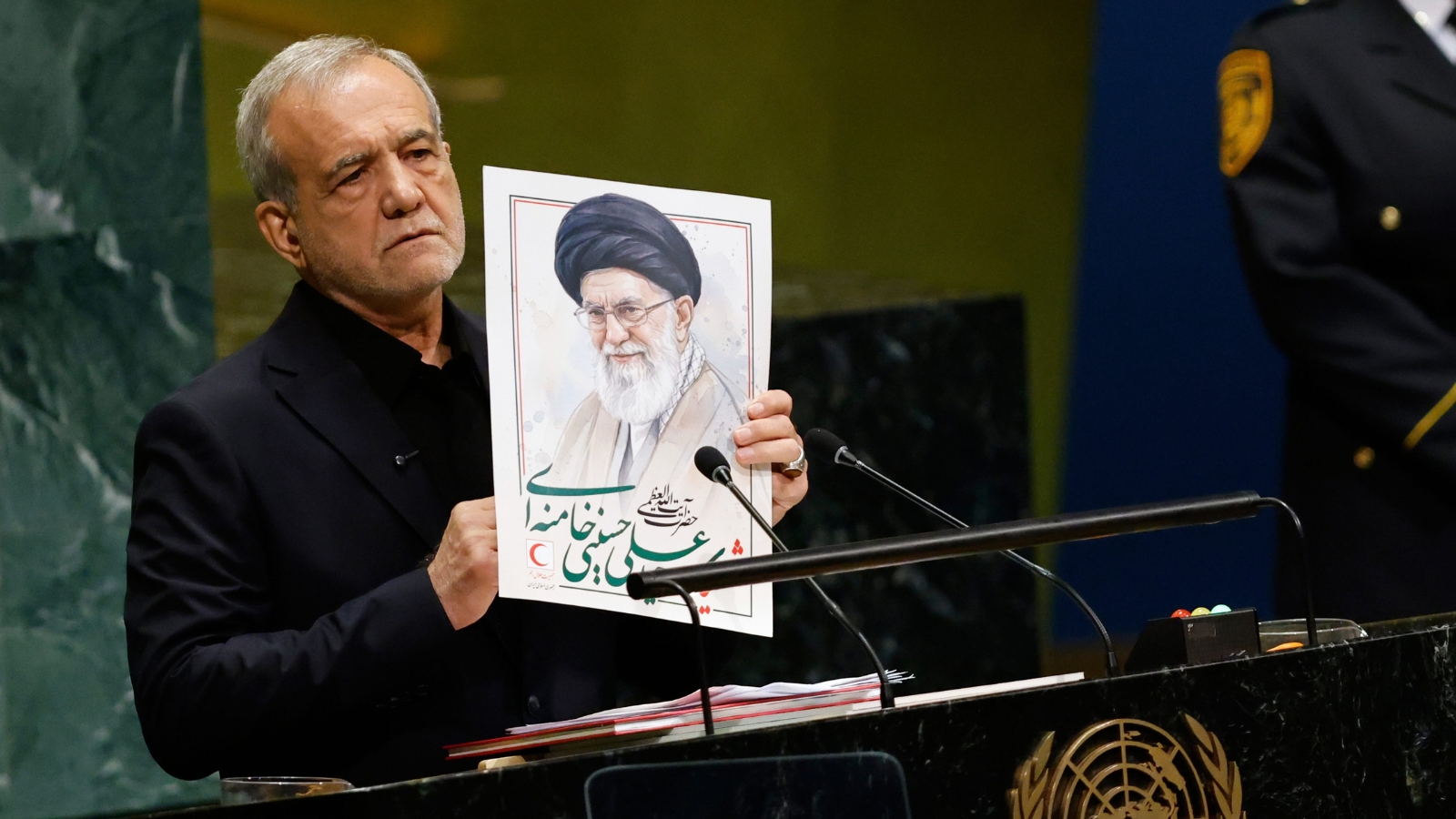
The standard Western media playbook on Tehran is astonishingly lazy. Every time an Iranian president steps up to the United Nations General Assembly podium and delivers a speech about sovereign dignity, non-negotiable national security, and standing up to foreign bullying, the headline-writers in New York and London reach for the exact same tired script. They frame it as defiance, as saber-rattling, or as a desperate domestic PR stunt designed to placate hardliners back home.
They are missing the entire plot. Also making waves lately: The Long Road Home Waiting in Dhaka.
When Masoud Pezeshkian talks about refusing to be bullied on the international stage, he is not shouting into a vacuum to score cheap political points with the Basij. He is executing a calculated, highly disciplined diplomatic pivot. He is signaling to Beijing, Moscow, and the Global South that Tehran remains open for business, structurally unbendable by Western sanctions, and strategically positioned to bleed out the American-led enforcement regime through pure bureaucratic and economic endurance.
I have watched foreign policy analysts misread Tehran for decades. They look at Iran through a binary lens: either the regime is on the verge of internal collapse due to economic strangulation, or it is seconds away from igniting a regional apocalypse. Both views are comforting fairy tales for people who do not understand how resilient a sanction-hardened command-adjacent economy actually is. More information regarding the matter are detailed by Al Jazeera.
Let us dismantle the core misconception driving the mainstream narrative: the idea that Iran is isolated, cornered, and reacting out of weakness.
The Sanction-Proof Illusion
The conventional wisdom in Washington is that maximum pressure works, it just needs more time, more secondary sanctions, and tighter enforcement on ghost tankers moving crude through the Strait of Malacca. This is financial illiteracy masquerading as foreign policy.
Over the past decade, Tehran has built a parallel financial architecture. It is not pretty, and it imposes a massive tax on ordinary Iranian citizens through inflation and currency degradation, but it is structurally functional. By routing trade through non-dollarized bilateral agreements with China, India, and regional brokers, the Iranian state has inoculated its core revenue streams against SWIFT lockouts.
When Pezeshkian stands at the U.N. and rails against hegemony, he is speaking the language of a state that has already survived the worst economic onslaught the West could legally muster short of total war. To pretend that another round of Treasury Department designations is going to force a structural capitulation is a delusion. The Iranian elite knows that Washington's appetite for enforcing secondary sanctions on Beijing is constrained by the sheer scale of US-China trade interdependence.
They are betting that Western resolve has an expiration date, and the math on that bet is entirely rational.
The Domestic Reformer Myth
Another favorite trope of the foreign press is the "Moderate versus Hardliner" false dichotomy. Every time a relatively pragmatic figure like Pezeshkian wins an election, Western pundits swoon, predicting an imminent democratic awakening or a sudden rush back to the negotiating table for a resurrected nuclear deal.
This betrays a fundamental misunderstanding of the Islamic Republic's power distribution. The Supreme Leader and the Islamic Revolutionary Guard Corps retain absolute veto power over any strategic initiative. Pezeshkian was not elected to dismantle the security apparatus; he was elected to streamline economic management, reduce administrative friction, and extract maximum sanctions relief without surrendering any geopolitical leverage.
When he uses the language of dignity at the U.N., he is aligning the reformist faction with the nationalist consensus. In Iranian politics, nobody wins by looking soft on foreign coercion. By adopting a posture of unyielding sovereignty while simultaneously signaling openness to technical diplomacy, Pezeshkian boxes the West into a corner. If Washington refuses to engage, Tehran paints the US as the unreasonable actor. If Washington engages on Tehran's terms, Iran secures legitimacy without making structural concessions on its regional missile programs or its nuclear threshold capabilities.
It is a masterclass in asymmetric diplomatic positioning.
The Regional Realignment Nobody Wants to Acknowledge
The mainstream analysis treats Iran's regional network—from the Houthis in Yemen to various militias across the Levant—as a liability that drains state resources. While the economic cost is undeniable, the strategic return on investment from Tehran's perspective has been staggering.
For forty years, Western defense strategy assumed that Iran could be contained behind its own borders. Today, Iran projects power across multiple maritime chokepoints and borderlands, effectively holding global commerce hostage to its security calculus. When Pezeshkian speaks of resistance, he is not speaking abstractly. He is pointing to a reality where a coalition of non-state actors, backed by Iranian drone technology and tactical doctrine, successfully disrupted Red Sea shipping lanes for months despite a massive Western naval deployment.
That is not the behavior of a bullied nation. That is the behavior of a regional power that has successfully rewritten the rules of asymmetric deterrence.
The Trap of Moral Superiority
The deeper issue with how the West covers Iranian diplomacy is an addiction to moral framing over structural analysis. We prefer to categorize nations as good or bad, compliant or rogue, rather than analyzing the cold, hard mechanics of their survival strategies.
When Western officials dismiss Iranian speeches as mere propaganda, they blind themselves to the operational signals embedded within them. Tehran is telling the world precisely what it intends to do: wait out the West, deepen integration with Eurasian trading blocs, and continue advancing its technological capabilities until the cost of containment outweighs the cost of accommodation.
If Washington continues to rely on the comforting illusion that economic strangulation alone will trigger a regime surrender, it will wake up a decade from now wondering how a parched, sanctioned nation quietly institutionalized its status as an unchallengeable regional hegemon.
Pezeshkian did not go to New York to beg for mercy. He went to serve notice that the old rules are dead, and nobody in the West is brave enough to admit it.