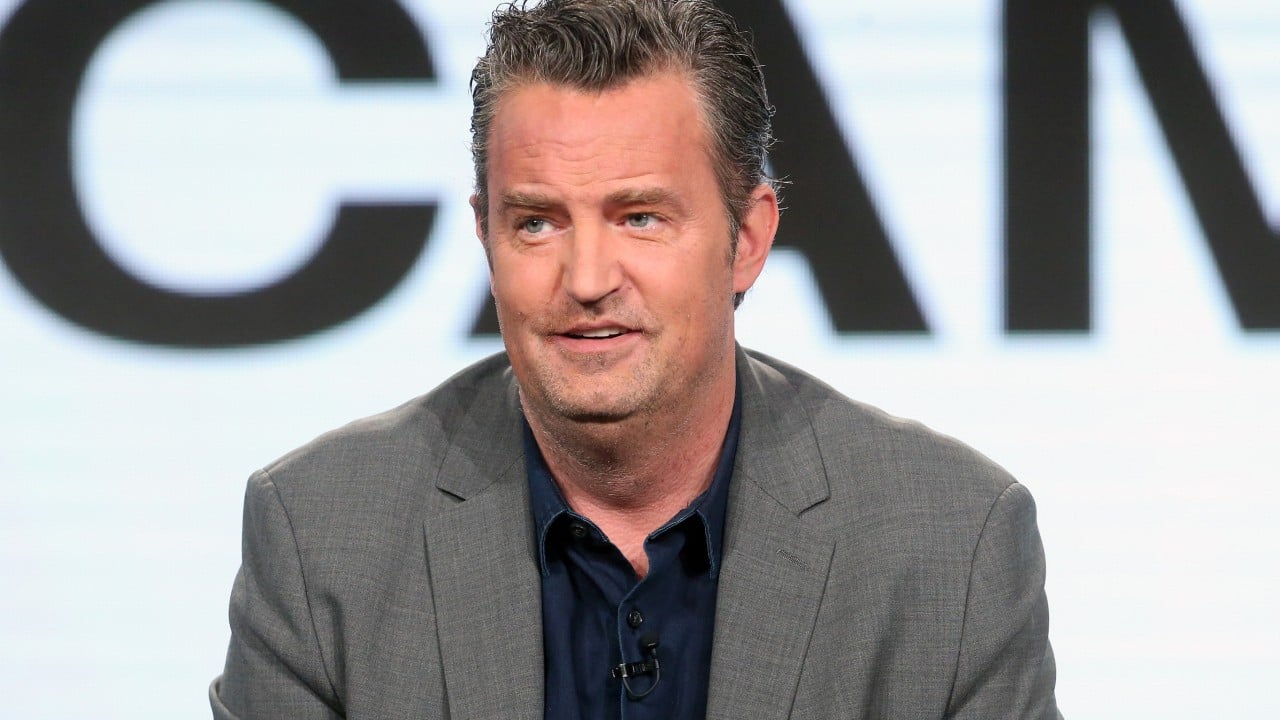
The headlines are celebrating a victory for accountability. Kenneth Iwamasa, the live-in personal assistant to Matthew Perry, has been sentenced to 41 months in federal prison for administering the fatal doses of ketamine that killed the Friends star. The public gets its ritual sacrifice. The Department of Justice gets a high-profile win. The collective conscience gets to pretend the system worked.
It didn't.
The mainstream media coverage of this sentencing is built on a lazy consensus: that punishing a desperate, codependent employee solves the systemic rot of Hollywood’s celebrity medical complex. Iwamasa injected Perry with ketamine at least 27 times in his final days. He is not innocent. But treating a puppet like the puppet master is a failure of logic and justice.
If we actually care about stopping the pipeline of illicit pharmaceuticals to vulnerable people, we have to look past the low-hanging fruit. The real story here isn’t about an assistant who crossed a line. It’s about a multi-billion-dollar ecosystem designed to turn medical professionals into high-priced dealers, while shielding the real architects from the fallout.
The Co-Dependency Trap: Why Assistants Are the Perfect Fall Guys
The narrative pushers love the "evil assistant" trope. It makes for great television. It suggests a malicious actor infiltrating a star's life to exploit them.
The reality is far more depressing. Having spent over fifteen years navigating the inner circles of high-net-worth talent management, I have seen this exact dynamic play out dozens of times. The relationship between a severely addicted celebrity and a live-in assistant isn't an employment contract. It’s a hostages-and-captors loop where the roles flip daily.
When a client worth $100 million demands a substance, an assistant faces a brutal binary: find it, or get fired and replaced by someone who will.
Am I excusing Iwamasa? Absolutely not. He injected a man who was already slipping into unconsciousness. That is criminal negligence. But sentencing him to nearly three and a half years in federal prison while the systemic structures remain untouched is security theater.
Iwamasa had zero medical training. He was operating under the explicit instruction of licensed doctors—specifically Dr. Salvador Plasencia and Dr. Mark Chavez—who used him as a proxy to avoid liability. The doctors knew Perry was spiraling. They joked in text messages about how much the "idiot" would pay. Yet, the legal system treats the uneducated intermediary as a primary villain rather than the weaponized tool he actually was.
The Economics of the Celebrity Medical Complex
Let’s dismantle the premise that this was a failure of individual morality. This was a triumph of market incentives.
To understand the celebrity medical complex, you have to understand the sheer volume of cash sloshing around elite addiction "treatment." When normal people relapse, they go to rehab or the ER. When a mega-celebrity relapses, an entire micro-economy springs into action to hide it from the studios, the insurers, and the public.
| Actor | Role in Ecosystem | Core Incentive | Risk Mitigation |
|---|---|---|---|
| The Star | The Consumer | Undocumented Access to Controlled Substances | Uses staff as a legal firebreak. |
| The Rogue Doctor | The Supplier | Massive, Unregulated Cash Premiums | Uses assistants to administer doses, creating plausible deniability. |
| The Assistant | The Enabler/Proxy | Job Retention and Proximity to Power | None. Bears 100% of the operational risk. |
The competitor articles on this case focus heavily on the tragedy of Perry’s addiction. They gloss over the mechanics of how $55 vials of liquid ketamine were marked up to $2,000 for Perry’s camp. That isn't medical care. That’s a cartel with a medical license.
Dr. Salvador Plasencia allegedly charged Perry tens of thousands of dollars in cash for ketamine treatments administered in the back of cars and in luxury living rooms. When Chavez pleaded guilty to conspiring to distribute ketamine, he admitted to diverting the drug from his own clinic and writing fraudulent prescriptions.
The assistant did not create this supply chain. He did not possess the DEA registration required to order the drugs. He did not have the medical authority to validate the dosage. He was the courier. By focusing the outrage on the courier, the public misses the fact that the medical supply chain itself is aggressively porous when enough cash is involved.
Dismantling the "People Also Ask" Delusions
The public search intent around this case reveals a deep misunderstanding of how celebrity addiction actually functions. Let’s address the flawed premises driving the conversation.
"Why didn't the assistant just say no?"
This question assumes a traditional corporate structure where HR protects whistleblowers. In the entertainment industry, assistants are frequently isolated, financially dependent, and emotionally manipulated. Perry was open about his battles with addiction, but he was also an incredibly powerful individual surrounded by people whose livelihoods depended entirely on his favor.
When an employer who controls your housing, your health insurance, and your future career trajectory demands you facilitate their vice, "just saying no" means instant financial ruin and blacklisting. Iwamasa chose wrong, but pretending the choice was simple is a luxury enjoyed only by people who have never worked in Hollywood.
"Will this sentence deter other assistants from doing the same?"
No. It won't. Addiction does not operate on a cost-benefit analysis, and neither does the desperation of people trying to keep their jobs.
As long as wealthy individuals can hire private staff to insulate themselves from the real world, those staff members will be pressured to break the law. If you want deterrence, you don't lock up the assistant for 41 months. You strip the licenses of every doctor involved within 24 hours of the first suspicious prescription, and you prosecute the suppliers with the same RICO statutes used to take down street gangs.
The Hypocrisy of the Pharmaceutical Crackdown
There is a glaring double standard in how the justice system treats different tiers of drug distribution. If a street dealer sells fentanyl-laced heroin to a teenager, they are rightfully charged with homicide. But when a licensed physician writes fraudulent scripts for a celebrity, the legal system enters a phase of delicate negotiation.
Chavez and Plasencia operated under the protection of a medical license, which acted as a shield for months before federal authorities stepped in. The system treats white-collar medical corruption as a regulatory infraction until a body drops.
Let's do a thought experiment. Imagine a scenario where a street-level drug dealer hired a teenager to drop off packages of narcotics to a high-profile client. If that client overdosed, the feds wouldn't stop at the teenager. They wouldn't claim victory by putting the delivery boy in prison for three years while letting the plug negotiate a plea deal that keeps them out of the harshest maximum-security facilities.
Yet, because this took place in mansions in Pacific Palisades instead of an alleyway, the narrative centers on the assistant’s failure of loyalty, rather than the medical community's failure of ethics.
The Actionable Truth Nobody Wants to Face
If we are serious about preventing another high-profile overdose death, the current strategy must be completely inverted. Punishing the staff after the talent dies is too late. The intervention has to happen at the institutional level.
First, the DEA needs to implement real-time tracking on ketamine and other dissociative anesthetics matching the rigor applied to opioids. Ketamine has exploded in popularity as a trendy therapy for depression, creating a massive gray market. Rogue clinics and corrupt doctors are exploiting this boom to hide illicit distribution in plain sight.
Second, the entertainment industry must end the practice of allowing talent to use personal corporations to hire medical staff directly. When a doctor is paid directly by a celebrity’s business manager, the fiduciary duty to the patient’s health vanishes. It is replaced by a duty to the client’s satisfaction.
The 41-month sentence handed down to Kenneth Iwamasa isn't a milestone for justice. It’s an epitaph for a broken system. We locked up the help, left the mansion standing, and allowed the system that built it to keep running exactly as before.