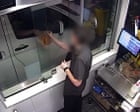
CCTV footage of Beau Lamarre-Condon pulling through a McDonald's drive-thru in a van allegedly used to dispose of bodies gave the jury a jarring contrast between ordinary daily errands and the aftermath of two violent deaths. On its own, ordering fast food doesn't prove murder. Yet in a court case built around what happened after Jesse Baird and Luke Davies were fatally shot in Paddington in February 2024, routine footage becomes a piece of a much bigger puzzle.
People searching about this clip usually want two things. First, they want to know what the cameras actually showed and how that footage fits into the prosecution's timeline. Second, they want to understand why everyday stops—fast food, hardware stores, skip bins, and text messages—carry so much weight when a former police officer claims self-defence. Recently making headlines lately: Missiles After Talks Aren't Hypocrisy They're the Whole Point.
Why Drive-Thru Footage Matters in a Murder Trial
When jurors watch surveillance video from a McDonald's drive-thru, nobody expects a confession on camera. That's not how circumstantial evidence works. Instead, CCTV helps establish movement, timing, vehicle use, and demeanor in the hours and days after the alleged killings.
In the New South Wales Supreme Court trial before Justice Natalie Adams, prosecutors presented footage showing Lamarre-Condon—a former police officer who pleaded not guilty to murdering Baird and his partner Davies—moving through ordinary public spaces while using a van linked to the alleged body disposal. Alongside the drive-thru clip, jurors were shown footage of him visiting a hospital and stopping at three different Bunnings hardware stores in the days following the shootings. More information regarding the matter are covered by USA Today.
In high-stakes trials, mundane errands often clash sharply with a defendant's claim of sheer panic. Jurors don't look at one clip in isolation; they weigh the whole sequence of actions against human behavior.
From my perspective covering court reporting and criminal procedure, everyday footage hits hardest when there's a gap between what a defendant says they felt and what their actions look like on tape. Lamarre-Condon's defence team argued that the two men were shot accidentally during struggles involving his police pistol while he acted in self-defence, and that he "panicked considerably," cleaned up the scene, and disposed of the bodies. Prosecutors, led by Crown prosecutor Brett Hatfield SC, pushed back hard, arguing his post-shooting conduct showed calculated effort to avoid accountability rather than panic or accidental death.
The Broader Timeline Shown to the Jury
The McDonald's stop wasn't a standalone moment. It sat inside a detailed chain of movements, witness accounts, and digital records examined during the trial.
Errands, Skip Bins, and Testimony
Court reporting from the trial outlined how surveillance and witness testimony traced Lamarre-Condon's steps after the Paddington incident:
- Public and retail stops: CCTV placed him at a McDonald's drive-thru, a hospital, and three Bunnings stores in the days after the alleged murders.
- Cronulla skip bins: Jurors heard that later that night, Lamarre-Condon and a friend stopped near Cronulla Bowls Club, where the friend pointed out skip bins, and Lamarre-Condon returned alone a few hours later. Bloodied items belonging to Baird and Davies were discovered inside those bins the next morning.
- Witness accounts: Friends testified during the trial, including one whose identity was suppressed who told the court Lamarre-Condon confessed to shooting two people and said he couldn't leave a witness, while another friend testified she drank champagne as he cleaned the van after moving bodies. Lamarre-Condon disputed key aspects of those accounts in court.
Phones, Messages, and Competing Stories
Digital evidence added another layer to the Crown's case. Lamarre-Condon admitted activating Baird's phone near the Paddington home on the night of February 20, 2024, and replying to notifications and sending messages to make it seem as though Baird was still alive. He called that "common sense" in court, while Hatfield questioned whether those steps fit an accidental killing or manslaughter rather than murder.
Jurors also heard about a brief Triple Zero call from Davies's phone with muffled audio and two unanswered police callbacks, and they visited the Paddington terrace to view a reconstruction of possible firing angles. Weapons evidence presented earlier indicated it would take roughly three kilograms of force to pull the trigger—a detail prosecutors pointed to in arguing it required conscious movement rather than a mere accident.
Lamarre-Condon maintained on the stand that he didn't murder either man, saying he shot Baird during a struggle after Baird lunged at him with a knife and that Davies was shot during a second struggle over the gun. He also claimed he didn't plan any murder—arguing he would've used stolen vehicles and an untraceable weapon if he had—to which Hatfield replied that nobody was claiming it was a good plan, noting that's why he was in court.
Self-Defence vs. Murder in Australian Courtrooms
Here's where people easily get tripped up by headlines. Seeing someone buy fast food or visit hardware stores doesn't automatically mean they're guilty of murder, even if the optics look cold.
In Australian criminal law—specifically New South Wales—the distinction between murder, manslaughter, and self-defence turns on intention, awareness of risk, and the legal elements of the offence. A defence of self-defence raises questions about whether the accused genuinely believed their conduct was necessary to defend themselves and whether the response was reasonable in the circumstances as they perceived them. Even if self-defence doesn't succeed, a jury can consider whether an unlawful killing amounts to murder or manslaughter depending on intent and state of mind.
That's why conduct after an event matters legally, yet remains open to interpretation. A prosecutor will argue that concealing bodies, discarding bloodied items, sending misleading messages from a victim's phone, and delaying help point toward consciousness of guilt and deliberate cover-up. A defence lawyer will argue that shock, fear, or panicked bad judgment after a terrifying struggle can make a person do bizarre or callous things without proving premeditated murder.
Honestly, that tension is what makes trials like this so gripping to watch—and so easy to misread from a single clip. A 20-second drive-thru video doesn't explain what happened inside a house. It simply shows a vehicle and a person moving through the world while two men were missing.
What Happens Next and How to Follow Coverage
By mid-November 2026, evidence in the trial concluded after weeks of testimony, cross-examination of Lamarre-Condon, and evidence in reply. Following the close of evidence, the legal process moves to the final stages before a verdict: the judge directs the jury on the law and how to approach their deliberations, reminding them that the accused doesn't have to prove innocence and the prosecution must prove guilt beyond reasonable doubt.
If you want to keep track of accurate developments without falling for sensationalized social media clips:
- Stick to court-reporting outlets: Read reputable Australian newsrooms covering the New South Wales Supreme Court directly, such as The Guardian Australia or ABC News Australia, rather than unverified short-form video summaries.
- Separate evidence from argument: Notice when a report is describing CCTV or forensic testimony versus what a prosecutor or defence barrister is arguing that evidence means.
- Watch for judicial directions and verdict updates: Pay close attention to how Justice Natalie Adams frames the legal elements for the jury, since legal definitions—not public reaction—govern the verdict.