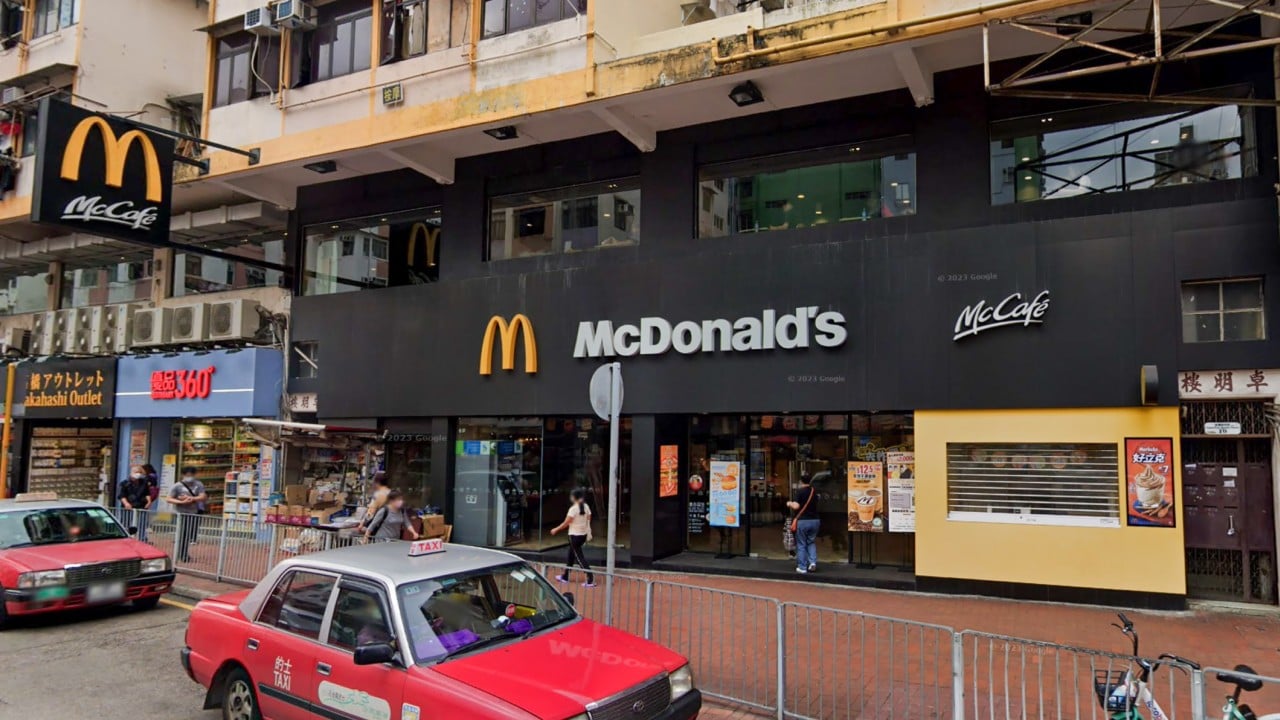
The headlines are singing a sweet, nostalgic lullaby about the return of old money to Hong Kong retail. The narrative goes that a prime storefront changed hands for fifteen point three million dollars, signaling a grand resurgence of wealthy tycoons reclaiming their turf while fast-food giants beat a retreat. It is a comforting fairy tale for financial journalists who need a clean, romantic angle to explain a complex asset swap.
It is also complete nonsense. Discover more on a similar issue: this related article.
I have spent two decades watching multinational corporations slice up their balance sheets, and when a golden arch giant liquidates a tangible square foot of asphalt in Asia, it is not because a few legacy fortunes decided to park their ancestral capital in a commercial strip. Corporations do not operate on sentimentality or dynastic pride. They operate on capital allocation discipline, cash flow yield optimization, and tax-efficient restructuring.
Strip away the glossy veneer of the local press coverage, and you find a routine corporate housekeeping exercise dressed up as a macro-economic resurrection. Let us dismantle the lazy consensus piece by piece. More journalism by Forbes delves into similar perspectives on this issue.
The Myth of the Nostalgic Exit
The prevailing narrative treats McDonald’s as a real estate fund that occasionally sells burgers. Analysts love pointing out that the corporation owns thousands of prime parcels worldwide, suggesting that every property sale represents a vote of confidence or a lack of faith in a specific urban core.
That framework is fundamentally broken.
Fast-food chains do not view high-street shops the way family offices view trophy assets. When a multinational offloads a high-priced property in one of the densest urban nodes on the planet, they are playing a completely different game than the buyer across the table.
[Traditional Media View]          [Actual Corporate Reality]
Tycoons reclaiming old turf   vs. Return-on-capital optimization
Emotional retail resurgence   vs. Asset-light franchise migration
For decades, corporate real estate strategies in dense Asian markets focused on anchoring flagship locations to secure brand equity. But as leasing models evolve and corporate treasury demands higher liquidity, holding unyielding bricks and mortar becomes a drag on return on equity. Selling a prime shop for millions of dollars is not a white flag waved at the Hong Kong retail sector. It is an accounting optimization. They locked in capital gains, eliminated property tax liabilities, and freed up dry powder for digital infrastructure and delivery-first logistics.
To claim this transaction proves that old money is back is to mistake a routine portfolio rebalance for a cultural renaissance.
Follow the Yield Not the Headlines
Let us talk about what old money actually does. Actual dynastic wealth does not deploy millions into single-tenant street-level retail during a period of structural shifts in consumer spending habits unless the yield math is overwhelmingly favorable.
The commentators pushing the old money narrative are ignoring the broader commercial leasing yields in the territory. High-street rents have taken a brutal beating over the past several years. E-commerce penetration, changing tourism demographics, and shifting mainland spending habits have permanently altered foot traffic dynamics.
If you are a generational family office with deep pockets, you are not buying a retail shop because you miss the colonial glory days. You are buying it because you negotiated a distressed or realistic valuation where the cap rate makes sense against current risk-free rates.
When a multi-national corporation sells an asset to a private buyer in this environment, it usually means the corporate seller has calculated that the future cash flows from that specific physical location no longer justify the capital locked up inside its walls. The buyer is taking on the operational risk of the retail corridor. McDonald’s is simply cashing out of a low-growth asset class to fund high-margin digital capabilities elsewhere.
The Real Estate Delusion
The core misunderstanding stems from a romanticized view of property ownership in financial hubs. People look at high nominal transaction values and assume a booming market.
Real estate markets do not move in lockstep with single high-profile transactions. A headline-grabbing fifteen million dollar ticket price for a prime corner shop is an anomaly, not a bellwether. It represents idiosyncratic valuation, specific tax motivations for the buyer, and a willing seller clearing a legacy asset off the books.
When you study corporate balance sheets across global franchises, you notice a clear migration toward asset-light models. Owning real estate ties up capital that could otherwise fund supply chain automation, drive-thru optimization, or mobile application infrastructure. The smartest operators are getting out of the landlord business because managing physical retail space is a distraction from their core competency: selling high-volume convenience.
The buyer might wear a tailored suit and represent a multi-generational family fortune, but do not confuse their private wealth strategy with a broad economic vote of confidence. They bought a yield-generating box. The seller dumped a box to optimize a balance sheet.
Stop looking at old money for signals about the future of commerce. Look at where the capital actually works.
And right now, capital works anywhere except locked inside a concrete box on a changing high street.