Geopolitical friction routinely translates into municipal symbolism, creating an intersection between macro-level trade disputes and micro-level civic administration. The Ottawa City Council vote to initiate the renaming of Trump Avenue in the Central Park neighborhood provides a case study in how political signaling interacts with municipal bureaucratic hurdles. Driven by escalating trade disputes and an executive order directing United States agencies to refer to Lake Ontario as Lake America, local authorities moved unanimously to strip the designation. Behind the headlines of potential replacements like Taco Avenue lies a distinct set of operational friction points, administrative costs, and voting dynamics that dictate whether symbolic retribution can actually clear municipal thresholds.
The Mechanics of Municipal Renaming
Transforming a residential identifier requires navigating a structured municipal framework designed to prevent arbitrary political changes while allowing local representation. The procedure governing Trump Avenue, a street established roughly 25 years ago within a New York City-themed subdivision, highlights these structural constraints.
Municipal policy dictates that any structural modification to a street name must overcome a series of sequential gates:
- Supermajority Resident Consent: More than fifty percent of the sixty-two households residing on the street must explicitly vote in favor of a change.
- Public Consultation Phase: A formal evaluation period for vetting proposed replacement names submitted by the community and council.
- Electoral Timing Gates: Procedural stalls that prevent contentious community votes from launching immediately prior to municipal elections.
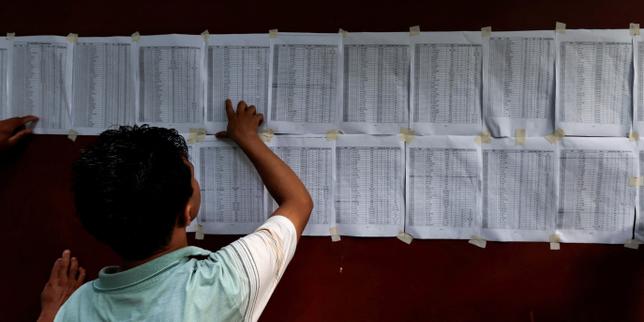
These constraints explain why previous efforts stall. During the 2021 municipal assessment, the sixty-two households split evenly with twenty-one votes in favor, twenty-one opposed, and twenty abstentions. This equilibrium did not reflect ideological alignment with the namesake, but rather administrative inertia. Homeowners faced with updating property titles, banking details, corporate registries, and utility alignments routinely calculate the administrative cost of a change as outweighing the symbolic benefit of the street sign.
The Economic and Political Cost Function
The current push for renaming—spurred by broader economic friction, reciprocal tariff debates, and the Lake America executive order—introduces external pressures into a localized administrative process. When national capitals become arenas for diplomatic retaliation, local councils face pressure from constituents demanding immediate symbolic alignment.
However, this creates a misalignment between national signaling and municipal utility. Local representatives like Councillor Tim Tierney have noted that cartographic retaliation acts as a distraction from structural trade negotiations. The cost function of municipal name changes is defined by two competing variables:
- Expressive Utility: The psychological or political satisfaction derived by the council and supporting residents from removing an objectionable namesake.
- Transactional Friction: The aggregate time, capital, and friction experienced by residents and municipal agencies in processing address updates across legal and financial databases.
When expressive utility spikes due to external geopolitical provocations, it temporarily overrides normal operational calculus. Yet, the underlying transactional friction remains constant. The sixty-two households on the affected corridor still bear the administrative burden regardless of whether the new designation is Ontario Avenue, Canada Avenue, or the viral contender Taco Avenue, which operates as an acronym for Trump Always Chickens Out.
Strategic Assessment of Administrative Inertia
Analyzing the probability of success for the current council motion requires looking past the viral nature of the proposed monikers. While public submissions range from geographic markers like Beaver Avenue and Canada Goose Avenue to provocative political statements like Obama Avenue and Pelosi Avenue, the structural bottleneck remains the resident-approval threshold.
The 2021 deadlock demonstrated that apathy and administrative avoidance form a stronger coalition than ideological support for a namesake. To shift the twenty abstaining households and break the twenty-one to twenty-one tie, proponents of the rename must either absorb the administrative costs on behalf of the residents or convince them that the geopolitical imperative outweighs personal paperwork inconvenience. Because municipal councils rarely subsidize private document updates, the default outcome leans heavily toward structural inertia.
Focus municipal advocacy efforts on streamlining the administrative remediation process for residents by providing automated municipal database updates, thereby lowering the transactional friction threshold required to achieve a supermajority vote during the upcoming autumn post-election consultation window.