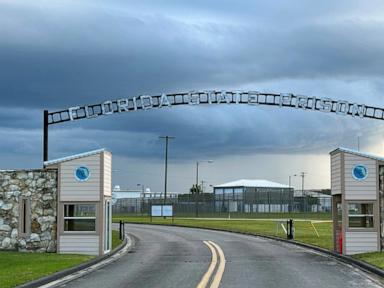
The operational velocity of capital punishment in Florida has shifted from an erratic judicial bottleneck into a predictable, high-throughput administrative pipeline. The execution of Richard Knight at the Florida State Prison near Starke represents the seventh state-sanctioned death of 2026. To understand this acceleration, analysts must look past the emotional dimensions of the underlying crimes and evaluate the statutory, logistical, and political mechanisms driving the acceleration.
By analyzing the structural shifts within Florida’s executive branch and the progressive contraction of judicial review windows, we can map the exact friction points that once slowed the death penalty—and understand how the state systematically removed them.
The Operational Mechanics of the Death Penalty Pipeline
The timeline from a capital conviction to the execution chamber historically spanned decades, slowed by multi-layered appellate reviews and administrative delays. Florida has fundamentally modified this timeline by optimizing what can be defined as the Capital Punishment Lifecycle. This lifecycle is governed by three specific operational variables:
- Warrant Density: The frequency with which the executive branch signs death warrants, shifting capital punishment from an occasional judicial recourse to a standardized administrative schedule.
- Appellate Compression: The systematic narrowing of legal windows for emergency stays, restricting the grounds upon which the Florida Supreme Court and federal circuits can intervene.
- Protocol Standardization: The programmatic utilization of a specific three-drug lethal injection sequence, designed to minimize chemical procurement friction and withstand procedural constitutional challenges.
[Conviction & Sentencing] ──> [Appellate Compression] ──> [Warrant Execution] ──> [Protocol Delivery]
The statistical reality of this optimization is stark. Following an unprecedented 19 executions in 2025—which established an absolute historical record for any single Florida administration since the death penalty was reinstated in 1976—the state has maintained a high operational velocity into 2026. The previous historical apex of eight executions, established in 2014, has been eclipsed by an executive strategy that treats death warrants not as isolated constitutional events, but as sequential operational targets.
Inside the Case of Richard Knight
The legal trajectory of Richard Knight highlights how compressed appellate windows function in practice. Convicted in 2006 for the 2000 fatal stabbings of Odessia Stephens and her four-year-old daughter, Hanessia Mullings, Knight spent two decades within the post-conviction review process. The underlying double homicide occurred in Coral Springs following a domestic residency dispute, and the state's case relied on forensic evidence and a secondary jailhouse confession.
The final phases of Knight’s capital lifecycle demonstrate how the state’s legal apparatus handles late-stage interventions. Knight’s legal counsel presented a series of emergency appeals based on two primary arguments:
The Latent Forensic Challenge
Appellants identified an un-attributed fingerprint on a knife recovered from the homicide scene, classifying it as newly discovered evidence capable of introducing reasonable doubt. The Florida Supreme Court denied this appeal by enforcing strict procedural bar rules. The court noted that the fingerprint’s existence was fully documented and cross-examined during the original 2006 trial. Under current evidentiary frameworks, old evidence framed through new speculative theories fails to meet the statutory threshold required to disrupt a scheduled execution date.
Protocol and Warrant Challenges
Concurrently, the defense challenged the transparency of the executive warrant selection process and the specific chemical constraints of the state's lethal injection protocol. The state’s high court rejected these claims, reaffirming the broad scope of executive discretion granted to the governor under Florida law.
This legal compression creates a definitive bottleneck for defense teams. When the Florida Supreme Court denied Knight’s final state-level appeals, it left the U.S. Supreme Court as the sole remaining disruption vector. Because federal courts increasingly defer to state-level procedural determinations under the Antiterrorism and Effective Death Penalty Act (AEDPA), the probability of a last-minute federal stay is structurally minimized.
The Chemistry and Logistical Supply Chain of Lethal Injection
Florida's execution protocol relies on a rigid three-drug chemical sequence. Maintaining the reliability of this sequence is essential for avoiding the litigation that often halts executions in states with unstable drug supplies. The Department of Corrections manages this process through a highly standardized protocol:
- Phase One (Anesthetic Nullification): The administration of an initial sedative designed to induce profound unconsciousness, rendering the individual entirely insensate to pain.
- Phase Two (Neuromuscular Interruption): The introduction of a paralytic agent that halts voluntary muscular function, paralyzing the diaphragm and respiratory system.
- Phase Three (Cardiac Arrest): The final injection of a chemical agent that disrupts the electrical conductivity of the myocardium, inducing immediate and irreversible cardiac arrest.
The operational challenge for many states lies in the pharmaceutical supply chain. European export bans and domestic manufacturer restrictions have forced corrections departments to source chemicals through alternative, often confidential, compounding pharmacies. Florida has insulated its protocol from these supply chain shocks by maintaining rigorous statutory confidentiality shields over its suppliers. This prevents public pressure campaigns and litigation from interrupting the chemical pipeline, ensuring logistical continuity across sequential death warrants.
Macro-Level Resource Allocation and Regional Comparisons
The acceleration of executions reflects a deliberate reallocation of judicial and executive resources. Capital litigation is exceptionally resource-intensive. By aggressively moving inmates from death row to the execution chamber, the state actively shortens the tail end of the capital litigation cost curve.
This model positions Florida as the clear outlier in national capital punishment trends. While the majority of U.S. states have either abolished the death penalty or entered into functional moratoria, a highly concentrated group of jurisdictions drives national execution numbers. In 2025, a total of 47 executions were carried out across the United States. Florida led the nation, while Alabama, South Carolina, and Texas followed with five executions each.
The operational momentum in Florida shows no signs of slowing down. The administrative pipeline has already mapped out its next sequence, with another execution scheduled for June 2, involving Andrew Richard Lukehart, who was convicted of a fatal 1996 beating.
Predictive Modeling of Florida's Capital Logistics
The data indicates that Florida's execution velocity is determined by executive intent rather than judicial backlog. The state has created an optimization loop where the signing of a warrant triggers a highly predictable sequence of legal and administrative events designed to systematically exhaust defense options within days.
Barring a significant federal intervention or a major structural shift in the Supreme Court’s interpretation of the Eighth Amendment, Florida's administrative framework is optimized to maintain or exceed its current execution velocity. The state has successfully institutionalized a high-throughput system by stripping away the procedural friction that historically defined capital cases. This clear operational strategy has transformed the delivery of capital punishment into a highly streamlined and predictable bureaucratic process.