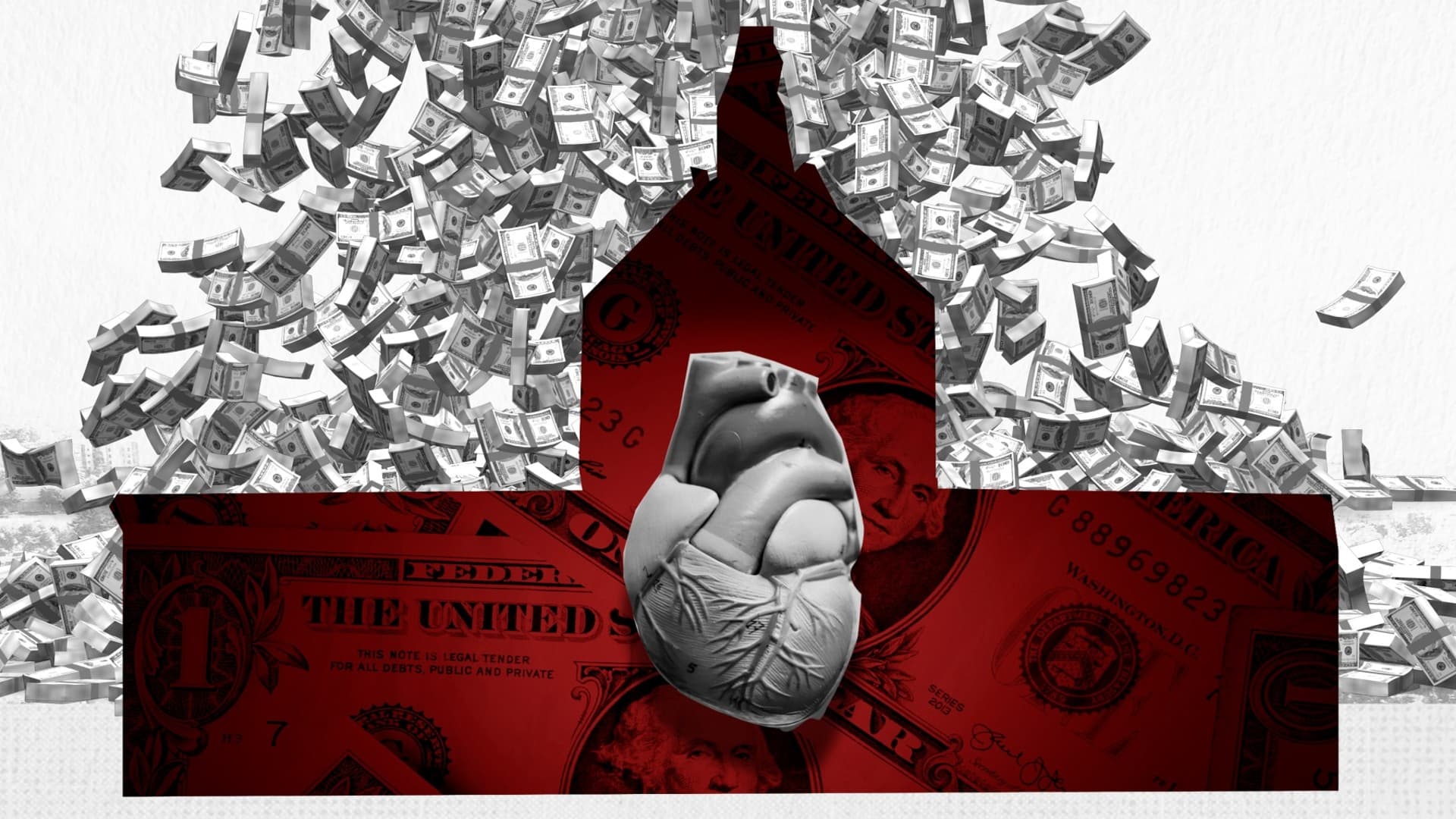
Ben & Jerry’s exists as a structural anomaly within modern capital markets: a mission-driven subsidiary operating under the governance of a multinational conglomerate, Unilever. The recent push by co-founder Ben Cohen to return the brand to independent status is not merely a nostalgic appeal for local control. It is a response to the inherent friction between Social Mission Autonomy and Fiduciary Duty Aggregation. When a social-activist brand is absorbed into a profit-maximizing entity, the resulting "Social-Corporate Conflict" creates a discount on brand equity that eventually forces a strategic divergence.
The viability of an independent Ben & Jerry’s depends on three variables: the legal durability of the original 2000 merger agreement, the capital requirements of a global supply chain, and the valuation gap between a niche ethical premium brand and a mass-market consumer packaged goods (CPG) division.
The Dual-Governance Bottleneck
Most corporate acquisitions follow a linear integration model where the parent company absorbs the subsidiary's operational functions (HR, legal, supply chain) to capture scale efficiencies. The Ben & Jerry’s acquisition broke this model by establishing an independent Board of Directors tasked specifically with protecting the brand’s "Social Mission."
This created a Bifurcated Governance Structure. The parent company (Unilever) owns the financial assets and dictates the P&L, while the subsidiary board controls the brand’s political and social output.
The friction point occurs when the Social Mission interferes with the parent company’s jurisdictional neutrality. Unilever operates in 190 countries; Ben & Jerry’s takes stances on geopolitical conflicts that can lead to legal challenges or boycotts in those same territories. This "Political Liability Transfer" means the parent company bears 100% of the risk while the subsidiary board retains 100% of the ideological control. Cohen’s argument for independence stems from the fact that this arrangement has reached a point of Negative Synergy, where the costs of conflict resolution exceed the benefits of shared logistics.
The Cost Function of Independence
Transitioning from a Unilever division to an independent entity involves more than a change in stock ticker. It requires a total reconstruction of the firm’s Operating Architecture. The primary hurdles are:
- Supply Chain Decoupling: Ben & Jerry’s currently utilizes Unilever’s global "Ice Cream Collective" infrastructure. This includes cold-chain logistics, raw material procurement (dairy, sugar, cocoa), and shelf-space negotiation power. An independent entity would lose the "Volume Discount Factor," likely increasing Cost of Goods Sold (COGS) by 15-20% in the short term.
- The Capital Expenditure Gap: Maintaining global distribution requires significant CapEx for production facilities and freezer infrastructure. As a subsidiary, Ben & Jerry’s draws from Unilever’s internal capital market. As an independent firm, it would need to access public or private debt markets, where its "Social Mission" might be viewed as a risk factor rather than an asset, potentially raising the cost of capital.
- R&D and Innovation Velocity: Unilever provides a centralized R&D hub for dairy alternatives and shelf-life extension technology. Independence would necessitate a stand-alone R&D department, slowing the time-to-market for new product lines.
The "Independence Premium"—the higher price consumers might pay for a truly autonomous "rebel" brand—must be weighed against these structural cost increases. If the brand cannot maintain a Price-to-Earnings (P/E) Ratio that justifies the loss of conglomerate efficiency, the spin-off fails as a business case.
Categorizing the Conflict: The Three Pillars of Divergence
The tension between Cohen and Unilever can be mapped across three distinct analytical pillars:
I. The Jurisdictional Neutrality Pillar
Unilever’s primary objective is "Fiduciary Neutrality." To maximize shareholder value, a global conglomerate must minimize friction with sovereign governments and diverse consumer bases. Ben & Jerry’s, by contrast, utilizes "Brand Friction" as a marketing and ethical tool. When the subsidiary board voted to cease sales in specific territories (notably the West Bank), it forced the parent company into a geopolitical debate it was structurally unsuited to handle. The resulting litigation and divestment by certain U.S. pension funds demonstrated that a social mission is not just a marketing cost; it is a Systemic Risk Factor.
II. The Valuation Divergence Pillar
Conglomerates often trade at a "Conglomerate Discount." Investors struggle to value a company that sells both soap and premium ice cream because the risk profiles are disparate. Unilever’s broader strategy involves "Premiumization"—moving away from low-margin staples toward high-growth beauty and wellness. While Ben & Jerry’s is a premium brand, its ice cream category is capital-intensive and slow-growth compared to digital-first beauty brands. A spin-off allows the market to value Ben & Jerry’s as a pure-play "Ethical Consumer" stock, which historically commands higher multiples from ESG-focused (Environmental, Social, and Governance) funds.
III. The Cultural Entropy Pillar
Over time, the integration of an activist brand into a corporate hierarchy leads to "Cultural Dilution." The founders and the original board perceive a "Mission Drift" where the parent company prioritizes margin expansion over social impact. Cohen’s push for independence is an attempt to reverse this entropy. From an analytical perspective, this is a battle for Brand Authenticity Assets. If the consumer perceives the social mission as a corporate PR veneer rather than an organic founder-led initiative, the "Authenticity Premium" evaporates.
The Mechanism of the Spin-Off
For Ben & Jerry’s to become independent, a "Leveraged Social Buyout" or a "Structural Divestiture" must occur. This is not a simple "divorce." It is a multi-stage financial restructuring:
- Asset Carve-Out: Unilever must identify which physical assets (factories in Vermont, etc.) belong to the brand and which are shared infrastructure.
- Intellectual Property Transfer: The most valuable asset is the trademark and the "Social Mission Charter." Unilever would likely retain a royalty interest or a minority stake to recoup its 24-year investment.
- Debt Loading: New Ben & Jerry’s would likely be birthed with a debt load to pay Unilever for the equity. This creates a "Debt-Mission Paradox": the brand must be hyper-profitable to service the debt, which might limit its ability to fund the very social causes that sparked the independence movement.
Quantifying the "Mission Discount"
The primary reason a board seeks independence is the belief that the brand is being undervalued within the larger portfolio. We can express this via the Strategic Alignment Index (SAI):
$$SAI = \frac{V_{i}}{V_{s}}$$
Where $V_{i}$ is the valuation as an independent entity and $V_{s}$ is the valuation as a subsidiary. If $SAI > 1$, the brand is being "suffocated" by the parent. In Ben & Jerry's case, $V_{i}$ is bolstered by a high ESG score and "Brand Fanaticism," but $V_{s}$ is supported by Unilever’s massive distribution network. The current push for independence suggests the founders believe $V_{i}$ has reached a tipping point where the brand’s political identity is more valuable than its logistical convenience.
However, the "Independence Trap" remains: once independent, the company is vulnerable to hostile takeovers by private equity firms that may have even less regard for the social mission than Unilever did. Without the "Conglomerate Shield," Ben & Jerry’s must survive the volatility of the open market while maintaining a cost structure that is inherently less efficient than its competitors.
Strategic Forecast: The Path of Least Friction
Unilever has already signaled its intent to spin off its entire ice cream business, not just Ben & Jerry’s. This is a strategic move to clean its balance sheet of low-margin, high-emission (dairy) assets. For Ben & Jerry’s, this creates a secondary conflict: being part of a new, standalone "Ice Cream Co" vs. being truly independent.
The founders’ goal of "Independence" is likely to clash with the realities of private equity involvement in any Unilever spin-off. If Ben & Jerry’s is bundled with brands like Magnum and Breyers into a new corporate entity, the "Bifurcated Governance" problem is simply moved to a different building.
The only viable path to true independence—consistent with the founders' vision—is a B-Corp Public Offering or a Trust-Owned Model (similar to Patagonia or Rolex). This would require Ben & Jerry's to secure a "Mission-Aligned" buyer or a consortium of impact investors willing to pay a "Premium for Control" to Unilever.
Unilever’s fiduciary duty to its shareholders makes it nearly impossible to "give" the brand back to the founders at a discount. Therefore, the strategic play for the Ben & Jerry’s board is to make the brand so "politically expensive" to own that Unilever decides a discounted divestiture is cheaper than the ongoing litigation and reputation risk. The goal is to maximize "Ownership Friction" until the parent company views the asset as a "stranded political asset" rather than a financial one.