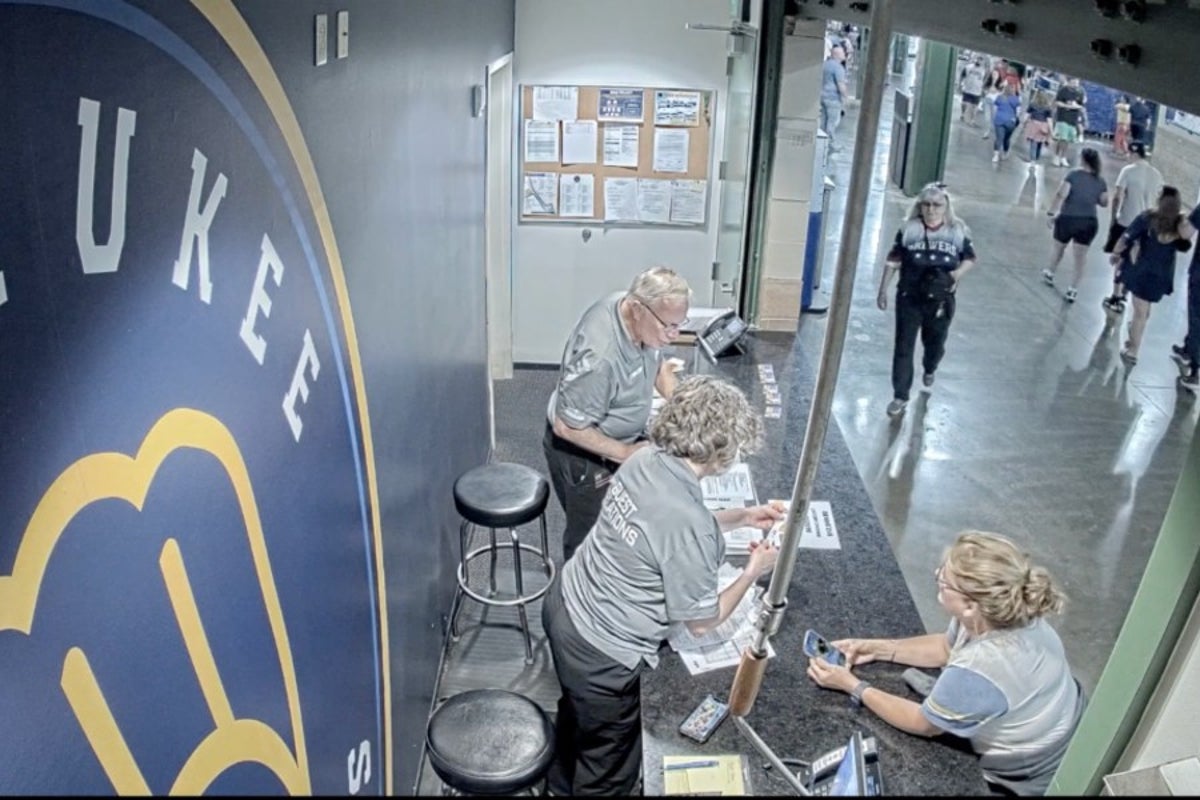
Major League Baseball franchises operate under a dual-mandate system: maximizing game-day fan engagement while maintaining strict operational velocity. When these two priorities collide, severe reputational and legal vulnerabilities emerge. A stark illustration of this systemic conflict is the "six-out rule" utilized in live stadium raffles, where a winning ticket holder is given a window of exactly six outs—roughly 15 to 25 minutes of real time—to claim a cash prize. When a fan fails to meet this micro-window due to systemic friction, the resulting dispute exposes a fundamental flaw in how sports organizations balance promotional liability against fan experience.
This operational failure mode can be deconstructed into three core pillars: contractual asymmetry, stadium logistical bottlenecks, and the misalignment of promotional incentives. By examining these forces, organizations can transition from rigid, high-friction compliance models to high-velocity, low-friction systems that protect both the brand and the consumer. You might also find this connected article useful: The Long Road From Cape Verde To A Hero's Welcome In Chile.
The Contractual Asymmetry of In-Stadium Raffles
Live stadium drawings, often executed as 50/50 raffles where half the proceeds go to charity and half to a single winner, are governed by a contract of adhesion. The team defines the terms entirely; the fan accepts them implicitly upon purchase.
The core operational metric in these contracts is the Claim Window Velocity ($V_c$), defined as the total allowable time to present a winning ticket divided by the physical barriers to entry at the verification point. As reported in latest reports by Yahoo Sports, the results are notable.
$$V_c = \frac{T_{allowable}}{D_{physical} \times C_{friction}}$$
Where:
- $T_{allowable}$ is the time remaining based on game play (measured in outs).
- $D_{physical}$ is the linear distance from the fan's seat to the central administrative office.
- $C_{friction}$ is the crowd density coefficient at that specific moment in the game.
When a team enforces a strict six-out rule, they compress $T_{allowable}$ into an unpredictable, highly volatile time block. Baseball lacks a game clock. Six outs can transpire in eight minutes of rapid play, or stretch to thirty minutes during a pitching change and a rally. The fan bears 100% of this temporal volatility.
The primary structural flaw in this contract design is the lack of a standardized notification mechanism. The team typically flashes the winning number on the scoreboard and announces it over the public address system once. If a fan is in a restroom, purchasing concessions, or assisting a child, the notification window closes instantly. This creates an immediate information asymmetry: the organization holds the capital, while the consumer holds an unverified claim with an accelerating expiration rate.
Logistical Bottlenecks: The Cost Function of Stadium Transit
The structural defense often mounted by sports franchises relies on the premise of personal responsibility: the fan should have walked faster. This argument ignores the physics of stadium logistics during live sporting events.
A standard MLB stadium accommodates 35,000 to 50,000 spectators. Transit within this environment is subject to severe structural bottlenecks.
Vertical Circulation Contraction
Stadium concourses, escalators, and ramps are designed for macro-flows (ingress at the start of the game, egress at the end). During active play, these pathways experience localized stagnation. A fan attempting to navigate from the upper deck to the basement administrative offices faces a physical resistance profile similar to exiting a building during an evacuation, but without the benefit of cleared emergency lanes.
Verification Point Obscurity
Unlike concession stands or team stores, the administrative or customer service hub where prizes must be claimed is deliberately placed away from high-traffic retail areas. It is frequently located in service corridors or lower-level executive suites. This introduces a significant discovery delay. The fan must engage in a multi-step search process, frequently receiving conflicting directions from game-day staff who are under-trained in administrative protocols.
The Deceleration Effect of Group Dynamics
Raffle tickets are rarely purchased by isolated individuals; they are bought by families or groups. When a winning number is realized, the group dynamic introduces immediate decision-making latency. Deciding who goes, securing personal belongings, and moving through a crowded environment with dependents reduces average walking speed by up to 40% compared to a single commuter.
When these three variables are compounded, the real-world transit time frequently exceeds the temporal equivalent of six outs. The fan has not abandoned their claim; they are actively trapped within the organization's own physical infrastructure.
Misaligned Incentives and the Fallacy of the Rollover Fund
From a strategic perspective, the enforcement of hyper-restrictive claim windows creates a perverse incentive structure. If a prize goes unclaimed, the funds do not vanish. Depending on local gaming regulations and team policy, the unclaimed pool is either rolled over into the next game's jackpot or retained by the team's charitable foundation.
While the charitable allocation serves a public good, the mechanics create a clear conflict of interest. A larger rolled-over jackpot drives exponential ticket sales at the subsequent game. The franchise benefits from increased fan engagement and higher gross handles, driven directly by the operational failure of a previous consumer.
This creates a high-risk operational posture. The short-term financial lift of a larger jackpot or a retained prize pool is heavily outweighed by the long-term erosion of brand equity. When a family publicly fights a franchise over a forfeited $13,000 prize, the media narrative shifts from a benevolent charitable initiative to an extractive corporate entity hiding behind legal fine print. The customer lifetime value (CLV) of that fan segment, alongside the secondary circle of consumers influenced by negative press, drops to zero.
Frameworks for Operational Remediation
To mitigate this specific category of operational risk, sports organizations must modernize their promotional logistics. Relying on mid-20th-century announcement methods in smart stadiums is anachronistic and unsustainable.
[Legacy Model: High Friction]
Scoreboard Announcement -> Visual Scan Required -> 6-Out Countdown -> Manual Navigation -> Forfeiture

[Optimized Model: Low Friction]
Digital Purchase -> Push Notification -> Extended Digital Claim -> Verified Account Payout -> Retention
Digital Tethering and Asynchronous Validation
The most direct solution is the elimination of anonymous physical ticket sales. By migrating raffle entries entirely into the team’s mobile application, the purchase is permanently tied to a verified fan account.
- Immediate Push Notifications: The moment the drawing occurs, the system delivers a direct alert to the winner’s device, bypassing stadium noise and scoreboard visual blocks.
- Asynchronous Verification: The fan should be allowed to press a "Claim Prize" button within the app during the six-out window. This single digital action pauses the expiration clock, validating the claim instantly. The physical verification and tax documentation can then occur at the fan's convenience, either later in the game or within a 48-hour post-game window.
Dynamic Window Calibration
If physical tickets must be preserved due to local cash-handling regulations, the rigid six-out metric must be abandoned in favor of an event-driven model. The claim window should extend until 30 minutes following the final out of the game. This simple shift flattens the stadium transit bottleneck, allowing the winner to navigate to the administrative office after the general crowd has cleared the concourses, eliminating the safety risks associated with fans sprinting through packed corridors.
The Strategic Path Forward
Organizations facing disputes of this nature frequently double down on legal insulation, citing the fine print on the back of the ticket. This tactical response is fundamentally flawed. In the court of public opinion, and increasingly under modern consumer protection scrutiny, hidden operational traps are indefensible.
The optimal strategic play for an organization caught in this specific crisis is a complete pivot from defensive litigation to systemic overhaul. The disputed prize should be paid in full immediately—not as a settlement, but as a public acknowledgment of operational failure. This capital expenditure should be treated as a marketing reallocation aimed at damage control.
Simultaneously, the franchise must announce the immediate retirement of the six-out rule, replacing it with a fan-first digital validation framework. By converting a PR vulnerability into an infrastructure upgrade, the organization restores trust, stabilizes ticket sales velocity, and eliminates a glaring point of operational failure before it impacts the bottom line.