The margins of modern security are terrifyingly thin. We like to think of public safety as an impenetrable grid of sensors, law enforcement response times, and systemic safeguards. The reality on the ground is far more fragile. A mechanical failure in a firearm and the quiet intervention of a vigilant coworker prevented a devastating tragedy at a Hindu temple, exposing the terrifying vulnerability of community sanctuaries and the arbitrary nature of catastrophe.
The Anatomy of an Unfolding Crisis
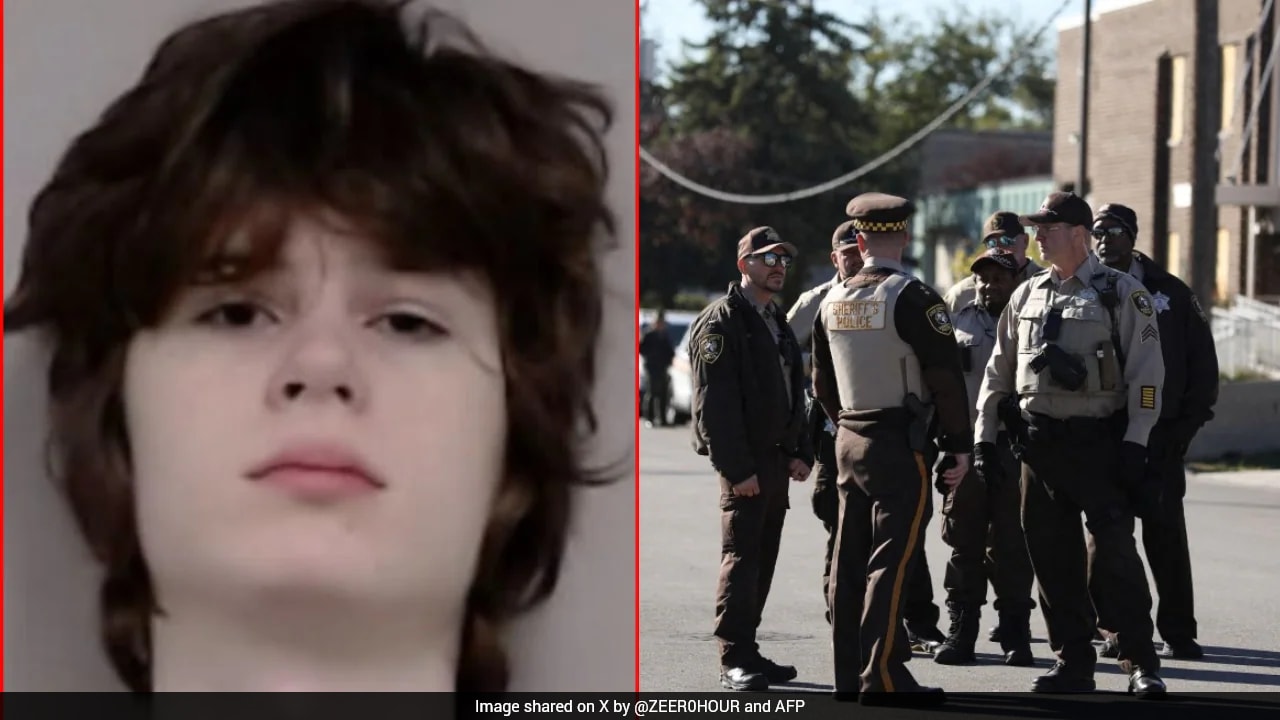
Violence often arrives not with a grand political manifesto, but with the quiet accumulation of personal grievance and accessible lethality. When a troubled American teenager plotted an assault targeting a Hindu temple, the trajectory was set by online radicalization, social isolation, and the terrifying ease of acquiring high-powered weaponry. Law enforcement agencies later pieced together manifests, digital footprints, and purchase histories that painted a grim picture of premeditation. You might also find this connected coverage useful: Why the Lake Ringgold Reservoir Fight Is About Bad Math Not Just Ranchland.
Yet, the best-laid plans of violent extremists frequently founder on the shores of human incompetence and mechanical reality. Firearms are complex assemblies of springs, pins, and tight tolerances. They require maintenance, proper handling, and a clear sequence of operations. When an inexperienced actor attempts to execute a mass casualty event, the psychological pressure combines with technical unfamiliarity to create critical points of failure.
In this instance, the weapon jammed. A feed malfunction or a failure to properly chamber a round turned a lethal instrument into an inert piece of metal at the exact moment of intended execution. That mechanical stoppage bought seconds—precious, agonizing seconds that transformed the dynamic of the encounter. As reported in detailed reports by USA Today, the implications are notable.
The Human Factor in the Workplace
While the jammed rifle stalled the momentum of the attack, it was a coworker who altered the final outcome. We often overlook the workplace as a primary early-warning system. Employers and colleagues observe behavioral shifts, escalating fixations, and emotional deterioration long before federal intelligence agencies flag a name on a watchlist.
The coworker noticed the warning signs. Instead of dismissing erratic behavior as ordinary teenage angst or eccentric habits, this individual intervened. Interpersonal friction, direct questioning, or a timely report to authorities short-circuited the isolation required for radicalization to fester into action. In high-stakes threat mitigation, human intuition remains our most sensitive sensor. Algorithms can track keyword searches and digital purchases, but they cannot read the subtle tension in a breakroom or the alarming conviction in a coworker's casual remarks.
The Vulnerability of Sacred Spaces
Hindu temples, synagogues, mosques, and local churches share a common architectural and cultural philosophy. They are built to welcome. Unlike government facilities or corporate headquarters equipped with turnstiles, metal detectors, and armed guards, houses of worship prioritize open doors, community gathering, and spiritual accessibility.
This openness makes them uniquely vulnerable targets for lone-wolf actors seeking maximum visibility and minimal initial resistance. When an assailant approaches a temple, they are rarely testing tactical fortifications. They are exploiting the inherent trust embedded in the institution.
The averted attack forced local religious communities to confront a harsh choice. Do they harden their infrastructure with bulletproof glass, security cameras, and armed patrols, or do they preserve the sanctuary's welcoming atmosphere? There is no clean answer. Every security measure installed alters the spiritual character of the space, yet remaining entirely open leaves congregants at the mercy of statistical probability and jammed triggers.
The Mirage of Predictability
Society demands narrative closure. We want to believe that every averted disaster is the result of a foolproof counterterrorism strategy or a perfectly executed intelligence operation. Admitting how close we came to catastrophe—due entirely to a mechanical malfunction and a coworker's gut instinct—makes us deeply uncomfortable. It reminds us that safety is often an illusion sustained by luck.
We cannot legislate away every troubled mind, nor can we bulletproof every threshold. The architecture of prevention relies on redundant safety nets: mental health support systems, vigilant peers who refuse to ignore red signs, and, occasionally, the sheer unpredictable friction of a malfunctioning firearm.
The teenager is facing the judicial system, and the temple remains standing, its daily rituals resuming under a heavier, more watchful silence. The weapon sits in an evidence locker, cleaned and analyzed by experts who understand its failure points. But the broader system remains fragile, waiting for the next intervention where fate hangs by a single, jammed thread.