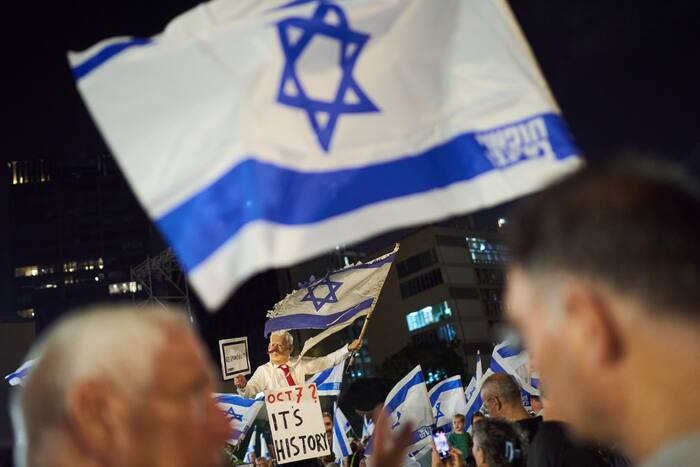
Israel’s October 27, 2026 national election functioned less as a conventional ideological contest between left and right and more as an institutional stress test centered on the political survival of Prime Minister Benjamin Netanyahu. Standard political reporting frames this vote through broad narratives of voter fatigue and security anxiety, yet those descriptions obscure the underlying structural mechanics driving voter behavior and parliamentary arithmetic. According to reporting from the Associated Press, PBS News, and data compiled by the Israel Democracy Institute, the election operated across four distinct structural axes: manpower allocation through military conscription, institutional checks via judicial restructuring, coalition arithmetic inside a fragmented 120-seat Knesset, and the divergence between executive legitimacy and security doctrine.
Understanding why the electorate split into a deadlock requires replacing surface-level political commentary with an operational breakdown of how these pressures interact. When a parliamentary democracy conducts its first national vote following a catastrophic security failure—the October 7, 2023 Hamas attack—and multi-front regional escalation, voter preferences reorganize around concrete material burdens rather than abstract party loyalty. Discover more on a related subject: this related article.
The Structural Framework of a Referendum Election
In a proportional representation system like Israel’s, citizens cast ballots for party lists rather than individual executive candidates, and a governing coalition requires a minimum threshold of 61 seats in the 120-seat Knesset. When an incumbent prime minister who has governed for nearly 17 years becomes the primary organizing variable of the political system, party platforms compress into a binary alignment: pro-Netanyahu versus anti-Netanyahu.
This binary compression alters how policy disputes function. Instead of competing on incremental economic or social adjustments, rival blocs use structural issues—such as who serves in the military and who appoints Supreme Court justices—as proxy mechanisms to assemble or break parliamentary majorities. As documented in Associated Press coverage of the 2026 campaign, the initial electoral outcome reflected this exact tension: Netanyahu’s Likud party dropped from 32 seats to roughly 27, and his religious-ultranationalist coalition fell short of the 61-seat threshold after previously holding 68 seats, yet the opposing bloc led by former military chief Gadi Eisenkot also faced severe mathematical friction in assembling an alternative majority. More reporting by The Guardian explores similar views on this issue.
The Four Pillars of Voter Realignment
1. The Conscription Burden and Manpower Deficit
The primary material driver separating the secular-centrist electorate from Netanyahu’s governing coalition is the unequal distribution of military service. Israel enforces mandatory conscription for most Jewish men and women, a policy that forms the operational backbone of the Israel Defense Forces (IDF). However, Netanyahu’s coalitions have historically depended on ultra-Orthodox (Haredi) political parties—such as Shas and United Torah Judaism (UTJ)—whose core policy demand is preserving military exemptions for young men engaged in full-time religious study.
According to figures cited by the Associated Press and the Israel Democracy Institute, roughly 13,000 ultra-Orthodox men reach the conscription age of 18 each year, yet fewer than 10 percent enlist. During extended multi-front military operations across Gaza, Lebanon, and confrontations involving Iran, this exemption created an acute operational bottleneck. Secular and national-religious reservists faced repeated, prolonged deployments, transferring direct economic and personal costs onto households that already shoulder the tax and combat burden.
Polling by the Israel Democracy Institute indicates that roughly one-quarter of Jewish voters identified the conscription exemption as a decisive factor in their vote. Tamar Hermann, an expert on Israeli public opinion at the Israel Democracy Institute, noted that military service operates as an informal credential of full civic legitimacy within Israeli Jewish society. Yohanan Plesner, president of the institute, characterized the exemptions as the single most potent unifying issue for the anti-Netanyahu coalition. Gadi Eisenkot, who lost a son and two nephews in combat in Gaza, campaigned explicitly on ending these de facto exemptions and instituting universal military or national service. The cause-and-effect relationship is direct: maintaining the Haredi coalition guarantee required Netanyahu to defend an exemption policy that alienated centrist and moderate right-wing voters experiencing the direct strain of reserve duty.
2. Institutional Balance and the Judicial Overhaul
Before October 7, 2023, domestic politics centered on the Netanyahu government’s legislative effort to restructure the judiciary and curtail the authority of the Supreme Court. Supporters framed the legislation as a necessary correction to restrain unelected judges from overriding parliamentary decisions, while critics and mass protest movements characterized it as an effort to eliminate institutional checks on executive power while Netanyahu stood trial on corruption charges.
Following the 2023 attack, immediate security survival displaced judicial reform as the dominant public preoccupation. Data from the Israel Democracy Institute shows that only 18 percent of Jewish Israelis cited the judicial overhaul as a primary voting determinant in 2026, reflecting what researchers described as public fatigue. On the political left, 22.5 percent still prioritized the issue, whereas among centrist and right-wing voters it did not rank among the top four concerns.
Despite lower immediate salience among swing voters, the legislative mechanism remained active. In 2025, the Knesset passed legislation granting the government greater control over judicial appointments, scheduled to take effect upon the swearing-in of the next legislature. Once the newly elected Knesset convened and elected a speaker backed by Netanyahu’s opponents, anti-Netanyahu lawmakers immediately introduced bills to repeal those judicial changes, establish prime ministerial term limits, and form a state commission of inquiry into the October 7 failures. The judicial dispute thus shifted from street mobilization to procedural legislative sequencing.
3. Executive Legitimacy Versus Security Doctrine
A persistent misconception in external commentary is that the 2026 election represented a sharp ideological divide over Israeli security doctrine toward Gaza, Lebanon, or Iran. Reporting from The Jerusalem Post and policy analyses of the campaign indicate that across the major Zionist parties—including Likud, Eisenkot’s camp, Naftali Bennett’s B’Yachad party, and Avigdor Liberman’s Yisrael Beiteinu—core strategic postures regarding military superiority, opposition to a Palestinian state, and confronting Iran overlap substantially.
The true divergence lies in executive credibility, accountability, and diplomatic management. Over a quarter of Jewish Israelis told Israel Democracy Institute pollsters that the identity of the party leader was a primary factor in their decision. This creates two competing assessments of leadership risk:
- The Incumbency Argument: Netanyahu’s supporters view his tenure and relationship with U.S. President Donald Trump as irreplaceable assets in managing high-stakes confrontation with Iran and resisting international pressure to halt military operations prematurely. From this perspective, replacing an experienced wartime leader introduces unacceptable strategic uncertainty.
- The Accountability Argument: Opponents point to the intelligence and preparedness failures of October 7, 2023, alongside Netanyahu’s ongoing corruption indictment and refusal to establish an independent state commission of inquiry, as disqualifying breaches of public trust. Eisenkot, drawing on his tenure as IDF Chief of Staff from 2015 to 2019, positioned institutional discipline and formal accountability mechanisms as prerequisites for restoring national resilience.
This dynamic explains why voters who share hawkish security views nonetheless split over who should execute them. The contest is not over whether to confront regional adversaries, but whether the sitting prime minister’s personal political incentives compromise strategic decision-making.
4. The Parliamentary Arithmetic Bottleneck
The fourth structural pillar is the mathematical constraint of coalition formation. Because no single party approaches 61 seats, forming a government requires aggregating smaller factions whose red lines frequently contradict one another.
In the post-election landscape, three distinct coalition geometries illustrate why political deadlock persists:
- The Right-Religious Bloc: Netanyahu’s preferred alignment relies on Likud combined with ultra-Orthodox parties (Shas and UTJ) and far-right nationalist factions. While ideologically cohesive on judicial restructuring and preserving Haredi exemptions, losing seats from its previous 68-seat peak left this bloc short of a governing majority.
- The Anti-Netanyahu Opposition Bloc: Assembling 61 seats without Likud requires uniting centrist figures like Eisenkot and Yair Lapid with right-wing Netanyahu critics such as Naftali Bennett and Avigdor Liberman. Even combined, these Jewish-majority opposition parties fall short of 61 seats without either external support or participation from Arab-majority parties. However, right-wing opposition leaders like Bennett have expressed reluctance to rely on an Arab-backed minority government, while Likud and far-right figures aggressively frame any reliance on Arab parties as a security liability.
- The Broad Zionist Unity Model: On pure policy alignment—covering Iran, Gaza, Haredi conscription, and judicial stability—a coalition uniting Likud (27 seats), Eisenkot’s faction (21 seats), Bennett’s party (12 seats), and Liberman’s party (7 seats) would command 67 seats. This configuration could pass universal conscription laws without Haredi vetoes and stabilize judicial appointments. Yet this mathematically optimal policy coalition is blocked by personal political vetoes: key opposition leaders refuse to sit in a government headed by Netanyahu, while Netanyahu refuses to step aside.
Operational Constraints and Analytical Limitations
Evaluating Israeli electoral outcomes through structural frameworks carries distinct analytical boundaries that observers must account for:
- Poll Volatility Versus Seat Allocation: Survey data from organizations like the Israel Democracy Institute accurately captures issue salience among Jewish Israelis, yet seat distribution depends heavily on turnout differentials—particularly among Arab citizens—and whether small factions clear the 3.25 percent electoral threshold. A minor shift in turnout can eliminate a small party entirely, redistributing seats across blocs without any change in underlying public opinion.
- Asymmetric Coalition Discipline: Haredi parties historically demonstrate high discipline in sticking with Netanyahu because alternative coalitions threaten their core funding and conscription exemptions. Conversely, the anti-Netanyahu bloc is an ideologically heterogeneous alliance bound primarily by opposition to one leader, making it structurally vulnerable to defections or internal policy paralysis once legislative voting begins.
- External Security Shocks: Domestic coalition negotiations do not occur in a vacuum. Escalations involving Iran, Hezbollah, or ceasefire negotiations in Gaza can rapidly alter political leverage, enabling an incumbent caretaker prime minister to frame opposition maneuvers as destabilizing during active conflict.
Strategic Trajectory and Post-Election Playbook
The immediate trajectory of Israeli governance hinges on procedural control of the Knesset rather than rapid executive resolution. By electing an opposition-backed Knesset speaker, the anti-Netanyahu bloc secured control over the parliamentary agenda, allowing it to advance legislation on prime ministerial term limits, judicial repeal, and an October 7 state inquiry even before a governing cabinet is finalized.
For political actors and institutional observers navigating this deadlock, the decisive lever is breaking the binary linkage between Likud’s 27 seats and Netanyahu’s personal premiership. As long as Netanyahu remains at the helm of Likud and the Haredi parties refuse to negotiate with Eisenkot, neither bloc possesses a stable, cohesive 61-seat governing majority. Consequently, the opposition’s optimal operational play is to use its temporary Knesset committee and speaker majorities to pass structural guardrails—specifically term limits and mandatory conscription legislation—that alter the institutional incentives for Likud and right-wing defectors ahead of either a negotiated unity realignment or a subsequent repeat election.
For further visual context on the campaign's core fault lines, watch A look at the main issues in Israeli elections seen as a referendum. This video provides an overview of the primary domestic and security disputes shaping voter sentiment in the election.