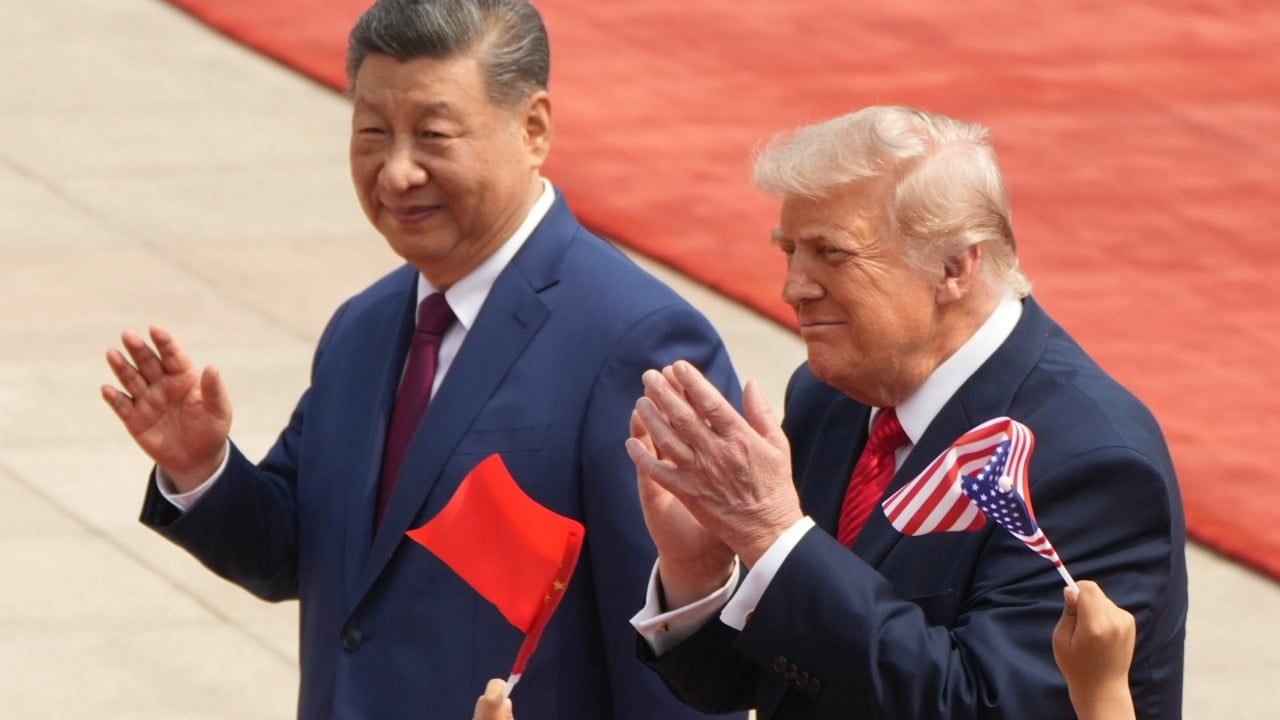
Modern democratic governance contains a permanent structural contradiction between elected executives seeking immediate economic acceleration and independent central banks mandated to preserve long-term currency value. This friction intensifies whenever political leadership confronts slowing growth, tight labor markets, or elevated borrowing costs. The ongoing friction between the executive branch and the Federal Reserve is not merely a personality clash or a transient political dispute; it represents a fundamental stress test for the institutional architecture designed to insulate macroeconomic stability from electoral cycles. To evaluate the trajectory of this institutional conflict, one must deconstruct the economic incentives, historical precedents, and transmission mechanisms that govern the modern central bank.
The Institutional Logic of Central Bank Insulation
Central bank independence rests on a simple premise: politicians facing recision every few years possess an inherent bias toward short-term economic stimulation. Lowering borrowing costs and expanding credit availability ahead of an election yields immediate, visible expansions in consumer spending, asset valuations, and job creation. However, the inflationary consequences of such monetary easing typically manifest months or years later, long after ballots have been cast. For another perspective, check out: this related article.
Economists Kydland and Prescott formalized this time-inconsistency problem, demonstrating that discretionary monetary policy by politically sensitive authorities predictably results in higher inflation without generating permanent gains in employment or output. To solve this credibility trap, modern states delegate monetary authority to technocratic institutions shielded from direct electoral feedback loops.
This insulation was formalized in the United States through the Treasury-Federal Reserve Accord of 1951, which severed the central bank’s obligation to monetize government debt at artificially low yields. True operational independence requires three distinct pillars: financial autonomy, staggered terms for governors that span multiple presidential administrations, and legal protections against arbitrary dismissal. When these pillars hold, economic agents anchor their inflation expectations to the central bank's announced target rather than the political promises of the current administration. Similar analysis on this trend has been shared by Forbes.
The Asymmetry of Political Pressures
The executive branch operates under an objective function aimed at maximizing voter approval over a fixed four-year horizon. Within this framework, interest rates function as a tax on economic activity, housing markets, and government debt servicing. When the Federal Reserve maintains a restrictive stance to combat persistent inflation, it directly imposes costs on key electoral constituencies, including real estate developers, automotive manufacturers, and leveraged corporate borrowers.
This dynamic creates an intense asymmetry in political lobbying. While businesses and citizens who suffer from high inflation are diffuse and disorganized, those who suffer from high borrowing costs are concentrated, vocal, and politically influential. Consequently, executive pressure invariably tilts toward monetary accommodation.
Presidents from both parties have historically sought to influence monetary policy through public speeches, private meetings, and appointments. Yet, contemporary executive pressure has evolved past subtle hints or backchannel negotiations into open public campaigns demanding immediate rate cuts. When an administration publicly castigates central bank leadership for maintaining high borrowing costs, it attempts to shift the political cost of inflation onto unelected technocrats, testing whether institutional norms can withstand direct populist mobilization.
Transmission Channels of Executive Leverage
Directly firing a central bank chair is legally constrained by statute, which protects governors from removal except for cause. However, the executive branch retains multiple indirect channels to exert influence over monetary deliberations.
The primary lever is the appointment power. With rotating vacancies on the Federal Reserve Board of Governors and the expiration of leadership terms, presidents possess structural opportunities to reshape the ideological balance of the Open Market Committee. Nominees can be vetted specifically for their alignment with executive preferences on interest rates and regulatory oversight. When a president selects allies to fill these seats, the internal consensus of the central bank shifts, altering the voting arithmetic during policy meetings.
A secondary channel involves regulatory and investigative scrutiny. Federal agencies, tax authorities, and congressional allies can launch investigations into administrative expenditures, building renovation overruns, or operational practices within the central bank. While these inquiries rarely yield legal violations, they consume institutional capital, create public distractions, and introduce personal friction for central bank leadership.
A third channel is rhetorical signaling. Continuous public criticism degrades the informational authority of the central bank. If markets begin to believe that monetary decisions are subject to executive coercion, the perceived credibility of the inflation target erodes. Financial institutions adjust their risk models, demanding higher term premia on long-dated bonds to compensate for the growing risk of politically motivated policy errors.
Macroeconomic Transmission of Politicized Monetary Policy
When central bank independence is perceived as compromised, the domestic and international financial systems react through well-documented feedback loops. The immediate economic consequence is an unanchoring of inflation expectations.
If economic actors anticipate that monetary authorities will cave to executive pressure and cut interest rates prematurely, nominal wage demands and corporate pricing strategies adjust upward. Businesses factor in future monetary easing, neutralizing the restrictive effects of current borrowing costs. Inflationary pressures, rather than abating, become persistent as input costs and consumer prices spiral.
To counter this loss of credibility, bond markets typically demand higher yields on government debt. Long-term Treasury yields rise even as the central bank faces pressure to lower short-term rates, steepening the yield curve and increasing the government's borrowing costs. This dynamic traps the fiscal authority in a vicious cycle: higher debt servicing costs expand the federal deficit, which in turn fuels aggregate demand and exacerbates inflationary pressures, forcing the central bank into an even tighter corner.
Externally, a politicized central bank undermines the reserve currency status of the United States dollar. Global capital flows into U.S. assets because foreign central banks and institutional investors trust the institutional invariants of American monetary governance. If that governance appears subject to the whims of executive politics, foreign capital faces higher sovereign risk premiums, leading to capital outflows, currency depreciation, and imported inflation through higher import prices.
Historical Precedents and Institutional Resilience
Historical episodes illustrate both the perils of political interference and the fortitude required to resist it. During the late 1960s and 1970s, intense pressure from Presidents Lyndon B. Johnson and Richard Nixon contributed to accommodative monetary policies under Chair Arthur Burns. The result was the catastrophic stagflation era, characterized by double-digit inflation and collapsing economic confidence.
Recovery from that stagflation required an extreme institutional correction. Under Paul Volcker, the Federal Reserve reclaimed its independence, raising interest rates to historic highs and triggering a severe recession to break inflationary psychology. Volcker's tenure demonstrated that restoring credibility demands immense economic sacrifice precisely because political interference had previously allowed imbalances to compound unchecked.
Subsequent chairs benefited from the norm of independence established during the post-Volcker era, treating market stabilization as a technical optimization problem rather than a political negotiation. Even during severe financial crises, such as the 2008 global financial panic and the 2020 pandemic shock, the central bank deployed unprecedented balance-sheet expansions while maintaining formal operational independence over its policy rate targets.
Strategic Assessment of the Future Equilibrium
The current tension between the executive branch and the Federal Reserve marks a critical juncture for institutional economics. The survival of central bank independence depends less on statutory wording than on the collective resolve of institutional participants, the depth of market trust, and the enforcement of constitutional norms by the judiciary.
If executive strategies succeed in subordinating monetary policy to electoral timelines, the United States risks entering a persistent stagflationary regime. In such a scenario, nominal GDP growth will be accompanied by volatile, elevated inflation, compressed private investment, and heightened financial fragility. Central bankers will find themselves trapped between the mathematical reality of inflation data and the political demands of the White House.
Conversely, if the central bank holds its operational autonomy, it reinforces the bedrock principle that monetary stability is a public good too vital to be subordinated to short-term political expediency. Financial markets will continue to price risk under the assumption that an independent arbiter guards the purchasing power of the currency.
The ultimate resolution will not be decided by rhetoric or executive pressure, but by the discipline of macroeconomic data. Inflation remains an unyielding constraint; no political decree can repeal the laws of supply, demand, and monetary transmission. As long as price stability remains the statutory mandate, any deviation forced by political pressure inevitably generates severe economic feedback, forcing a costly return to orthodox restraint. The strategic imperative for policymakers is clear: defend the institutional separation of monetary authority from fiscal ambition, or absorb the compounding costs of currency devaluation and macroeconomic instability.