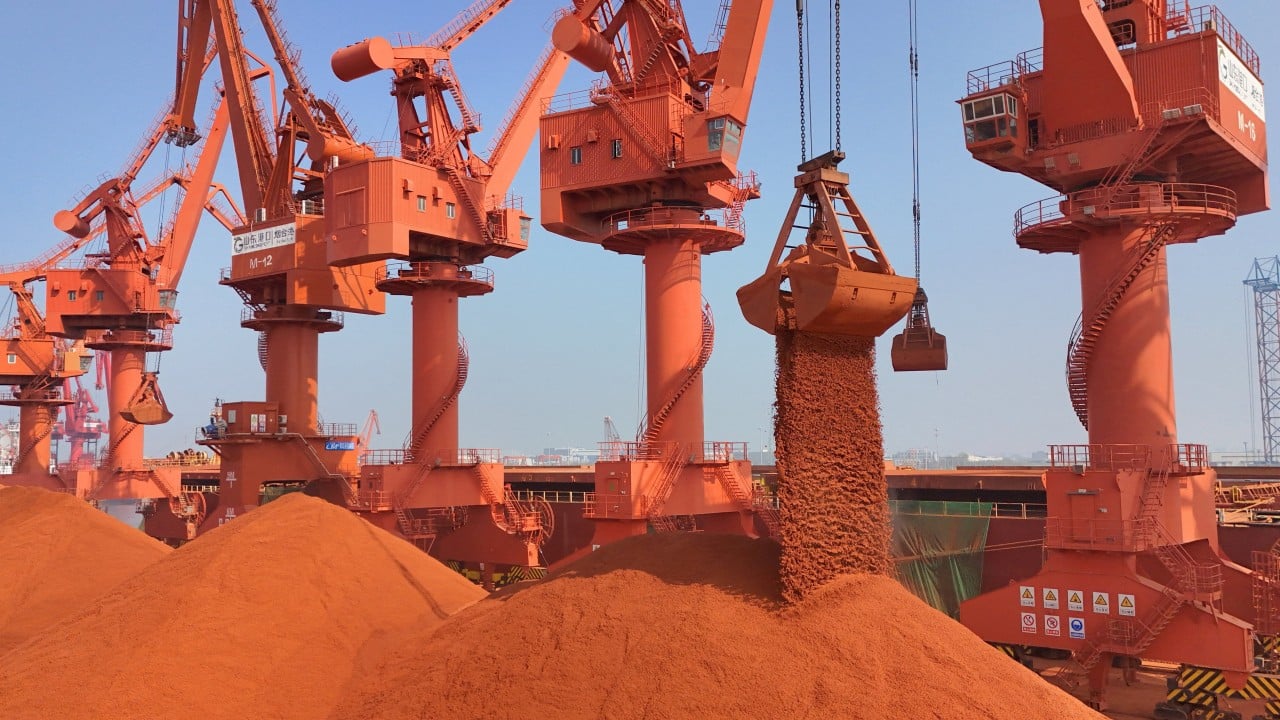
The hegemony of the US dollar in global commodities is being eroded not by a single geopolitical event, but through a systematic integration of the Australian mining supply chain into China’s Cross-Border Interbank Payment System (CIPS). While market observers often focus on the diplomatic tension between Canberra and Beijing, the operational reality is a structural shift in how the world’s largest bulk commodity—iron ore—is priced and settled. This transition functions as a proof-of-concept for the Renminbi (RMB) to move from a peripheral currency to a primary settlement asset for hard commodities.
The Mechanics of Bilateral Settlement Displacement
Historically, the Australian mining sector operated on a dollar-dominant architecture. BHP, Rio Tinto, and Fortescue Metals Group (FMG) sold ore in USD, creating a permanent demand for dollars and forcing Chinese steel mills to maintain massive USD reserves. The transition to RMB settlement, accelerated since 2020, functions through three primary transmission mechanisms.
- Direct Port-Side Sales: By establishing Chinese subsidiaries, Australian miners now sell iron ore directly at Chinese ports in RMB. This bypasses the traditional seaborne market (where USD is mandatory) and mirrors a domestic retail transaction.
- Blockchain-Enabled Settlement: The use of platforms like Contour and MineHub allows for the issuance of electronic Bills of Lading and Letters of Credit denominated in RMB. These digital workflows reduce the settlement time from weeks to hours, removing the "convenience premium" previously held by the USD.
- CIPS On-ramping: Every RMB transaction processed by an Australian miner serves as a stress test for CIPS. As these companies increase their RMB liquidity, they create a "closed loop" where they can pay Chinese equipment manufacturers or service providers in the same currency, eliminating FX conversion friction.
The Incentives of the Australian Mining Oligopoly
The decision by Rio Tinto and BHP to embrace RMB settlement is not a political concession; it is a defensive strategy against margin volatility. The logic is governed by The Iron Ore Basis Risk. When a Chinese mill buys ore in USD, they face a double exposure: the price of the ore itself and the fluctuation of the AUD/USD/RMB exchange rates.
By offering RMB settlement, Australian miners absorb a portion of the currency risk to ensure volume stability. In an oversupplied market, the ability to settle in the buyer's local currency is a powerful non-price competitive advantage. This creates a feedback loop where the miner gains "preferred supplier" status, and the Chinese state-owned enterprises (SOEs) reduce their reliance on the SWIFT network, which Beijing views as a strategic vulnerability.
Structural Barriers to Full De-dollarization
Despite the surge in RMB-denominated trades, two fundamental bottlenecks prevent the total displacement of the USD in the Australia-China corridor.
The Capital Account Constraint
The RMB remains a managed currency with restricted capital flows. Australian miners cannot easily repatriate billions in RMB to pay dividends in Melbourne or buy back shares in London. Until China fully liberalizes its capital account—an unlikely prospect given the CCP’s focus on financial stability—RMB will remain a "transactional currency" rather than a "reserve currency" for Australian corporates. The RMB collected is typically recycled within the Chinese ecosystem to pay for capital expenditures (CAPEX), such as purchasing giant haul trucks or autonomous shipping vessels from Chinese vendors.
The Index Pricing Deadlock
Global iron ore benchmarks, such as the Platts IODEX, are still USD-denominated. Even if a trade is settled in RMB, the price is almost always derived from a USD original. This means that the "Unit of Account" function of money remains with the dollar, even if the "Medium of Exchange" has shifted. True globalization of the yuan requires the Dalian Commodity Exchange (DCE) to become the primary price-setter, a shift that necessitates massive participation from international liquidity providers who are currently wary of Chinese regulatory intervention.
Quantifying the Transition: The Velocity of Adoption
The growth of RMB settlement in the mining sector is non-linear. It follows a classic "S-curve" of adoption where the early phase was defined by small, experimental shipments (approximately 100 million RMB per transaction) and the current phase is characterized by multi-billion dollar framework agreements.
Data from the People’s Bank of China (PBOC) indicates that the share of China’s total cross-border trade settled in RMB rose from nearly 0% in 2010 to over 25% by 2024. In the Australian mining sub-sector, this percentage is estimated to be higher due to the concentrated nature of the buyer-seller relationship. The four largest steel mills in China account for a massive plurality of Australian exports, allowing for a top-down mandate on currency preference that would be impossible in fragmented industries like textiles or electronics.
The Geopolitical Risk of Infrastructure Lock-in
As Australian miners integrate CIPS into their accounting systems, they create a form of "institutional path dependency." Once a corporation has built the legal, tax, and technological infrastructure to handle large-scale RMB transactions, the switching costs to return to a pure-USD model become prohibitive.
This creates a paradox for the Australian government. While Canberra remains a core member of the Five Eyes and the AUKUS alliance, its primary revenue-generating industry is becoming financially entwined with the Chinese monetary system. This creates a "Dual-Track Dependency" where Australia relies on US military hardware for security and Chinese digital financial architecture for economic solvency.
Strategic Implications for Resource Exporting Nations
The Australian model provides a blueprint for other resource-rich nations, particularly in the Global South. Brazil (iron ore/soy), Indonesia (nickel), and Saudi Arabia (oil) are closely monitoring the Australian miners' success in RMB settlement.
The strategy is not "Exit USD," but rather "Optionality." By maintaining dual-currency settlement capabilities, exporters can:
- Insulate themselves from unilateral US sanctions.
- Deepen ties with the largest end-market for their products.
- Capture "seigniorage-lite" benefits by participating in the development of new financial rails.
The Displacement of Traditional Banking Intermediaries
The shift toward RMB settlement in mining is also disrupting the traditional "Gateway Banks" of the West. Institutions like HSBC, Standard Chartered, and JPMorgan, which have long dominated trade finance, now face competition from Chinese state-owned banks like ICBC and Bank of China. These Chinese banks offer lower cost of capital for RMB-denominated trade loans and possess direct access to the PBOC’s liquidity windows.
Australian miners are increasingly bypassing Western intermediaries to deal directly with Chinese financial institutions. This reduces the "intelligence footprint" of Western regulators over commodity flows, as these transactions do not touch the New York clearing system.
A Forecast of Sovereign Risk and Commodity Pricing
Over the next 36 months, the "RMB-Basis" will become a standard feature in commodity hedging. We should expect to see the emergence of a standardized "Australia-China RMB Iron Ore Contract" that trades independently of the USD seaborne price.
The final stage of this evolution occurs when Australian miners begin to hold significant RMB balances on their balance sheets as a strategic reserve. This will mark the transition of the yuan from a trade-facilitation tool to a store of value. However, this move will be the trigger for intense regulatory scrutiny from the Australian Prudential Regulation Authority (APRA), as it introduces systemic currency risk into the Australian financial core.
Australian miners must now treat currency settlement not as a back-office function, but as a strategic geopolitical asset. The move toward the yuan is a rational response to the shift in global economic gravity. The firms that master the "RMB-USD Hybrid Model" first will capture the most significant liquidity premiums, while those who remain tethered exclusively to the dollar will find themselves paying an ever-increasing "friction tax" to reach their largest customer.