When an Ebola outbreak hits, the immediate panic centers on the virus itself. That makes sense. Bleeding, organ failure, and a terrifyingly high mortality rate are enough to freeze any community in fear. But there is a second, often more lethal crisis that standard news reports miss entirely.
Medical teams are running for their lives from the very people they are trying to save. You might also find this related article interesting: The Truth About the Cruise Ship Hantavirus Case and What It Means for Travel Safety.
It sounds impossible. Why attack a doctor who traveled thousands of miles to cure your family? Yet, during major filovirus outbreaks, health workers regularly face machetes, stones, and arson. During the massive 2018 to 2020 outbreak in the Democratic Republic of Congo (DRC), the World Health Organization (WHO) documented hundreds of attacks on healthcare facilities. Dozens of workers died. Not from the virus, but from homicide.
If you want to understand why containment efforts fail, you have to look past the microscope. The real battleground isn't just biological. It's psychological, cultural, and deeply political. As reported in recent reports by Healthline, the results are widespread.
The Deadly Friction of Foreign Intervention
Imagine a remote village. Trust in the central government is already dead due to decades of civil war or neglect. Suddenly, white trucks roll in. People dressed in terrifying, faceless hazmat suits take away sick relatives. Those relatives often die alone, and their bodies are buried in plastic bags, violating sacred ancestral funeral rites.
To a local community, this doesn't look like healthcare. It looks like an invasion.
Conspiracy theories thrive in these environments. During the West Africa epidemic and subsequent outbreaks in Central Africa, rumors spread that foreigners brought the virus to harvest organs or make money. When armed security forces accompany medical teams to enforce quarantines, it cements the belief that the medical response is a military operation.
Local resistance isn't born out of pure ignorance. It's born out of terror and historical trauma. If a community believes a clinic is a death trap, they will burn it down. They do.
When Politics Weaponizes a Health Crisis
Ebola does not happen in a vacuum. Outbreaks frequently strike zones of active conflict. This complicates everything.
In the eastern DRC, rebel groups like the Allied Democratic Forces have spent years fighting the government. When the state and international agencies show up with millions of dollars in funding to fight a disease, local factions get angry. They ask why the world ignores the massacres happening daily by rebel gunfire, yet spends a fortune on a virus.
Health workers become soft targets for political grievances.
- Rebel groups attack triage centers to destabilize government control.
- Local politicians exploit the crisis, telling voters that the outbreak is a hoax designed to delay elections.
- Criminal gangs target aid convoys for ransom, knowing foreign agencies have deep pockets.
When a clinic gets ransacked, the response halts. Contact tracing stops. Sick people hide in their homes, spreading the pathogen to their neighbors. Every single attack acts as a force multiplier for the virus.
Why Bullets and Blame Don't Cure Biohazards
The instinct of international organizations is often to double down on security. They ask for more UN peacekeepers or local military escorts.
That is a catastrophic mistake.
Heavy-handed security validates the conspiracy theories. It tells the community that the medical teams are enemies who need military protection. Real safety for medical staff only happens when the local community decides to protect them.
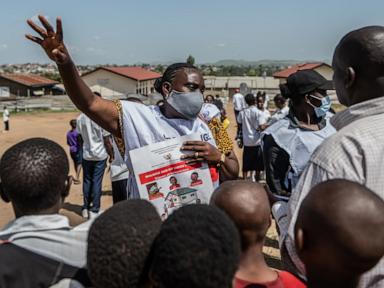
Anthropologists are actually more useful than soldiers in these scenarios. During the later stages of the West Africa crisis, the response finally shifted when teams started listening to local elders. They modified burial practices so families could see their loved ones from a safe distance. They hired local youth to do awareness campaigns instead of flying in teams from the capital.
Trust is the only effective shield. Without it, the best vaccines and therapeutics in the world are completely useless because no one will show up to receive them.
Building Real Security on the Front Lines
We have to change how we deploy medical aid in conflict zones. Relying on armed guards is a band-aid that usually worsens the wound. True security requires a complete overhaul of the intervention strategy.
First, stop prioritizing foreign personnel over local staff. Local nurses and community health workers carry the highest risk and possess the deepest trust. They need better pay, proper protective gear, and a seat at the decision-making table. They know the social landscape; foreign experts don't.
Second, integrate Ebola funding into general healthcare. If you roll into a town that lacks clean water, malaria medicine, and basic maternity care, and you only offer help for a rare hemorrhagic fever, people get suspicious. Fund the clinics for everything, not just the high-profile disease that scares western nations.
Finally, treat community resistance as a communication failure by the responders, not as malice by the citizens. Talk less. Listen more. Fix the relationship before the next outbreak hits, or prepare to watch history repeat its bloody cycle.