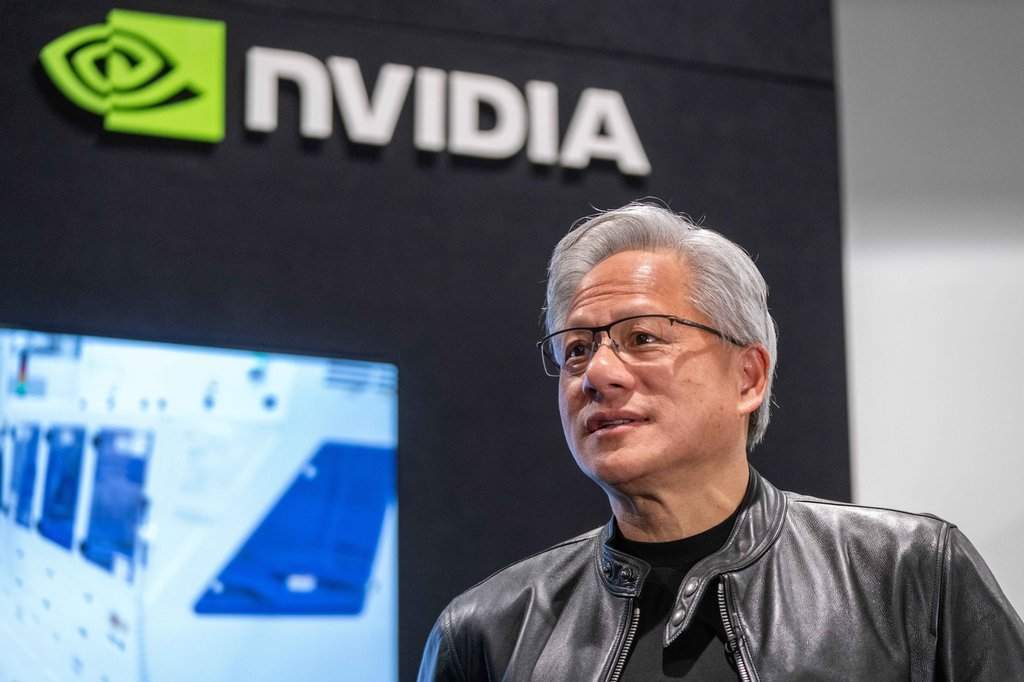
Megaspeed says Alice Huang left the Singapore-based data center operator on August 30, 2025, and launched an internal probe as fallout from Nvidia export scrutiny escalated. Yet the timeline and ownership reality tell a far harsher story. Even after Megaspeed stated she stepped away in late summer 2025, U.S. authorities added Megaspeed—along with subsidiaries in Thailand and Malaysia and related entities—to the Commerce Department's Entity List in November 2026 amid investigations into alleged AI chip diversion to China.
A departure date on paper does not unwind years of commercial ties, shareholder influence, or supply-chain suspicions. In high-stakes semiconductor trade, compliance is judged by where hardware actually goes and who controls the infrastructure, not by press releases issued after intelligence leaks and regulatory pressure mount.
Why a 2025 Exit Looks Like Damage Control
Corporate distancing is standard practice once a company's name collides with counterintelligence reporting and export enforcement. When Megaspeed stated that Alice Huang left effective August 30, 2025, and held no current role, the announcement arrived amid intense scrutiny over her ties to Nvidia CEO Jensen Huang and allegations from U.S. officials regarding Chinese intelligence links.
Timing matters in regulatory investigations. Singapore authorities opened probes involving Megaspeed in February 2025, and reporting later highlighted both Megaspeed's massive Nvidia purchases and its commercial links to major Chinese tech players such as Alibaba. Meanwhile, Singapore's Ministry of Home Affairs later stated in November 2026 that Alice Huang had been barred from re-entering Singapore after police assessed she provided inaccurate information to downplay her role during earlier inquiries, even as prosecutors in February 2026 found insufficient evidence at that stage to charge her with specific offenses tied to those declarations.
An internal probe launched in the middle of a geopolitical storm faces an immediate credibility hurdle. Boards and executives conducting self-reviews under federal and foreign scrutiny rarely satisfy skeptical regulators unless outside auditors or enforcement agencies verify the findings independently.
The Structural Trap Behind AI Chip Diversion Probes
To understand why Megaspeed became a focal point, look at how advanced AI compute moved through Southeast Asia during the export-control era. Washington tightened restrictions on shipping high-end accelerators directly to China, creating powerful financial incentives for cloud and data center operators in neighboring jurisdictions to build massive GPU clusters.
- Cloud clusters as gray-zone conduits: Data center operators outside mainland China can buy regulated hardware legally in theory, then offer remote compute access or corporate links that raise red flags for export enforcers.
- Ownership versus management: Stepping down from an executive title does not automatically sever controlling equity or informal influence. Reports have described Alice Huang as a controlling shareholder in Megaspeed, complicating any claim of a clean break.
- Cross-border friction: Investigations spanning the United States, Singapore, Thailand, and Malaysia expose gaps in intelligence sharing and evidentiary standards. Singapore Prime Minister Lawrence Wong noted that authorities questioned Alice Huang and released her due to insufficient evidence while awaiting further information from Washington.
Hypothetically, suppose a regional data center firm purchases thousands of accelerators under a compliance pledge that the hardware stays local, while a sister entity or major client routes workloads or equipment across borders. Even if formal contracts look neat on first glance, investigators trace network logs, shipping manifests, payment trails, and beneficial ownership to test whether the arrangement existed to route around trade rules.
Governance Blind Spots Exposed at Nvidia and Beyond
This affair is not just about one data center operator in Singapore. It exposes how concentrated power in the AI hardware boom strains corporate governance across the entire supply chain.
When a single vendor commands extraordinary pricing power and demand outstrips supply, commercial incentives can outrun compliance guardrails. Nvidia has faced intense political and regulatory examination over due diligence, customer vetting, and how export rules operate in practice, including forming an export control committee and dealing with a Department of Justice witness subpoena in connection with Megaspeed and export controls. Nvidia has maintained that its shipments were authorized or halted as required and that it did not ship restricted H200 accelerators to the company linked to Megaspeed or to China.
At the same time, executive conduct and personal ties become national-security flashpoints when a company sits at the center of strategic technology. Jensen Huang briefly resigned as CEO in November 2026 following disclosures around his relationship with Alice Huang before being reinstated by the board within two weeks after administration officials indicated he was not the target of a Justice Department probe. That whiplash shows how thin the boundary has become between personal boundary lapses, board oversight, and statecraft.
What Entity List Sanctions Mean in Practice
Adding Megaspeed and related entities to the U.S. Commerce Department's Entity List changes the operating math overnight. Suppliers subject to U.S. export jurisdiction generally cannot ship covered items—including advanced AI chips, networking gear, and certain software or technical support—without a license, which faces a presumption of denial.
For a capital-intensive data center business, losing frictionless access to top-tier accelerators is devastating. GPUs depreciate fast, cluster economics depend on continuous expansion and maintenance, and enterprise customers hesitate to build long-term workloads on infrastructure facing geopolitical blacklists.
An internal probe cannot easily reverse an Entity List designation. Regulators look for verifiable chain-of-custody controls, transparent ownership disclosures, and proof that prior red flags were addressed rather than papered over. Until those standards are met—and cross-border investigators finish comparing notes—a 2025 departure date will remain a footnote in a much larger enforcement battle.