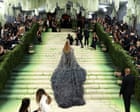
The Metropolitan Museum of Art’s Costume Institute has officially announced that the Met Gala 2027 theme will center on the poetics of everyday, trading decades of theatrical excess for a deliberate examination of ordinary clothing. On the surface, the shift reads like a humble, poetic retreat from the viral spectacle of gilded armor and twenty-foot trains. In reality, it is a high-stakes commercial and creative trap that strips away the safety net of costume, forcing billion-dollar luxury houses and A-list stylists to defend the exorbitant price tags of garments that look remarkably like what people wear to buy groceries.
For years, the first Monday in May operated on a predictable formula. Brands bought tables for hundreds of thousands of dollars, dressed celebrities in unwearable architectural marvels, and harvested millions in Earned Media Value within forty-eight hours. Nobody questioned why a gown cost six figures when it required four hundred hours of hand-beading and a freight elevator to transport. The spectacle justified the expense. Now, with the spotlight turning toward the vernacular wardrobe—think tailored workwear, crisp poplin shirting, worn denim, and utilitarian outerwear—the illusion of effortless magic vanishes.
The Economics of Invisible Luxury
Luxury conglomerates are entering a period of pronounced consumer fatigue. Shoppers who spent freely during the post-pandemic boom have grown cynical about aggressive price hikes on basic goods, scrutinizing stitching, fabric weight, and supply chains with forensic intensity. By selecting the poetics of everyday for the spring 2027 exhibition, curator Andrew Bolton is holding a mirror directly up to the industry’s most lucrative, yet most vulnerable, profit center.
Consider the numbers. High-margin runway spectacles generate headlines, but quiet luxury basics—white tank tops, cashmere crewnecks, and structured wool trousers—pay the rent. Yet selling a cotton t-shirt for nine hundred dollars requires an immense amount of cultural mythology. When those exact archetypes are placed under the harsh fluorescent lights of the Met’s galleries and marched up the iconic Fifth Avenue steps, the mythology is tested in real time.
"Anyone can hide mediocre tailoring beneath three layers of tulle and a theatrical headpiece. Stripping away the ornament exposes every crooked seam and lazy proportion."
A hypothetical example illustrates the peril for creative directors. Imagine a heritage French house tasked with dressing a major pop star for the 2027 carpet. If they send her out in a literal interpretation of a mechanic’s jumpsuit or a trench coat, the internet will instantly compare the look to a forty-dollar thrift store find. If they over-embellish the garment to justify the couture label, they miss the brief entirely and look out of touch. Navigating that razor-thin margin requires a level of technical mastery that few contemporary studios still possess at scale.
Why Maximalism Finally Hit a Wall
To understand why the Costume Institute pivoted away from extravagance, you have to look at the diminishing returns of red-carpet shock value. Over the past decade, the Met Gala arms race escalated to a point of absurdity. Celebrities arrived inside literal boxes, carried replicas of their own severed heads, or required teams of handlers just to navigate a single stair.
The algorithm loved it. Fashion critics grew exhausted by it.
When every attendee dresses like a sci-fi monarch or a baroque chandelier, visual inflation sets in. Nothing stands out because everything is screaming for attention. More importantly, the disconnect between global economic anxiety and red-carpet opulence has become a public relations liability. Audiences scrolling through their feeds while budgeting for rent and groceries have increasingly soured on displays of unchecked decadence.
The Trap of Performative Simplicity
Turning toward the poetics of everyday solves the optics problem, at least on paper. It signals restraint, intellectual rigor, and an appreciation for human labor and lived experience. Yet history shows that fashion’s flirtations with modesty and utilitarianism often backfire when executed by the ultra-wealthy.
Look back at the late 1990s and early 2000s, when minimalist designers stripped the runway down to raw hems, neutral palettes, and industrial fabrics. While critics praised the cerebral purity of the movement, mass-market retailers quickly realized they could replicate the silhouette at a fraction of the cost. Luxury brands suffered a severe identity crisis because consumers could no longer tell the difference between a three-thousand-dollar coat and a three-hundred-dollar knockoff from across the street.
The 2027 gala risks triggering that exact same commodification crisis on a global broadcast stage. If the defining looks of the night can be convincingly recreated by fast-fashion giants within seventy-two hours using standard jersey and twill, luxury houses lose their most potent weapon: exclusivity through craft.
Inside the Costume Institute Curatorial Shift
Andrew Bolton has spent his tenure elevating fashion to the status of fine art, often leaning into romanticism, religion, and surrealism to make his case. Shifting the focus to ordinary garments is not a sudden whim; it is a calculated move to prove that mundane design carries as much historical weight as royal court dress.
Museums have historically neglected everyday clothing because people wore it until it fell apart. Rags do not survive in archives; silk ballgowns do. By dedicating the 2027 blockbuster exhibition to the garments of daily life, the Met is attempting to correct a massive blind spot in fashion scholarship. The show will likely examine how ordinary items—the trench coat, the pleated skirt, the work boot—evolve through repetition, wear, and subtle structural tweaks.
For museumgoers, this promises a deeply resonant experience. Visitors will recognize their own closets in the vitrines, creating an immediate emotional bridge that a nineteenth-century crinoline simply cannot build. The danger lies in translating that quiet, intimate museum experience onto a red carpet engineered for maximum sensory overload.
The Stylist Dilemma on the Fifth Avenue Steps
Celebrity stylists are the true power brokers of the modern Met Gala, and the 2027 theme just made their jobs infinitely harder. Most red-carpet styling relies on silhouette manipulation—cinching waists, widening shoulders, and extending hemlines to create dramatic proportions that photograph well from fifty feet away.
Everyday clothing does not play by those rules. It is designed for movement, comfort, and function, not static posing under flashbulbs.
- Proportion distortion: A standard button-down shirt loses its crispness within twenty minutes of sitting in a town car, leaving celebrities looking rumpled rather than poetic.
- Fabric limitations: Matte cottons, raw denims, and heavy wools absorb camera flashes instead of reflecting them, flattening the visual impact on high-definition broadcasts.
- The styling crutch: Without access to statement jewelry, dramatic capes, or theatrical trains, stylists must rely entirely on posture, grooming, and micro-tailoring to sell the look.
We will inevitably see two distinct camps emerge on the carpet. The first group will take the coward’s way out, treating "everyday" as an excuse to wear literal streetwear or basic slip dresses that belong at a casual dinner party. They will be torn apart by critics for failing to respect the occasion.
The second group will attempt hyper-elevated realism—garments that appear simple from afar but reveal staggering complexity up close. Think leather treated to drape like worn cotton, denim woven from dyed silk threads, or knitwear constructed without a single visible seam. This is the only path to triumph in 2027, yet it demands months of research and development that many chaotic brand studios struggle to manage.
What History Tells Us About Fashion Backlash
Whenever the fashion establishment attempts to romanticize the wardrobe of the working class, cultural friction follows. From Marie Antoinette’s faux-peasant village at Versailles to high-fashion grunge collections in the nineties, the line between homage and appropriation is dangerously thin.
Critics will watch the 2027 guest list with heightened skepticism. Watching billionaires and A-list actors celebrate the "poetry" of a mechanic’s coverall or a nurse’s tunic while stepping out of chauffeured Maybachs invites immediate accusations of poverty tourism. The Costume Institute will need razor-sharp curatorial framing to ensure the exhibition honors the ingenuity of everyday utility rather than fetishizing it as an aesthetic costume for the elite.
Brands sponsoring tables must also tread carefully. In previous years, a splashy viral moment excused almost any thematic misstep. In 2027, a tone-deaf execution will not just earn a bad review; it will expose a brand’s fundamental lack of imagination.
The Real Stakes for the Industry
The fashion business is currently bifurcating into two extreme tiers: ultra-exclusive couture for the top fraction of one percent, and accessible mass-market goods for everyone else. The middle ground—traditional ready-to-wear—is being squeezed from both sides.
The Met Gala 2027 theme sits squarely on that contested middle ground. It forces the industry to answer an uncomfortable question that executives have dodged for years: what actually makes a luxury garment worth its price when you strip away the logos, the theatricality, and the marketing hype?
If designers rise to the occasion, the night will serve as a masterclass in textile innovation and architectural restraint, reminding the public why true craftsmanship remains irreplaceable. If they falter, the first Monday in May will accidentally prove what skeptics have suspected all along—that behind the velvet ropes and billion-dollar ad campaigns, the emperor is wearing a forty-dollar t-shirt.